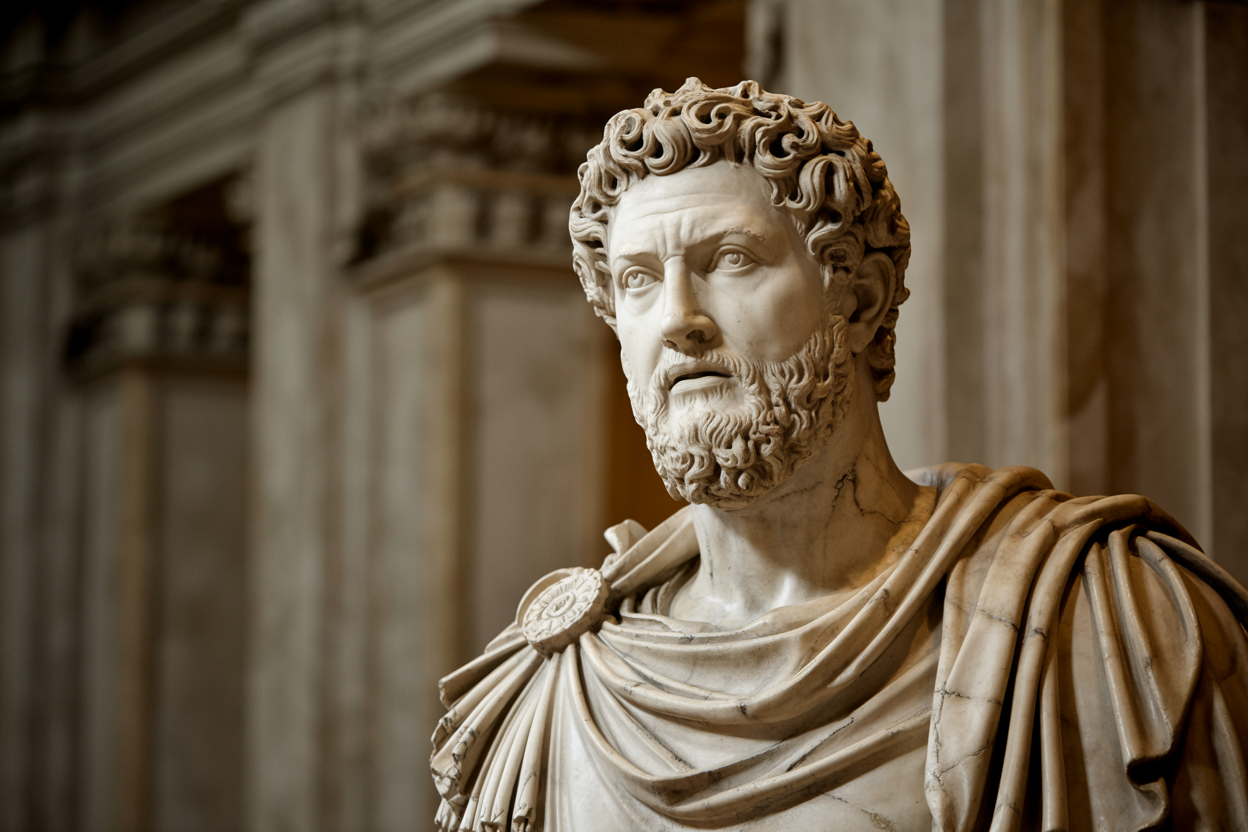
Marcus Aurelius ruled the Roman Empire during one of its most turbulent periods, yet he spent his private hours writing about character, virtue, and the nature of human relationships. His personal journal, known as Meditations, wasn’t written for public consumption. It was a brutally honest conversation with himself about how to navigate a world full of unreliable people.
What makes his observations so valuable is their timeless practicality. Aurelius wasn’t interested in cynicism or blanket distrust. He believed deeply in human cooperation. But he also understood that trust must be earned through demonstrated character, not assumed through words alone. Here are five types of people he warned us to be cautious about.
1. The Habitual Liar
“If it is not right, do not do it; if it is not true, do not say it.” — Marcus Aurelius
Marcus Aurelius placed enormous value on the alignment between a person’s words and their actions. In Meditations, he challenged himself to be “straight, not straightened,” meaning that integrity should come from within rather than being forced by external pressure. A person who lies habitually has abandoned that internal alignment entirely.
When someone consistently distorts the truth, you lose the ability to make sound decisions based on anything they say. You can’t model their behavior because their words don’t map to reality. You can’t forecast how they’ll respond in difficult situations because their reactions are built on a shifting foundation of convenience rather than principle.
This goes deeper than occasional dishonesty, which Aurelius understood as a common human weakness. The habitual liar has made deception a core part of their mental operating system.
Long-term agreements, partnerships, and relationships all require a baseline of reliable communication. Without it, every interaction becomes a guessing game. Stoic philosophy demands internal coherence above all else, and a person who lies regularly has none to offer.
2. The Flatterer Who Seeks Advantage
“I have often wondered how it is that every man loves himself more than all the rest of men, but yet sets less value on his own opinion of himself than on the opinion of others.” — Marcus Aurelius
Aurelius was deeply suspicious of praise that arrived with an agenda. He counseled himself not to be “carried away by applause” and to stay grounded in his own rational self-assessment rather than leaning on the approval of others. The flatterer exploits that very human desire to feel valued and seen.
In Stoic psychology, flattery is understood as a tactic of control rather than a gesture of goodwill. The person offering praise isn’t invested in truth. They’re invested in influence. Their compliments are carefully calibrated to create a sense of obligation or to lower your defenses before making a request.
The danger of the flatterer is that their approval is entirely transactional. The moment you stop being useful to their goals, the praise dries up or, worse, turns into criticism. You can’t trust someone whose warmth is a strategy. Aurelius recognized that genuine respect is shown through honest engagement, not through telling people what they want to hear.
3. The Person Ruled by Passion Instead of Reason
“If you are pained by any external thing, it is not this thing that disturbs you, but your judgment about it.” — Marcus Aurelius
Stoicism is fundamentally a philosophy of rational self-governance. Aurelius believed that our judgments about events, not the events themselves, determine our emotional responses. A person who is chronically angry, jealous, impulsive, or resentful has surrendered control of those judgments to whatever emotion happens to dominate in the moment.
This makes them genuinely unpredictable. You might share something in confidence during a calm moment, only to have it weaponized later during an emotional outburst. Plans made when they’re enthusiastic get abandoned when frustration takes over. Commitments made with sincerity get broken when resentment clouds their thinking.
Trust requires a reasonable degree of emotional regulation. Without it, you’re not dealing with a consistent person but with whoever their current mood has made them. Aurelius held that the ability to pause between stimulus and response distinguishes rational beings from reactive ones. A person governed by passion lacks that pause, and that makes them an unreliable partner in any meaningful endeavor.
4. The Disloyal and Ungrateful
“Accept the things to which fate binds you, and love the people with whom fate brings you together, and do so with all your heart.” — Marcus Aurelius
Aurelius frequently reflected on gratitude and the obligations we owe to those who have helped shape our lives. He opened Meditations with an extended tribute to the people who taught him, supported him, and influenced his character. He saw human beings as fundamentally designed for cooperation, and he treated loyalty and gratitude as expressions of justice.
A person who betrays confidences, forgets past help, or switches allegiances whenever a better opportunity appears has violated that principle of justice at its core. They prioritize short-term advantage over long-term character. Every relationship they maintain is conditional on what it can deliver right now.
Trust depends on constancy. You need to know that the person standing beside you today will still be there when circumstances become difficult. The disloyal person has already shown you through their actions that their commitment extends only as far as their current self-interest. Aurelius would say that such a person has cut themselves off from the cooperative nature that makes human society function.
5. The Person Who Lacks Self-Discipline
“You have power over your mind, not outside events. Realize this, and you will find strength.” — Marcus Aurelius
Aurelius admired restraint above almost every other quality. He repeatedly warned against indulgence in pleasure, status, and comfort, viewing these as traps that weaken a person’s ability to act with purpose. A person who can’t control their own impulses presents a specific and serious trust problem.
They overindulge when moderation is called for. They avoid responsibility when things get hard. They make excuses rather than corrections, and they consistently fail to keep commitments when those commitments require sacrifice or discomfort.
In Stoic terms, such a person is not sovereign over themselves. They are ruled by appetite, convenience, and the path of least resistance. If someone can’t govern their own impulses, they can’t be relied upon under pressure. And pressure is exactly when trust matters most. Aurelius understood that the discipline to do what is right, especially when it is difficult, is the true measure of a person’s reliability.
Conclusion
Marcus Aurelius never advocated for blanket suspicion or withdrawal from human connection. He believed in patience, understanding, and the recognition that all people are flawed. His philosophy was rooted in compassion, even toward those who disappointed him.
But he was also deeply practical. He understood that trust should be placed in people who demonstrate certain qualities through their consistent actions, not just their words. Rational judgment, emotional discipline, integrity, justice, and consistency were the markers he looked for.
Character, not charm, is the foundation of trust. That was true in second-century Rome, and it holds just as firmly today. The lesson from Aurelius isn’t to distrust everyone but to pay careful attention to what people repeatedly show you about themselves, and to let that evidence guide where you place your confidence.