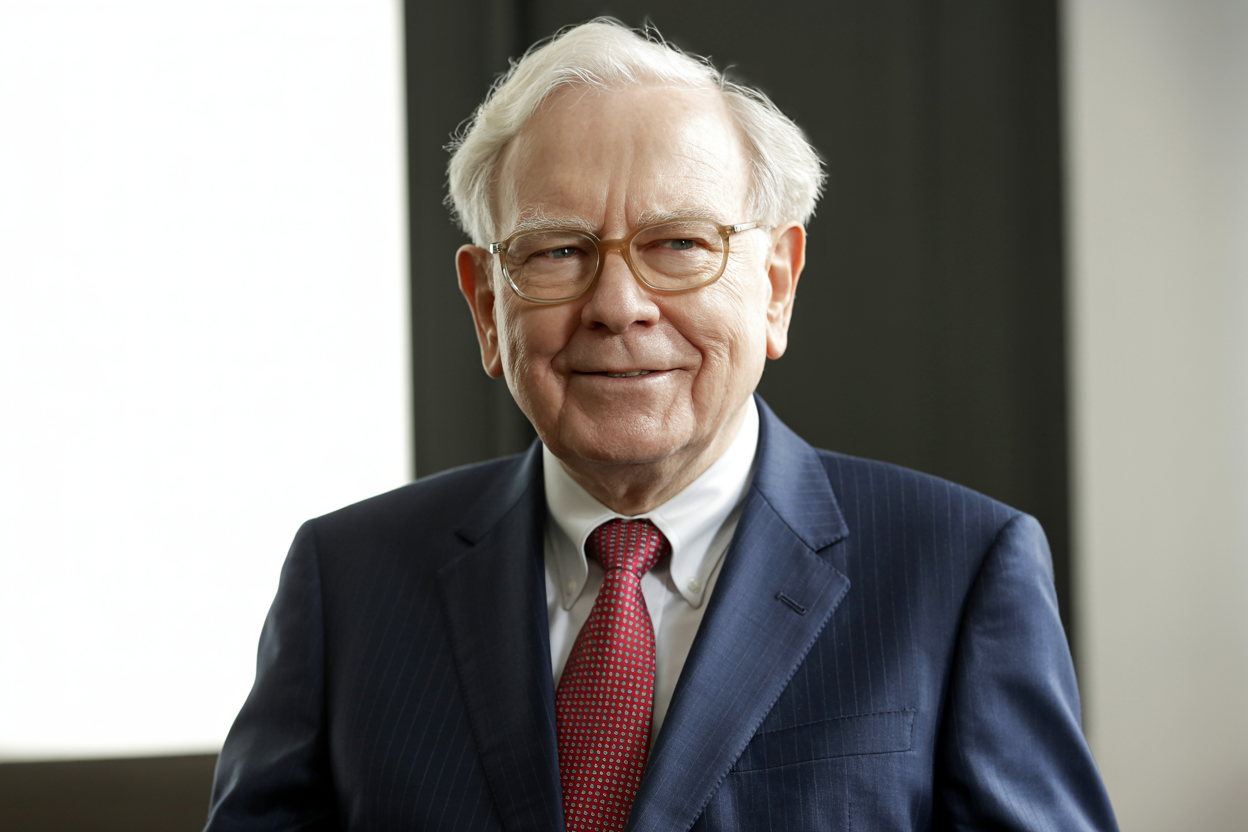
Warren Buffett spent over six decades sharing wisdom that reaches far beyond stock picking. Through Berkshire Hathaway shareholder letters, annual meeting Q&A sessions, and interviews, he developed a philosophy of money, time management, and success in life that most men appreciate only after years of costly mistakes.
1. The Best Investment You Can Make Is in Yourself
“The most important investment you can make is in yourself.” – Warren Buffett.
Buffett has repeated this principle across countless shareholder meetings. Early in his career, he enrolled in a Dale Carnegie public speaking course to overcome his shyness, a decision he credits as the most valuable investment he ever made.
Most men pour money into stocks and real estate while neglecting the one asset that generates all their income: their own abilities. Skills and knowledge appreciate over time, but only if you start early.
2. Time Is Worth More Than Money
“I’d give away every bit of my net worth—and Charlie [Munger] would too—to be your age. It’s the only thing you can’t buy.” – Warren Buffett.
Buffett made this statement during a Berkshire Hathaway annual meeting when a young attendee asked for advice. Rather than offering a stock tip, he reflected on the irreplaceable value of youth.
Most men spend their most energetic years trading time for money, believing they can reverse this equation later. But time spent with aging parents and moments with young children can’t be purchased at any price.
3. Compound Interest Builds Fortunes
“My wealth has come from a combination of living in America, some lucky genes, and compound interest.” – Warren Buffett.
Buffett bought his first stock at age 11, yet the vast majority of his fortune was accumulated after his 50th birthday. That is the exponential nature of compounding in action.
Most men don’t start investing seriously until their 30s or 40s, surrendering the most powerful years of compounding to consumption and debt. Starting early, even with small amounts, matters far more than starting big later.
4. Spending Beyond Your Means Will Ruin You
“If you buy things you don’t need, you will soon sell things you need.” – Warren Buffett.
Buffett has lived in the same Omaha home he purchased in 1958. Despite running one of the most valuable companies in history, he avoids status symbols and lives well below his means.
Many men equate success with conspicuous consumption, accumulating obligations that restrict their choices. True wealth is measured in options and independence, not possessions.
5. Debt and Leverage Are Wealth Destroyers
“I’ve seen more people fail because of liquor and leverage, leverage being borrowed money.” – Warren Buffett.
In his 2017 shareholder letter, Buffett warned that even small leverage and debt can rattle your mind during a market downturn, and an unsettled mind will not make good decisions. He and Charlie Munger built Berkshire with minimal leverage because they refused to risk what they had for what they didn’t need.
Most men learn this only after a downturn amplifies their loss, turning a temporary setback into a permanent one.
6. Your Reputation Is Your Most Valuable Asset
“It takes 20 years to build a reputation and five minutes to ruin it.” – Warren Buffett.
Buffett has shared this insight across interviews and shareholder meetings for decades. When he took over scandal-ridden Salomon Brothers in 1991, he told Congress he would be understanding if someone lost money for the firm, but ruthless if they lost a shred of its reputation.
Men often compromise integrity for short-term gains, only realizing too late that a damaged reputation is nearly impossible to restore.
7. Stay Inside Your Circle of Competence
“The size of that circle is not very important; knowing its boundaries, however, is vital.” – Warren Buffett.t
Buffett introduced this concept in his 1996 shareholder letter, explaining that an investor doesn’t need to be an expert on every company. This principle kept him out of technology stocks during the dot-com bubble.
Most men chase trends in areas they don’t understand, and they pay a steep price for it. Knowing what you don’t know is one of the most valuable financial skills you can develop.
8. Emotional Discipline Beats Intelligence
“The stock market is a device for transferring money from the impatient to the patient.” – Warren Buffett.
At the 2002 Berkshire annual meeting, Buffett told shareholders that a high IQ is not required for investing success, but temperament is enormously essential. During the 2008 financial crisis, while most investors were panic-selling, Buffett was buying aggressively.
Most men let fear and greed drive their financial decisions, buying at peaks and selling at bottoms. Controlling your emotions during volatility is worth more than any stock-picking strategy.
9. The People Around You Shape Your Financial Life
“It’s better to hang out with people who are better than you. Pick out associates whose behavior is better than yours, and you’ll drift in that direction.” – Warren Buffett.
Buffett has consistently emphasized the power of association. His hiring philosophy is equally direct: he looks for integrity, intelligence, and energy, and warns that without the first quality, the other two will destroy you.
Many men surround themselves with people who reinforce poor financial habits, such as overspending and short-term thinking. Your peer group quietly shapes your financial behavior more than any book or course ever will.
10. Relationships measure True Success
“When you get to my age, you’ll measure your success in life by how many of the people you want to have love you actually do love you.” – Warren Buffett.
In his final shareholder letter before stepping down as CEO, Buffett wrote that kindness is costless but priceless, and that greatness does not come from accumulating money, publicity, or power.
This is the lesson men learn last. They prioritize financial achievement above the relationships that define a meaningful life, and by the time the money arrives, the moments they missed are gone.
Conclusion
These ten lessons form the backbone of Buffett’s financial philosophy: invest in yourself, respect time, harness compounding, live below your means, avoid destructive debt, protect your reputation, know your limits, master your emotions, choose your circle wisely, and value people over profits.
None of these lessons requires genius or special access. They need the willingness to act on simple truths before life forces you to learn them the hard way. As Buffett once said, someone is sitting in the shade today because someone planted a tree a long time ago. The best time to plant yours was twenty years ago. The second-best time is now.