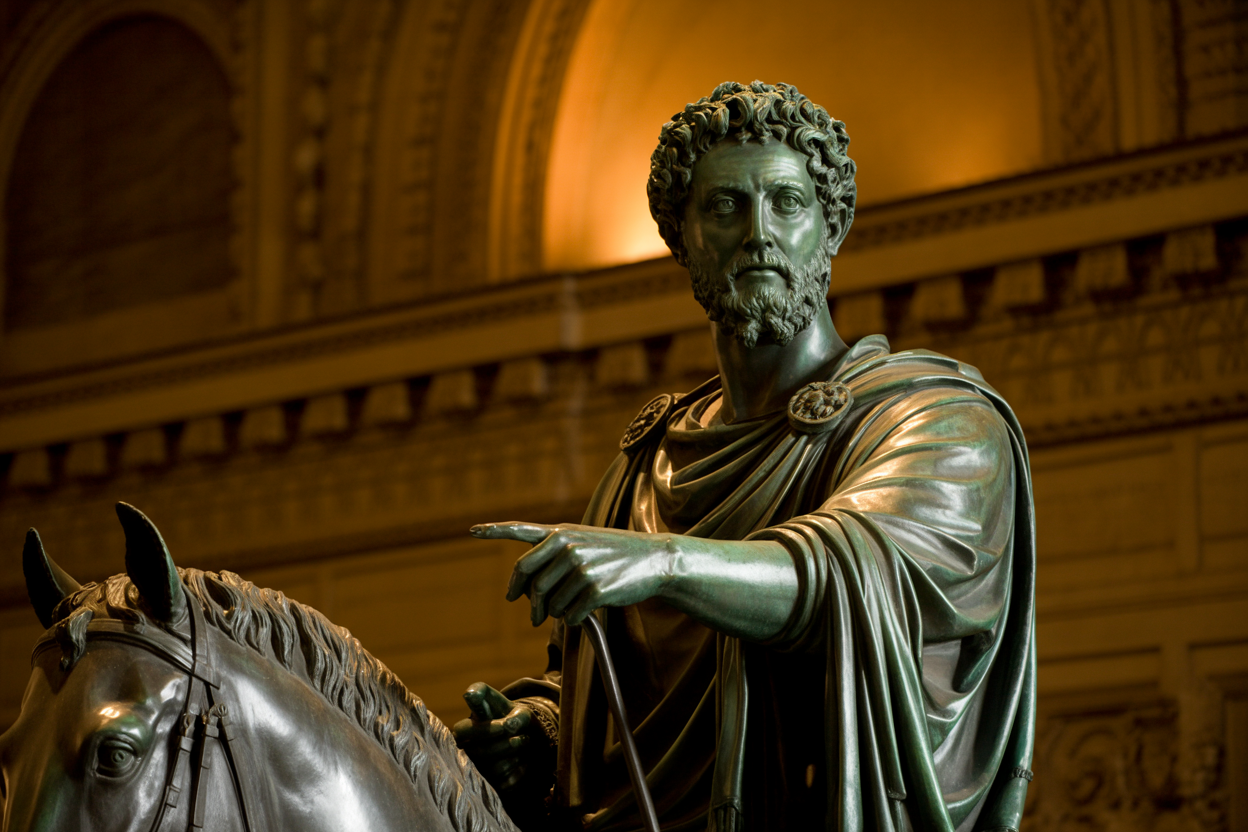
Marcus Aurelius ruled the Roman Empire during one of its most turbulent periods. He faced wars, plagues, betrayals, and personal loss on a scale most of us will never experience. Yet his private journal, known today as “Meditations,” reveals a man who refused to multiply his own pain through mental habits most people fall into without thinking.
His core insight was simple but powerful. Most people don’t just suffer from the events that happen to them. They suffer first in anticipation, then again when the event arrives.
1. The Double Weight of Human Suffering
Marcus Aurelius wrote, “You have power over your mind, not outside events. Realize this, and you will find strength.” This single idea captures why Stoics experience less suffering than the average person. They understand that most pain is not caused by what happens, but by the mind’s reaction to what happens.
Seneca, the Stoic philosopher who preceded Aurelius, observed that we suffer more often in imagination than in reality. The mind races ahead to future disasters, replaying worst-case scenarios until the body responds as though those disasters have already happened. The first round of suffering is entirely self-created. It lives in the space between what is happening now and what might happen later.
2. What It Actually Means to Suffer Twice
Aurelius captured this perfectly when he wrote, “Today I escaped anxiety. Or no, I discarded it, because it was within me, in my own perceptions, not outside.” He recognized that anxiety isn’t something that happens to us. It is something we generate internally and can release.
A person waiting for medical test results may spend days in agony before learning everything is fine. The stress hormones and sleepless nights were real, but the cause was never more than thought. Then, if the dreaded event actually occurs, the person arrives already depleted, less able to handle it than they would have been if they had waited to get stressed out until after confirmation of the results.
3. How Marcus Aurelius Approached Adversity Differently
In “Meditations,” Aurelius declared, “Choose not to be harmed, and you won’t feel harmed. Don’t feel harmed, and you haven’t been.” He practiced what Stoics called the discipline of assent, training himself to examine every mental impression before accepting it as accurate. When a troubling thought arose, he paused and asked whether it reflected reality in that moment.
A setback at work is one thing. Telling yourself that the setback means your career is over is something else entirely. Aurelius didn’t pretend that hardship didn’t exist. He refused to add a second layer of suffering on top of what was already there. The distinction between event and interpretation is one of the most practical tools he left behind.
4. The Mental Habit That Keeps People Trapped
Aurelius wrote, “If you are distressed by anything external, the pain is not due to the thing itself, but to your estimate of it; and this you have the power to revoke at any moment.” Most people suffer twice because of a deeply ingrained habit of projection. One bad quarter in your portfolio becomes a vision of financial ruin. One argument with a spouse becomes a preview of divorce.
This habit is so automatic that most people don’t notice they’re doing it. They believe they are being responsible by worrying. In truth, they are borrowing pain from a tomorrow that may never arrive. Investors who panic during downturns offer a perfect example: they often sell at the worst possible moment, locking in losses that would have been temporary.
5. The Stoic Practice of Present-Tense Living
Aurelius counseled, “Never let the future disturb you. You will meet it, if you have to, with the same weapons of reason which today arm you against the present.” He trained himself to stay anchored in the current moment, not because the future didn’t matter, but because the present was the only place where meaningful action could happen.
This didn’t mean he was reckless. Stoics believed in preparation. The difference was that they prepared without emotionally living in the future. The key distinction is between productive preparation and unproductive worry. Preparation is grounded in what you can control. Worry is focused on what you can’t. Aurelius poured his energy into the first and released the second.
6. Why This Matters for Building Wealth and Resilience
Aurelius noted, “The happiness of your life depends upon the quality of your thoughts.” People who build lasting wealth share a quality that appears to be Stoic discipline. They don’t react emotionally to every market fluctuation or headline. They assess situations clearly, make decisions based on evidence rather than fear, and move forward without wasting energy on imagined disasters.
Aurelius wasn’t emotionless. He wrote openly about grief, frustration, and fatigue. The difference was that he felt those things once, in response to real events, and then moved through them. The ability to suffer only once is one of the most valuable skills anyone can develop. It preserves your energy for moments that actually require it.
Conclusion
Marcus Aurelius wrote, “Very little is needed to make a happy life; it is all within yourself, in your way of thinking.” He didn’t have access to modern psychology, but he understood that the human mind tends to create suffering where none yet exists. Most people go through life carrying two burdens when reality only handed them one.
The Stoic path isn’t about avoiding pain altogether. That isn’t possible, and Aurelius never claimed it was. The path is about refusing to double your suffering through anticipation, catastrophic thinking, and fears that may never come to pass. You can’t control what happens to you, but you can control whether you suffer for it once or twice.