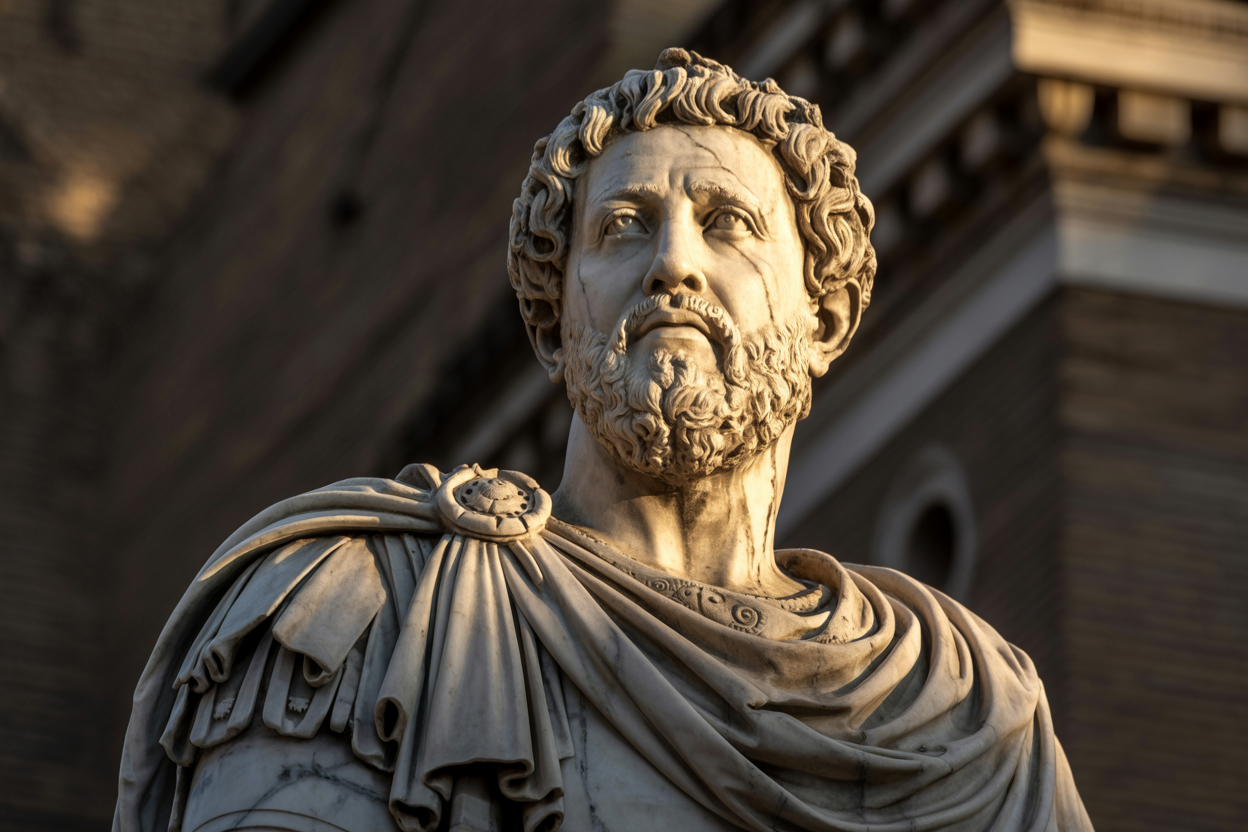
Marcus Aurelius ruled the Roman Empire during one of its most turbulent periods, yet he never lost his composure. While commanding armies and managing plagues, he quietly wrote a personal journal that would become one of history’s most powerful books on mental strength. That journal, known as “Meditations,” reveals the principles he used to stay grounded as everything around him fell apart.
What makes his teachings so valuable is that they weren’t written for an audience. They were honest conversations with himself about how to be better. These ten lessons capture what Aurelius believed separated men of true strength from those who merely appeared strong.
1. Strong Men Control Their Reactions
Aurelius understood that life would constantly throw challenges at every person. The difference between a strong man and a weak one isn’t what happens to them but how they respond.
“You have power over your mind, not outside events. Realize this, and you will find strength.” — Marcus Aurelius. A weak man reacts emotionally to every setback, letting anger or fear dictate his decisions. A strong man pauses, processes, and responds with intention.
2. Strong Men Accept What They Can’t Change
One of the greatest wastes of energy is fighting against things completely outside your control. Aurelius spent years dealing with war, betrayal, and loss, yet he consistently returned to the same principle.
“The happiness of your life depends upon the quality of your thoughts.” — Marcus Aurelius. Strong men focus their energy on what they can influence rather than complaining about what they can’t. Weak men exhaust themselves raging against circumstances that will never bend to their frustration.
3. Strong Men Don’t Seek Approval
The need for validation is one of the most common traps holding men back. Aurelius, despite being the most powerful man in the known world, cautioned against living for the opinions of others.
“It never ceases to amaze me: we all love ourselves more than other people, but care more about their opinion than our own.” — Marcus Aurelius. A strong man builds his sense of worth from within. He measures himself by his own standards and principles, not by applause or criticism from the crowd.
4. Strong Men Embrace Discomfort
Comfort is the enemy of growth. Aurelius repeatedly reminded himself that difficulty was not something to avoid but something to welcome as a training ground for character.
“The impediment to action advances action. What stands in the way becomes the way.” — Marcus Aurelius. Weak men run from hardship and look for the easy path. Strong men understand that every obstacle carries a lesson, and the struggle itself is what forges resilience and capability.
5. Strong Men Guard Their Time
Aurelius was deeply aware that time is the one resource no amount of power or wealth can recover. He viewed wasted time as a form of self-destruction that most people engage in without thinking.
“It is not that we have a short time to live, but that we waste a great deal of it.” — Marcus Aurelius. Strong men treat every hour as valuable and direct their days toward meaningful work and growth. Weak men drift through life distracted, only realizing what they’ve lost when it’s too late to reclaim it.
6. Strong Men Take Responsibility
Blaming others is the hallmark of a weak mind. Aurelius held himself accountable for his own life, failures, and emotional state, regardless of what others around him did.
“Waste no more time arguing about what a good man should be. Be one.” — Marcus Aurelius. Strong men don’t wait for conditions to be perfect. They don’t point fingers when things go wrong. They look inward first, own their part, and take action to fix what’s broken.
7. Strong Men Stay Disciplined When No One Is Watching
True character is revealed in private moments. Aurelius believed that integrity meant holding yourself to the same standard whether on a public stage or sitting alone in a room.
“Never esteem anything as of advantage to you that will make you break your word or lose your self-respect.” — Marcus Aurelius. Weak men perform virtue for an audience and cut corners when no one is looking. Strong men understand that discipline is a personal commitment that doesn’t depend on witnesses.
8. Strong Men Don’t Compare Themselves to Others
Comparison is a poison that slowly destroys ambition and contentment. Aurelius ruled an empire, yet he never measured his worth against other leaders or sought to prove superiority.
“How much time he gains who does not look to see what his neighbor says or does or thinks, but only at what he does himself.” — Marcus Aurelius. A strong man runs his own race. He focuses entirely on becoming better than he was yesterday. Weak men constantly look sideways, letting envy and insecurity steal their focus and peace of mind.
9. Strong Men Prepare for the Worst
Aurelius practiced a Stoic technique of mentally rehearsing difficult outcomes so they would never catch him off guard. This wasn’t pessimism. It was preparation that allowed him to face anything with confidence.
“Begin each day by telling yourself: today I shall be meeting with interference, ingratitude, insolence, disloyalty, ill-will, and selfishness.” — Marcus Aurelius. Strong men anticipate challenges and plan for them. Weak men assume everything will go smoothly and crumble when reality proves otherwise.
10. Strong Men Keep Their Ego in Check
Perhaps the most remarkable thing about Aurelius was his humility. As emperor, he had every reason to develop an inflated ego, yet his writings reveal a man constantly working to keep his pride in check.
“Receive without conceit, release without struggle.” — Marcus Aurelius. Strong men understand that arrogance blinds them to their own weaknesses and closes them off from growth. They hold their achievements lightly and stay open to learning. Weak men let success go to their heads and stop improving the moment they feel they’ve arrived.
Conclusion
Marcus Aurelius didn’t define strength by physical power, wealth, or status. He measured it by a man’s ability to master his own mind, control his emotions, and live with discipline and integrity.
These ten lessons aren’t relics of ancient philosophy. They are practical tools that apply just as powerfully today as they did nearly two thousand years ago. The path Aurelius described isn’t easy, and that’s precisely the point. Strength is built through daily practice, not through a single moment of courage.
Every day presents a new opportunity to choose discipline over distraction, accountability over blame, and inner peace over external validation. That consistent choice is what separates the strong from the weak.