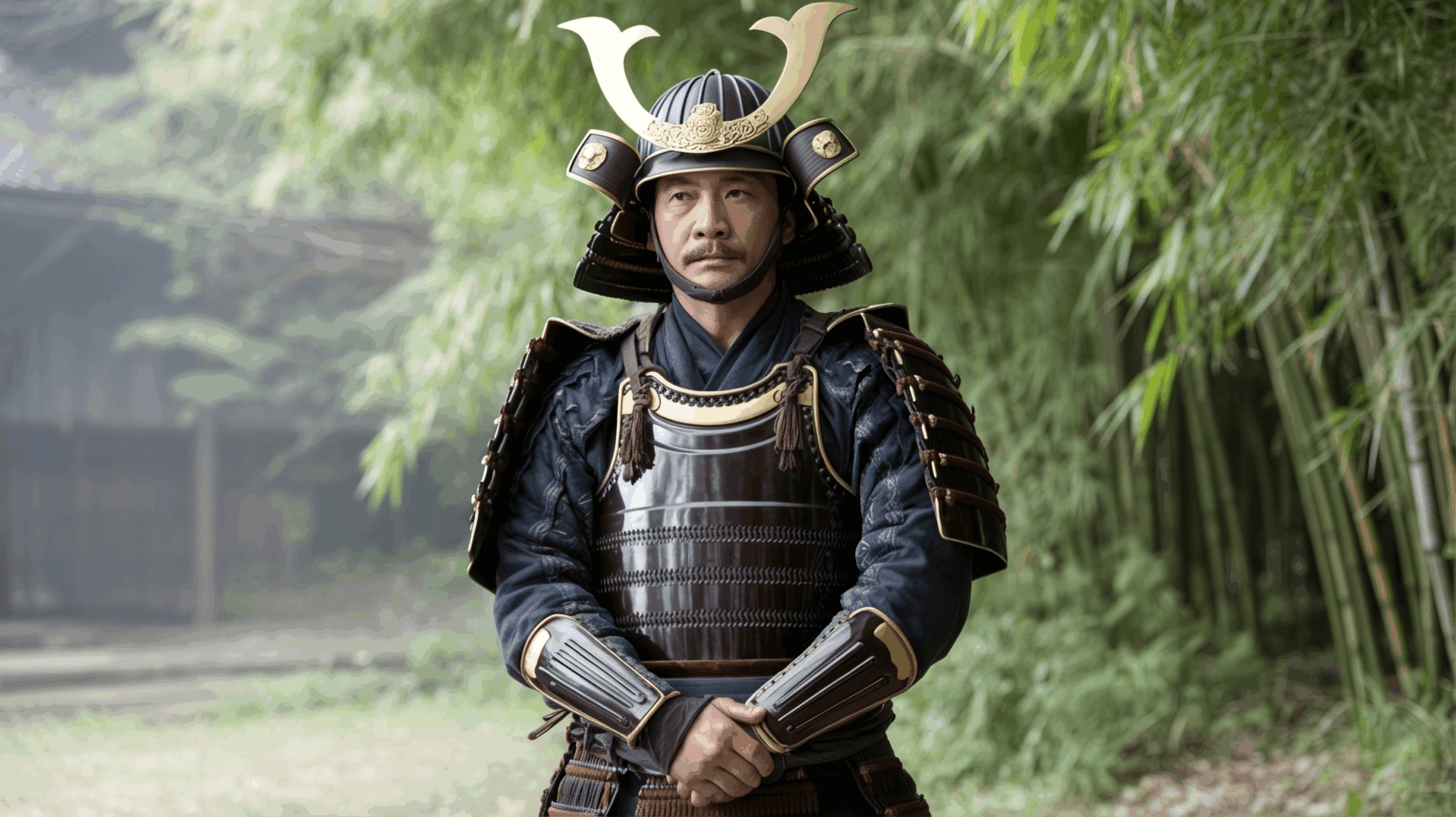
Miyamoto Musashi was Japan’s most celebrated swordsman, an undefeated duelist who fought over sixty battles and never lost. What made him exceptional was not just his technique. It was his mind.
His writings in The Book of Five Rings and Dokkōdō reveal a philosophy designed for warriors navigating the unpredictability of life-or-death situations. That same philosophy holds remarkable power for anyone trying to stay composed amid the chaos of modern life.
These five principles are not abstract ideals. They are a practical system for building the kind of calm that performs under pressure.
1. Accept Reality Without Resistance
Musashi believed that emotional resistance to what is actually happening creates weakness before a single blow is exchanged. The warrior who wishes the situation were different has already lost ground to someone who has accepted it.
“Accept everything just the way it is.” — Miyamoto Musashi
This principle is deceptively simple and relentlessly difficult to practice. When chaos arrives, the natural human instinct is to protest it, deny it, or freeze while hoping it resolves on its own.
Musashi rejected that instinct entirely. Clear-eyed acceptance of circumstances is not passivity. It is the first and fastest path to an effective response. Energy spent resisting reality is energy that can’t be used to navigate it. The samurai who accepted the terrain, the weather, and the opponent in front of him moved faster and thought more clearly than the one still unaccepting of conditions.
2. Do Not Let Emotion Control Your Mind
Musashi warned that emotional impulses distort perception and narrow the mind at the exact moment wide awareness is most needed. Anger, fear, and excitement are not neutral states. They are cognitive traps that pull attention inward and reduce the ability to read a situation accurately.
“Do not let yourself be guided by the feeling of lust or love.” — Miyamoto Musashi.
He meant this broadly. Any strong emotion that hijacks decision-making becomes a liability in chaotic conditions. The fighter consumed by rage telegraphs his next move. The investor consumed by fear sells at exactly the wrong moment. The leader consumed by anxiety makes decisions designed to relieve the anxiety rather than solve the problem.
A disciplined mind remains neutral, observant, and strategic even in intense circumstances. Musashi’s goal was not the suppression of emotion but the refusal to let it steer his actions. Feeling something and acting on it are two entirely separate choices, and the gap between them is where composure lives.
3. Keep the Mind Empty and Flexible
Musashi placed enormous emphasis on mental stillness and adaptability. A rigid mind is brittle under pressure. When a plan breaks down, a mind locked into fixed expectations panics rather than pivots, wasting critical seconds on frustration rather than on adjustment.
“The mind must always be in the state of ‘flowing.'” — Miyamoto Musashi
This flowing state is not confusion or indifference. It is a quality of readiness that allows instant adjustment without resistance. The mind that clings to how things were supposed to go can’t respond effectively to how things actually are.
Musashi trained himself to hold no attachment to a single strategy. If the situation changed, his response changed with it. In practical terms, this means letting go of the need to be right about your original plan and staying more committed to the outcome than to the method. That flexibility is what separates composure from rigidity when conditions turn unpredictable.
4. Maintain Broad Awareness
One of Musashi’s most important tactical teachings was the cultivation of wide perception under pressure. Panic collapses attention into tunnel vision. Composure keeps it open and panoramic, allowing it to take in the full picture rather than fixate on the most threatening detail.
“Observe what is unseen.” — Miyamoto Musashi
He trained warriors to see the full situation rather than fixate on the most obvious or most frightening element in front of them. In a duel, obsessing over the opponent’s sword hand means missing the shift in his feet or the angle of his shoulders.
This principle applies well beyond physical combat. In any chaotic environment, the person who can hold a wide view while others narrow theirs gains a decisive advantage. Broad awareness enables better decisions, earlier recognition of opportunities, and a steadier emotional state. Calmness and wide perception reinforce each other. One is nearly impossible to sustain without the other.
5. Train Until Calmness Becomes Automatic
Musashi was unambiguous about the true source of composure under pressure. It is not temperament. It is not personality. It is preparation refined through relentless practice until the right response becomes instinct rather than effort.
“You must understand that there is more than one path to the top of the mountain.” — Miyamoto Musashi.
That quote speaks to the flexibility of method, but the deeper principle running through all of his teachings remains consistent. Mastery through disciplined repetition builds the kind of confidence that fear can’t easily displace. When you have done something ten thousand times, uncertainty about it largely disappears.
When chaos arrives, an untrained mind scrambles for answers. A trained mind already has them stored as reflex. Musashi spent decades refining his skills not because he enjoyed discipline for its own sake, but because he understood that composure in the storm is built during the calm that precedes it. Preparation is the foundation on which every other principle rests.
Conclusion
Musashi’s philosophy is sometimes reduced to quotes on motivation posters, but the actual substance of his teaching is more demanding and more useful than that. He was describing a complete system for mental conditioning developed through decades of real combat and serious reflection.
Accept reality immediately. Control emotional impulses. Keep the mind flexible. Maintain wide awareness. Build skill through constant practice. Together, these five principles create what the samurai tradition called the immovable mind, a state of composure that doesn’t depend on circumstances being favorable.
The chaos Musashi faced was mortal danger. The chaos most people face today is financial, professional, and relational. The principles translate cleanly across that gap. Calmness is not a personality trait you either have or don’t. According to Musashi, it is a discipline that anyone willing to train for it can develop.