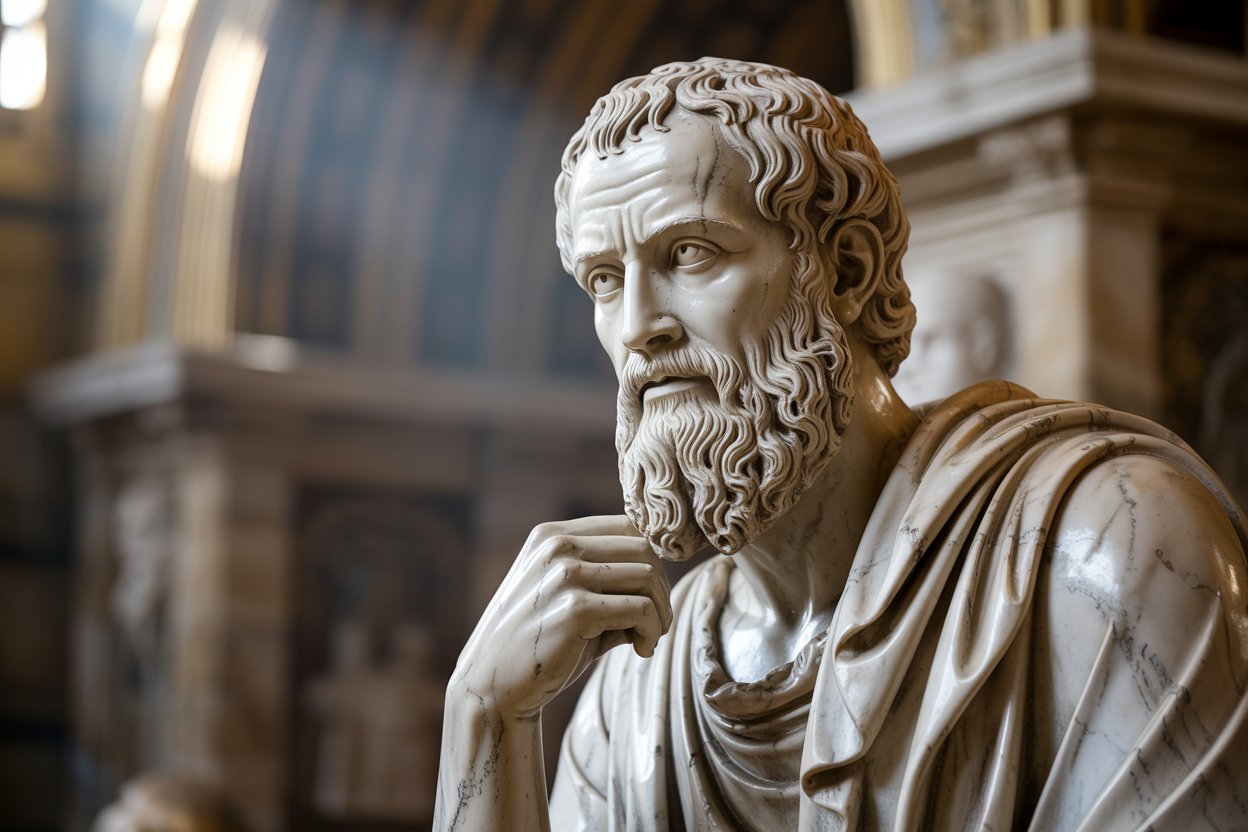
Modern culture has twisted Stoicism into something cold and indifferent. Social media posts celebrate “not caring” as a form of emotional armor or social detachment. This version of Stoicism misses the entire point.
The Stoic art of not caring is not about becoming emotionally numb or withdrawing from meaningful relationships; it is about cultivating a balanced perspective. It is about caring about what matters. It is about directing your emotional energy toward what you can control and refusing to surrender your peace to things beyond your influence.
This ancient philosophy offers a practical framework for navigating modern life without constant anxiety, frustration, or disappointment.
1. Emotional Sovereignt: What Stoic Not Caring Actually Means
Stoic philosophy teaches selective concern, not blanket apathy. The goal is emotional sovereignty, which means responding to life with reason instead of reflex. Epictetus established the foundation with a simple principle: some things are up to us, and some things are not.
Stoics care deeply about family, work, excellence, and virtue. What they refuse to do is hand their emotional stability to outcomes they can’t control. A Stoic parent loves their children but doesn’t manufacture anxiety over every possible future scenario. A Stoic professional pursues career success without tying their self-worth to promotions or recognition. The philosophy creates space between effort and outcome, between values and validation.
This mindset is consistently evident in the writings of Marcus Aurelius and Seneca. Both emphasized that you control your judgments and responses, rather than being controlled by external circumstances. Peace comes from mastering your internal world, not manipulating the external one.
2. The Foundation: Control What You Can Control
The Stoic framework divides reality into two categories. The first includes your thoughts, choices, effort, and character. The second includes everything else. This distinction may sound simple, but it transforms how you experience daily life.
Most people waste emotional energy on the second category. They stress over traffic, other people’s opinions, economic conditions, or past events. Stoicism redirects that energy toward areas where it produces actual results. You can’t control whether you get promoted, but you can control the quality of your work and your professional development. You can’t control whether people like you, but you can control how you treat others and live in accordance with your values.
Approval is an unstable currency. Stoics measure success internally, not socially. This shift eliminates the emotional volatility that comes from external validation. When your peace depends on factors you control, it becomes stable and sustainable.
3. Emotional Independence and Inner Freedom
Acceptance creates leverage while resistance creates suffering. This Stoic principle applies to everything from minor inconveniences to major setbacks. Complaining about reality doesn’t change reality. It just adds mental suffering to objective circumstances.
A Stoic approach means acknowledging what is without adding layers of emotional resistance. Your flight gets canceled. That’s a fact. The anger, frustration, and mental replay of how things should be different adds nothing productive. Acceptance doesn’t mean approval or passivity. It means dealing with actual circumstances instead of fighting with your imagination.
Detaching from outcomes requires practice. One Stoic technique involves negative visualization, which means mentally preparing for setbacks before they occur. This practice makes problems smaller when they arrive and strengthens gratitude for what remains. You don’t hope for bad outcomes. You prepare your mind to handle them without emotional trauma.
Voluntary discomfort serves a similar function. Stoics occasionally embrace discomfort to build resilience and reduce fear of loss. This might mean taking cold showers, fasting, or deliberately choosing harder, more challenging tasks. The practice builds psychological strength and reminds you that comfort is not the same as happiness.
4. Building Resilience Through Practice
Acting according to virtue instead of emotion creates consistency. Emotions fluctuate based on circumstances, energy levels, and immediate feelings. Values remain constant. A Stoic does what is right regardless of mood or temporary discomfort.
This principle applies to small daily choices and major life decisions. You honor commitments even when you don’t feel like it. You speak truthfully even when lies would be easier. You act with integrity even when no one is watching. These choices compound into character.
Reducing desires increases happiness faster than acquiring more possessions. This counterintuitive principle challenges modern consumer culture. Most people try to close the gap between what they have and what they want by getting more. Stoics close that gap by wanting less. The result is immediate and sustainable contentment.
This doesn’t mean rejecting ambition or success. It means refusing to tie your emotional state to the acquisition of things. You can pursue goals without needing them for happiness. You can enjoy possessions without depending on them for peace. The distinction matters.
5. Simplicity and Time Management
Simplifying your life creates clarity. Fewer possessions mean less maintenance and mental clutter. Fewer commitments mean more focus on what matters. Fewer distractions mean deeper engagement with meaningful activities. Stoicism embraces strategic elimination.
Time represents your most valuable and non-renewable asset. Stoics view wasted time as a moral failure, not a minor mistake. This perspective doesn’t mean constant productivity or eliminating rest. It means conscious choice about how you spend your finite days.
Seneca wrote extensively about time management and the human tendency to act as if life is infinite. People delay important conversations, postpone meaningful projects, and waste years on trivial pursuits. Then they wonder where the time went.
Memento mori, the practice of contemplating mortality, sharpens priorities and eliminates trivial worries. When you maintain awareness that your time is limited, you stop spending it on things that don’t matter. The practice is not morbid. It is clarifying.
Conclusion
The Stoic art of not caring is, in fact, the discipline of caring about the right things in the right way. When you stop attaching your peace to stuff you can’t control, happiness stops being fragile. You still engage fully with life, pursue meaningful goals, and build deep relationships. You refuse to let external circumstances compromise your emotional stability.
This ancient philosophy remains practical because it addresses timeless human problems. Anxiety comes from trying to control the uncontrollable. Disappointment comes from expectations tied to outcomes beyond your influence.
Frustration comes from resisting reality instead of working with it. Stoicism offers a different approach, one that fosters from the inside out rather than relying on external circumstances aligning perfectly. The result is not a life without challenges but a life where challenges don’t destroy your equilibrium.