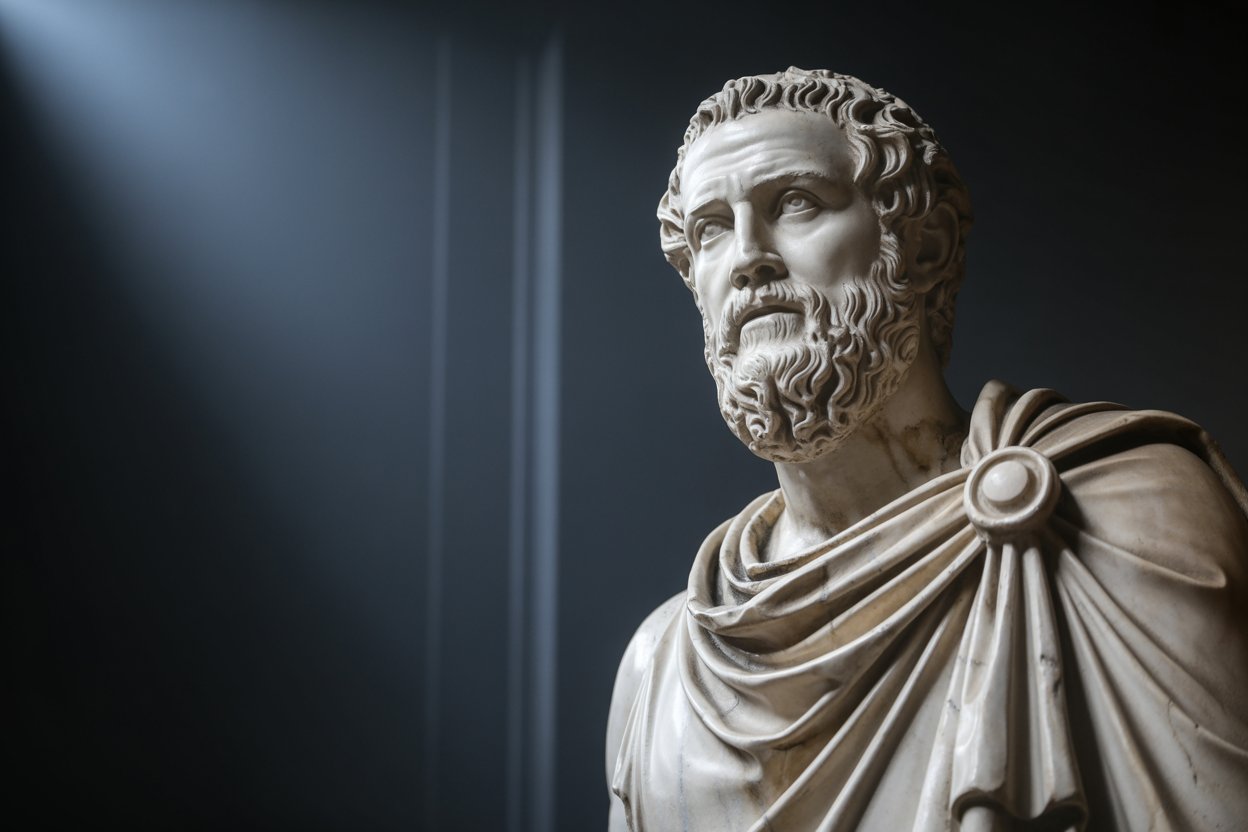
Self-discipline isn’t about punishment or deprivation. It’s about building the internal strength to act according to reason rather than impulse. The Stoics understood this centuries ago, and their principles remain the most practical framework for developing genuine self-control.
Taking care of yourself first doesn’t mean selfishness. It means preparing yourself to handle difficulty, resist outside control, and maintain clarity when pressure builds. The following five Stoic rules provide the foundation for that kind of strength.
1. Focus On What You Can Control
Stoic discipline starts with focus. Your time, effort, thoughts, and actions belong to you. These are the inputs you control entirely. Everything else exists outside your control, including outcomes, other people’s opinions, market conditions, and luck.
Most people waste enormous energy worrying about things they can’t influence. This drains the mental resources needed for actual progress. Stoic self-discipline requires drawing a hard line between what you control and what you don’t.
Marcus Aurelius practiced this distinction constantly. When he faced problems beyond his control, he focused solely on his response to them. That’s where his power was. The same applies to your career, finances, and relationships.
If you spend your day anxious about whether you’ll get promoted, you’ve given away your discipline. If you take that same day and improve your skills by delivering excellent work, you’ve stayed on track. The promotion might come or it might not, but your effort remains yours.
This principle protects you from emotional manipulation. When you stop needing specific outcomes, you become harder to control through fear or false promises. Your discipline stays intact because it’s not dependent on external validation.
2. Care for the Body to Strengthen the Mind
The Stoics treated physical health as necessary preparation for mental clarity. They didn’t view the body as separate from reason. Instead, they understood that poor sleep, excessive consumption, and physical neglect all reduce your capacity for self-discipline.
Seneca wrote about this extensively. He recognized that a weakened body weakens judgment. When you’re exhausted, malnourished, or unwell, you make worse decisions—your ability to resist impulse declines. Your discipline erodes. He wrote, “The body should be treated more rigorously, that it may not be disobedient to the mind.”
Taking care of your health isn’t self-indulgence. It’s tactical preparation. When difficulty arrives, a strong and healthy body helps you maintain composure. When stress builds, proper rest enables you to think clearly. When temptation appears, physical discipline makes mental discipline easier.
This doesn’t require obsessive optimization. The Stoic approach emphasizes consistency over perfection. Regular sleep, moderate eating, and basic physical activity provide the foundation. Your body becomes an asset rather than a liability.
The modern tendency to ignore physical health while pursuing career or financial goals backfires predictably. You can’t sustain high performance on poor sleep and neglect. Your discipline will fail at precisely the moment you need it most. Strengthening your body is strengthening your capacity to act rationally under pressure.
3. Practice Voluntary Discomfort
Stoic self-discipline grows through chosen difficulty. The ancient Stoics regularly practiced discomfort as a form of training. Seneca would sleep on hard surfaces. Musonius Rufus recommended simple food. Musonius Rufus, often called the “Roman Socrates,” viewed diet as a crucial training ground for the soul. He taught that mastering one’s appetite is the foundation of self-control. They deliberately exposed themselves to cold and restraint.
This wasn’t punishment or asceticism. It was preparation. If you can handle less, you’re not controlled by the fear of losing what you have. If you can tolerate discomfort, you’re not paralyzed by the threat of difficulty ahead.
Voluntary discomfort builds what psychologists now call stress inoculation. By choosing minor hardships, you develop tolerance for larger ones. Your discipline strengthens because you’ve proven to yourself that you can handle adversity.
In practical terms, this means occasionally doing without things you could afford and eating simply when you could eat luxuriously. Working when you could rest—saving when you could spend. These choices aren’t about deprivation. They’re about maintaining command over your impulses.
The person who can’t tolerate any discomfort becomes a lazy servant to comfort. Their discipline depends entirely on favorable conditions. When circumstances turn difficult, they have no experience handling hardship. Their self-control collapses because they’ve never tested it.
4. Do the Necessary Thing, Not the Pleasurable One
Stoic discipline means acting according to reason rather than impulse. The central question isn’t “What do I feel like doing?” but “What does this moment require of me?” This distinction separates disciplined action from reactive behavior.
Epictetus taught that every situation presents a required response. Your job is to identify what’s necessary and do it, regardless of whether it feels pleasant. This is duty before desire. It’s the foundation of reliable character.
Most people optimize for comfort and pleasure in the short term. They avoid difficult conversations, postpone hard work, and choose entertainment over effort. This pattern destroys self-discipline because it trains you to follow your impulses rather than your reason.
The disciplined approach reverses this. You identify what actually matters in each situation and act accordingly. If you need to have a challenging conversation, you have it. If you need to work late to finish something important, you work late. If you need to skip a late-night event to protect your health, you skip it.
This doesn’t mean ignoring pleasure entirely. It means pleasure can’t be the decision-making criterion. You act based on what’s necessary first, then enjoy pleasure when it aligns with reason. Your discipline comes from choosing correctly, not from choosing easily.
5. End Each Day with Self-Review
Seneca emphasized daily reflection as essential to Stoic practice. Discipline isn’t about perfection. It’s about honest feedback and continuous adjustment. Without self-review, you can’t identify where your discipline held and where it slipped.
The Stoic evening review is simple. You examine the day’s actions against your principles. Where did you act with strength? Where did you give in to impulse? Where did you waste energy on things beyond your control? What will you do differently tomorrow?
This practice builds self-awareness without self-criticism. You’re not judging yourself harshly. You’re gathering data about your patterns. Over time, this leads to genuine improvement because you’re working from accurate information about your behavior.
Most people avoid honest self-review because it’s uncomfortable. They’d rather believe they’re more disciplined than they actually are. This prevents growth because you can’t fix problems you won’t acknowledge. Stoic discipline requires looking directly at your failures and learning from them.
The key is consistency. Daily review creates compound improvement. Minor adjustments accumulate into significant changes. Your discipline strengthens gradually because you’re constantly correcting course based on real experience rather than vague intentions.
Conclusion
Stoic self-discipline isn’t about being harsh with yourself. It’s about being prepared. When you govern what you control, care for your body, practice discomfort, choose necessity over pleasure, and review your progress daily, you build genuine internal strength.
This preparation makes you more challenging to control, harder to break, and better equipped to handle pressure. You’re not dependent on favorable conditions or other people’s approval. Your discipline comes from within, which means it’s always available when you need it.
Taking care of yourself first, guided by these five principles, isn’t selfish. It’s the foundation for everything else you want to accomplish. Without self-discipline, your goals remain wishes. With it, you can sustain action regardless of circumstances.