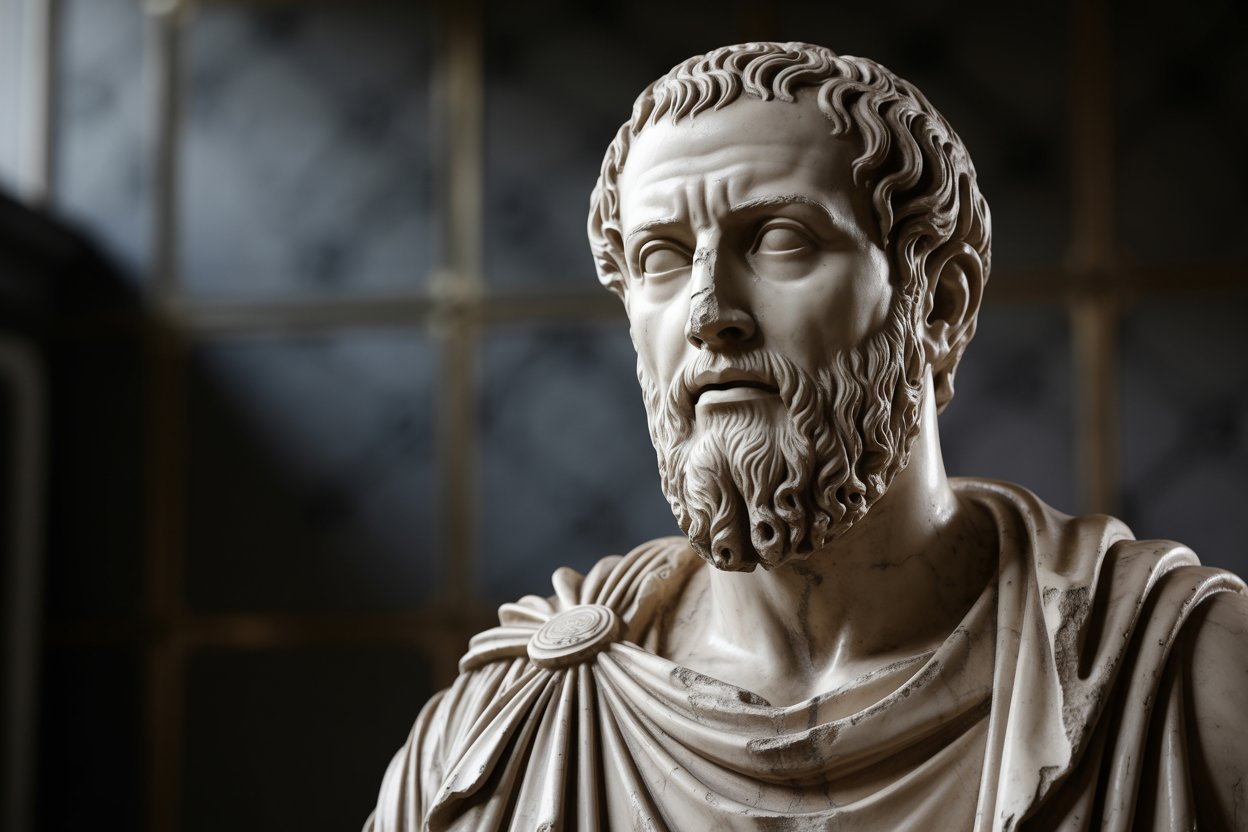
Your thoughts shape your life more than your circumstances ever will. The Stoics understood this truth centuries ago, teaching that events themselves hold no power over you. The real power lies in the judgments you form about those events.
Watching your thoughts is the foundational Stoic skill. It’s not about positive thinking or mental suppression. It’s about maintaining command over your inner world so external chaos can’t dictate your responses. Let’s look at how to always watch your thoughts using Stoic principles.
1. Separate Impressions From Reality
The Stoics called your first reactions “impressions.” These mental responses arise automatically when something happens. You see a critical email and immediately feel anger. You hear unexpected news, and anxiety floods in. These impressions aren’t the problem. The problem starts when you accept them as truth without examination.
Your power exists in the pause between impression and judgment. When an impression appears, you have a choice. You can agree with it instantly, or question it. Ask yourself: Is this interpretation based on fact, or is it based on my fears, assumptions, or past experiences?
This gap between stimulus and judgment is where discipline lives. Most people collapse this gap entirely, letting impressions become automatic beliefs. Stoics train themselves to expand this space, creating room for rational evaluation rather than reactive thinking.
2. Practice Constant Inner Dialogue
Marcus Aurelius, the Roman emperor and Stoic philosopher, treated his mind like a watchtower. He didn’t just notice his thoughts. He actively questioned them throughout the day.
When frustration arose, he asked, “Why am I bothered by this?” What underlying belief is being triggered? What judgment am I making that’s creating this emotional response?
This practice isn’t about suppressing thoughts. It’s about interrogating them. You become an investigator of your own mental processes.
The goal is to develop what the Stoics called “prosoche,” which means attention or vigilance. You maintain constant awareness of what’s happening in your mind. When a thought appears, you don’t automatically believe it. You examine it first.
3. Focus Only On What Is In Your Control
When a thought creates anxiety or stress, the Stoics had a simple filter. They asked, “Is this within my control?” If the answer is no, they recognized the thought as useless mental noise. Worrying about things outside your control doesn’t change outcomes. It only drains your mental energy and clouds your judgment.
This principle immediately exposes wasted thinking. You can’t control what others think about you, whether the economy crashes, or if your company restructures. You can control your effort, your responses, and your character.
Every anxious thought can pass through this filter. When you catch yourself mentally investing in something you can’t control, you redirect that energy toward what you can influence. This single practice eliminates most unnecessary suffering.
4. Label Thoughts, Don’t Merge With Them
The Stoics understood a truth that modern psychology has rediscovered. Thoughts are temporary mental events, not objective truths about reality.
When you think “This is terrible,” you’re not describing reality. You’re describing your current interpretation. The Stoics trained themselves to maintain this distinction.
Instead of thinking “This is bad,” they shifted to “I’m having the thought that this is bad.” This small linguistic change creates a powerful sense of psychological distance. You’re no longer merged with the thought. You’re observing it.
This practice restores objectivity. When you’re merged with a thought, it controls you. When you observe an idea, you control whether to accept it or dismiss it.
5. Replace Weak Judgments With Strong Principles
Stoics didn’t just observe their thoughts. They actively trained their minds by installing principles in advance. They developed rules that governed their thinking: Difficulty is training for your character. Discomfort isn’t the same as harm. Loss affects only external things, while your principles remain internal and protected.
When a thought appears that contradicts these principles, you have a standard to measure it against. You’re not comparing the thought to your emotions or immediate reactions. You’re comparing it to rational principles you’ve established during calm moments.
This approach prevents reactive thinking. You’ve already decided how you’ll interpret certain situations. When they occur, you don’t need to figure out your response in the heat of the moment. You already have a framework ready.
6. Review Your Mind Daily
Seneca, another prominent Stoic philosopher, recommended a nightly mental audit. Before sleep, review your day and examine your thinking.
What thoughts dominated your mind today? Where did you overreact to situations? Where did you maintain reason despite external pressure?
This practice builds long-term self-awareness. You start noticing patterns in your thinking. You see which situations consistently trigger problematic thoughts. You identify areas where your mental discipline is strong and areas where it needs work.
The review isn’t about judgment or guilt. It’s about data collection. You’re gathering information about your mental habits to improve them tomorrow.
Conclusion
The Stoic approach to watching thoughts starts with accepting a fundamental truth. You don’t control which thoughts appear in your mind. Your brain generates thoughts constantly, and many arise without your permission.
But you do control which thoughts you accept, reinforce, or reject. You control how long you entertain a thought. You control whether you treat a thought as fact or as one possible interpretation among many.
Mastery of life begins with mastery of mental attention. The Stoics didn’t achieve peace by controlling external events. They achieved it by maintaining their responses to those events. That control started with watching their thoughts and refusing to accept every mental impression as truth.
Your circumstances will always create impressions. The question is whether those impressions will control your judgments, or whether your principles will.