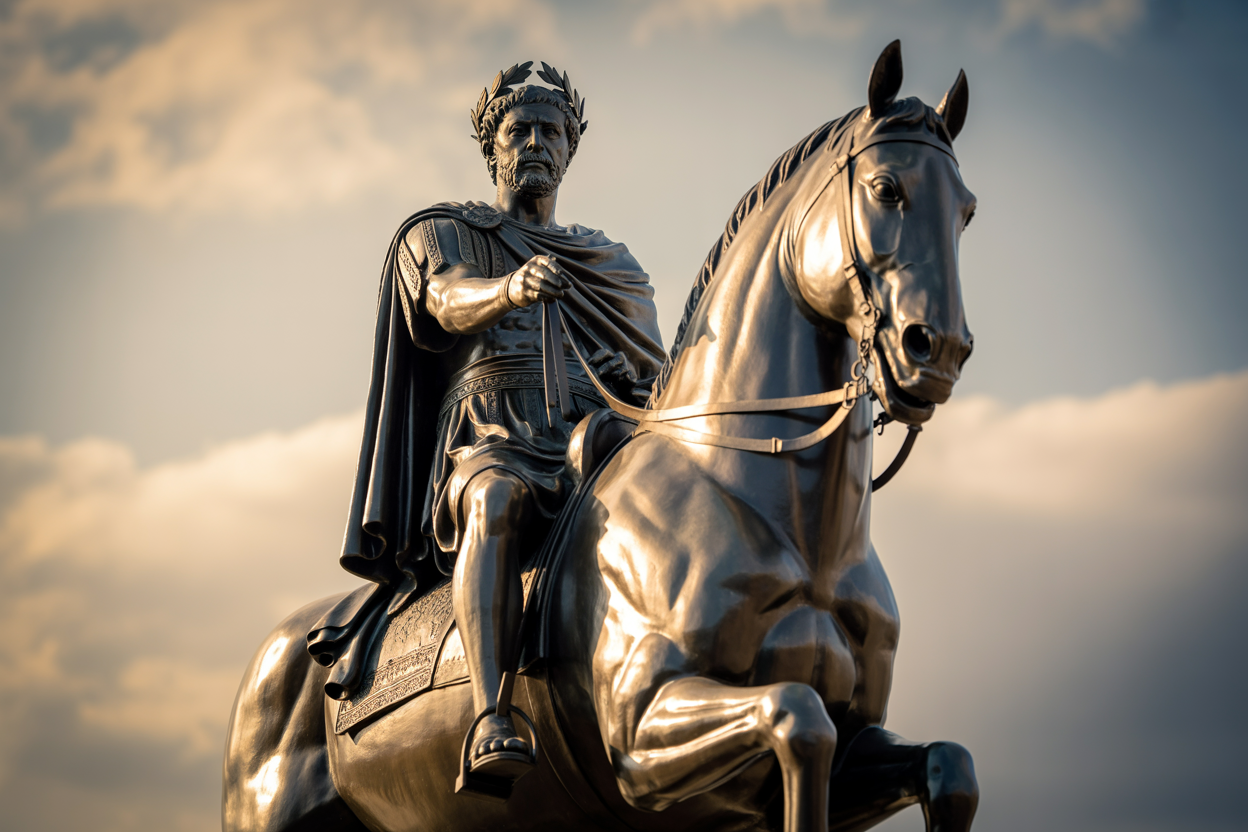
Marcus Aurelius ruled the Roman Empire for nearly two decades, yet he considered his most significant battle to be the one he fought within himself. His private journal, known today as Meditations, reveals a man who held himself to an extraordinary standard of self-discipline through Stoic philosophy.
These ten principles weren’t abstract theories for Marcus. They were daily practices that kept him grounded as he led an empire through war, plague, and political betrayal.
1. Control Your Morning Mind
Marcus wrote about the struggle of getting out of bed before dawn. He acknowledged the pull of warmth and comfort, then reminded himself that he was born for purpose, not for pleasure. The first battle of the day was won or lost before his feet hit the floor.
This wasn’t about punishing himself. It was about setting the tone for everything that followed. A disciplined morning created a disciplined day, and Marcus understood that yielding to comfort at sunrise made it easier to yield to every temptation that came after.
2. Master Your Perceptions
One of the most powerful Stoic practices Marcus lived by was stripping events of emotional judgment. He trained himself to see situations as they actually were, not as his fears or desires painted them. A setback was simply a setback, not a catastrophe.
This discipline of perception gave him enormous power over his inner life. When you can’t control what happens to you, influencing how you interpret it becomes the ultimate form of self-mastery. Marcus returned to this practice repeatedly because he knew that an undisciplined mind distorts reality.
3. Serve Something Greater Than Yourself
Marcus never viewed self-discipline as a personal achievement. He saw it as a requirement for fulfilling his duty to others. Every act of laziness or self-indulgence was a betrayal of the people who depended on him.
This outward focus is what separates Stoic discipline from mere willpower. When motivation comes from service rather than ego, it draws on a more bottomless well. Marcus pushed through exhaustion, illness, and frustration because the stakes were never just about him.
4. Accept What You Can’t Change
Marcus practiced a radical form of acceptance that went beyond mere tolerance. He wrote that the obstacle in the path becomes the path itself. Rather than wasting energy resisting what he couldn’t control, he channeled that energy into responding with virtue.
This acceptance was not passive. It was a fierce redirection of effort toward what actually mattered. By refusing to fight reality, Marcus freed himself to act with clarity and purpose within the conditions life presented.
5. Keep Death Close
Few thinkers have meditated on mortality as honestly as Marcus Aurelius. He wrote frequently about the brevity of life and how fame, wealth, and power dissolve into nothing. This wasn’t despair. It was fuel.
Awareness of death eliminated procrastination and pettiness. When you hold the reality of your limited time in front of you, trivial distractions lose their grip. Marcus used mortality as a lens, focusing only on what was worthy of his remaining days.
6. Guard Your Time Ruthlessly
Marcus warned against filling life with things that don’t matter. Gossip, spectacles, idle argument, and trivial entertainments were all enemies of a disciplined life. He saw time as the one resource that could never be recovered once spent.
This wasn’t about productivity in the modern sense. It was about alignment. Every hour spent on something meaningless was an hour stolen from something essential. Marcus measured the quality of his days by how closely his actions matched his principles.
7. Practice Voluntary Discomfort
As emperor, Marcus had access to every luxury the ancient world could offer. He deliberately chose simplicity instead. He ate plain food, wore simple clothing, and trained his body to endure hardship so that comfort could never become a chain that bound him.
This Stoic practice served a strategic purpose. A person who needs nothing can’t be controlled by anything. By regularly choosing the more challenging path, Marcus kept his willpower sharp and ensured that external circumstances could never dictate his inner state.
8. Return to Your Principles Daily
The existence of Meditations itself proves this rule. Marcus sat down regularly to write, reflect, and hold himself accountable. He corrected his own thinking, challenged his assumptions, and recommitted to his values on the page.
He understood that discipline is never a permanent achievement. It must be renewed constantly. The person who assumes their character is settled stops growing. Marcus treated every evening as an opportunity to examine whether his actions matched the man he intended to be.
9. Resist the Pull of Anger and Emotion
Marcus wrote extensively about the destructive nature of anger. He considered it a sign of weakness, not strength. When provoked, his practice was to pause, consider the other person’s perspective, and choose a rational response over an emotional reaction.
This took extraordinary discipline, especially for a man with absolute power. He could have indulged every impulse without consequence, yet he held himself to a higher standard. He knew that the person controlled by anger is not truly in command, regardless of the title they hold.
10. Judge Yourself by Your Actions, Not Your Intentions
Marcus firmly believed that good intentions without action were meaningless. He wrote that the soul takes on the color of its thoughts, meaning that repeated behaviors shape character far more than aspirations ever could.
This final rule tied all the others together. Discipline is not something you believe in. It is something you do. Marcus measured himself not by the ideals he admired but by the choices he made under pressure, fatigue, and temptation.
Conclusion
The thread running through all ten of these principles is that Marcus Aurelius viewed self-discipline as freedom, not restriction. The undisciplined mind is enslaved by impulse, comfort, and fear. The disciplined mind chooses its own course regardless of external circumstances.
What makes these rules endure nearly two thousand years later is their honesty. Marcus was not writing for an audience. He was writing to hold himself together mentally and emotionally during some of the most challenging years any leader has faced.
His struggle with discipline was real, daily, and never fully won. That is precisely what makes his example so powerful for anyone seeking to build a stronger, more intentional life.