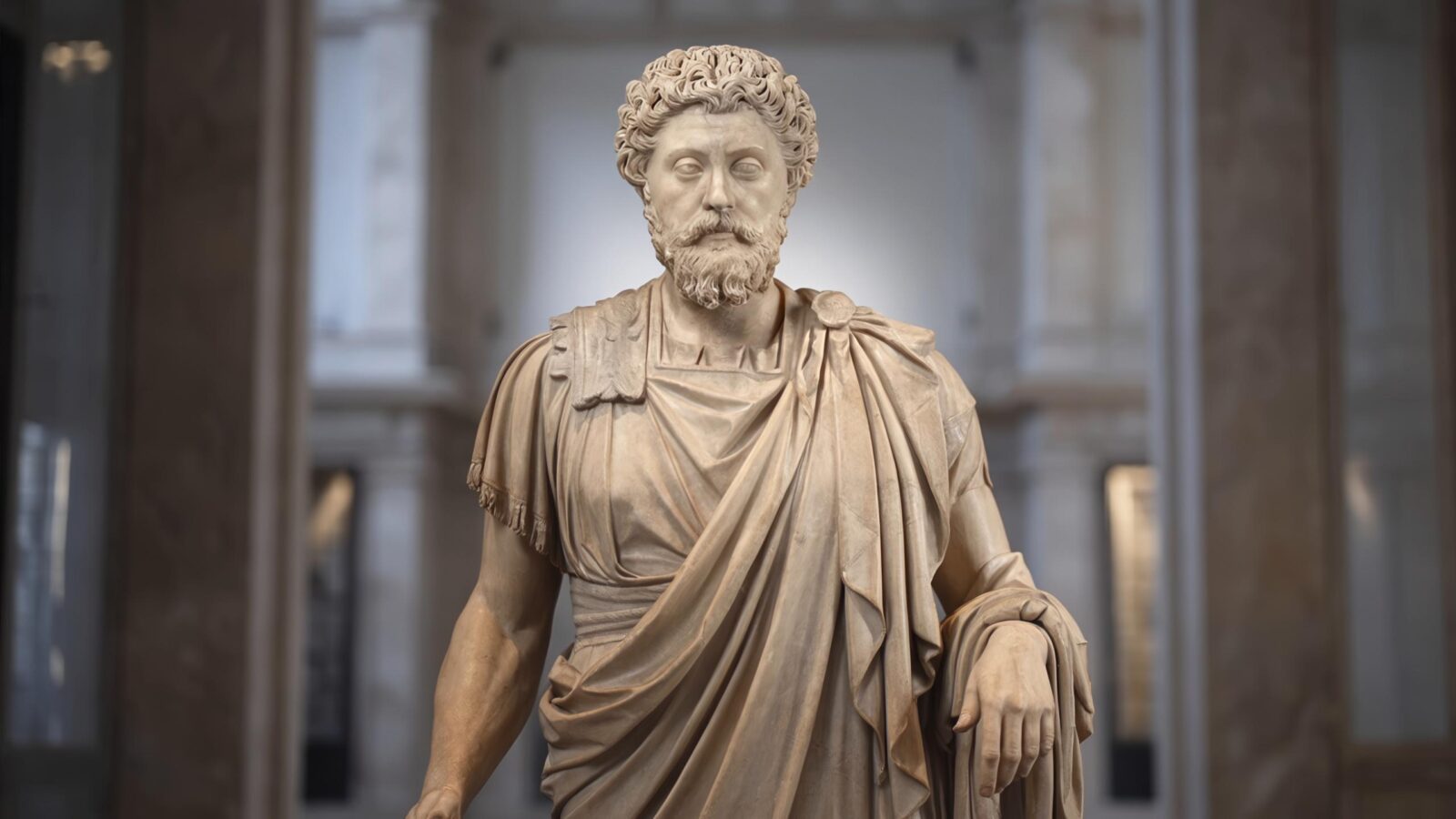
Psychological strength shows up when a person faces pressure without letting panic, resentment, or ego take over. It does not require an aggressive personality or a life free from mental pain. It requires a steady mind when disappointment, criticism, uncertainty, and loss arrive.
Marcus Aurelius ruled Rome through war, disease, political strain, and family grief. His private writings returned to the same practical concern: how should a person think and act when life becomes difficult? His Stoic approach still offers useful habits for anyone who wants more self-control and less inner mental turmoil.
1. They Put Their Energy Into The Choices They Control
“Things do not touch the soul, for they are external and remain immovable; but our perturbations come only from the opinion which is within.” – Marcus Aurelius, Meditations, Book IV, Section 3
Marcus Aurelius spent a great deal of time separating a person’s own conduct from everything outside their control. Your judgment, effort, words, and behavior are yours to direct. The weather, the past, another person’s attitude, and many outcomes are not.
A psychologically strong person sees this division clearly. They do not spend hours replaying an insult or wishing reality had followed their plan. They ask what can be done now, and then they do that work.
This changes how people deal with setbacks. A lost opportunity may call for better preparation next time. A business problem may require a difficult conversation, a new process, or a decision to cut losses before they worsen.
Their circle of control is often smaller than people want it to be. You may not control the result, but you control whether you prepared, acted honestly, and kept your head when the result went against you. That is enough to begin moving forward.
2. They Give Their Emotions Time to Settle
“Such as are thy habitual thoughts, such also will be the character of thy mind; for the soul is dyed by the thoughts.” – Marcus Aurelius, Meditations, Book V, Section 16
Marcus Aurelius knew that a person’s first reaction is often unreliable. Anger can make a minor slight feel like a serious attack. Fear can make a temporary setback look permanent.
Strong people still feel anger, fear, sadness, envy, and frustration. They avoid making decisions when those feelings are at their loudest. A pause protects them from sending the message, making the purchase, or starting the argument they will regret later.
That pause can be ordinary. It may mean going for a walk, writing down the facts, waiting until morning, or saying very little during a heated exchange. The point is to let judgment return before action begins.
This is not emotional suppression. Ignoring feelings can create another problem, especially when resentment builds beneath the surface. The better habit is to acknowledge what you feel, look at the situation plainly, and choose a response that aligns with your values.
3. They Stop Treating Discomfort as an Emergency
“That which is an obstacle on the road helps us on this road.” – Marcus Aurelius, Meditations, Book V, Section 20
Marcus Aurelius viewed difficulty as part of human life. Work becomes tiring, people disappoint each other, bodies age, and plans break apart. None of this proves that a person has been singled out for unfair treatment.
Psychologically strong people can tolerate discomfort without reaching for immediate relief. They can stay with a hard task, face an awkward conversation, and wait for a better opportunity. Those abilities matter because many bad choices are attempts to escape an unpleasant feeling as quickly as possible.
Overspending may provide a brief lift during boredom or stress. Quitting too soon can offer relief from frustration. Saying what another person wants to hear can spare someone from conflict for a day, but cause a larger problem later.
Discomfort often carries useful information. It may show that a boundary needs to be set, a skill needs more work, or a decision has real consequences. A mentally strong person can listen to that signal without allowing it to run the whole show.
4. They Take Responsibility Without Making Excuses: Their Identity
“No longer talk at all about the kind of man that a good man ought to be, but be such.” – Marcus Aurelius, Meditations, Book X, Section 16
Marcus Aurelius placed character above reputation because character is built through repeated choices. A person cannot select every circumstance they face. They can choose whether to act with honesty, fairness, discipline, and courage in that circumstance.
Psychologically strong people do not deny bad luck or other people’s mistakes. They know that unfair things happen and that some setbacks were never theirs to prevent. Still, they ask where their own decisions made the situation worse and what they should change next.
This habit can feel uncomfortable because blame is easy. Blame gives people someone to point at and protects their ego for a while. Responsibility asks more of a person, yet it also gives them a place to act.
Taking responsibility does not mean taking guilt for every problem around you. It means owning your preparation, conduct, boundaries, and response. A person who does that has a better chance of learning from mistakes instead of repeating them under a new excuse.
5. They Do the Right Thing When No One Is Applauding
“See how soon everything is forgotten, and look at the chaos of infinite time on each side of the present, and the emptiness of applause.” – Marcus Aurelius, Meditations, Book IV, Section 3
Marcus Aurelius warned himself against chasing praise and status. Public approval changes quickly because people are distracted, self-interested, and often wrong. A person who needs constant approval puts their peace of mind in other people’s hands.
Psychologically strong people can enjoy recognition without depending on it. They do careful work because it should be done well. They keep promises because their word matters, even when nobody would know if they had taken an easier route.
This kind of strength appears in quiet moments. It appears when someone pays what they owe, tells the truth when a lie would be convenient, or prepares fully for work that may bring little praise. These choices build self-respect over time.
Seeking approval can turn life into a performance. A person starts choosing what looks impressive rather than what is sound. Marcus Aurelius instead pushed himself toward duty, which gave his actions a firmer basis than popularity did.
Conclusion
“For nowhere either with more quiet or more freedom from trouble does a man retire than into his own soul.” – Marcus Aurelius, Meditations, Book IV, Section 3
Psychological strength is built through practice, usually in ordinary moments that do not look dramatic. It grows when people direct their attention toward their own choices, wait before reacting, tolerate discomfort, accept responsibility, and act with integrity.
Marcus Aurelius offers a clear path for handling a difficult life without becoming bitter or reckless. His ideas ask a person to govern their own mind first. That work does not remove hardship, though it changes how the person deals with it.