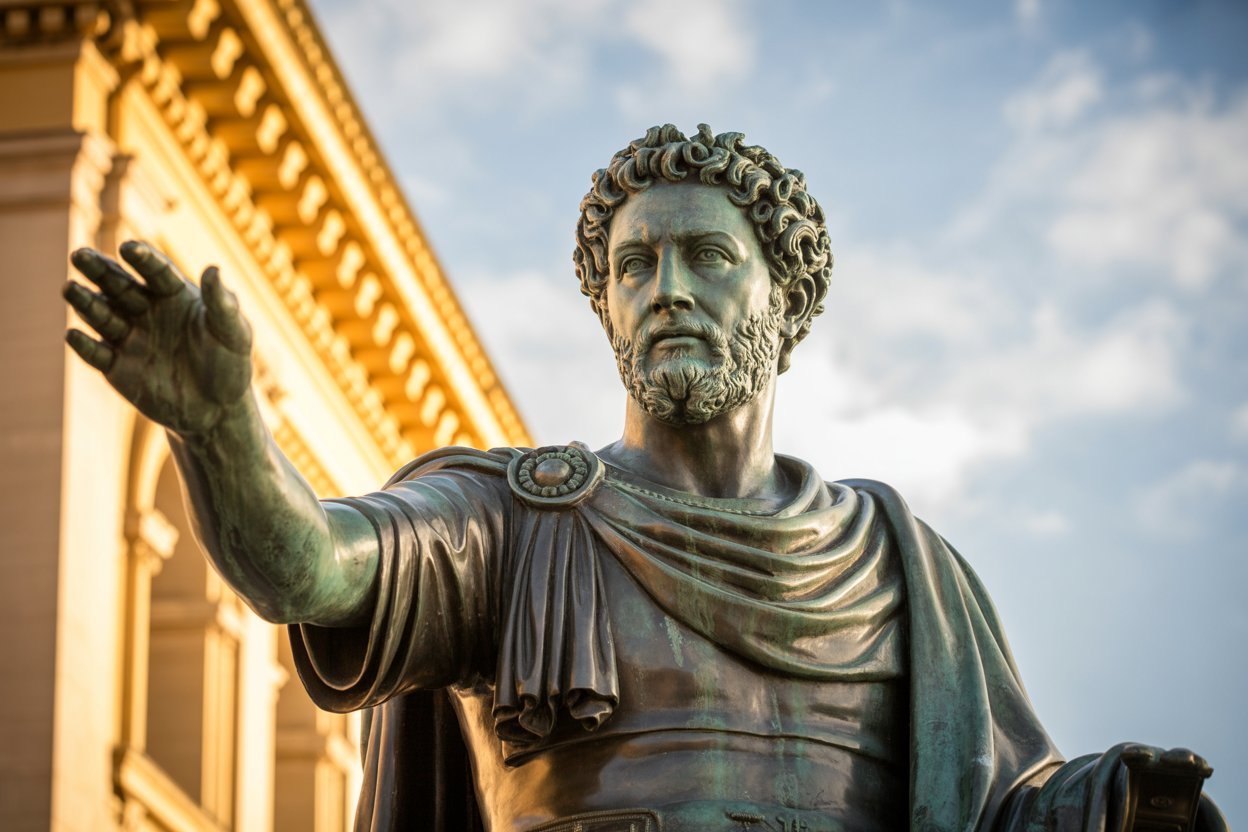
What would you do with unlimited power? If you could have anything you wanted—any pleasure, possession, or indulgence—would you act differently than most people in that situation? This isn’t just a hypothetical. Marcus Aurelius, the most powerful man in the ancient world, faced this very question.
What set him apart—and offers us timeless guidance—is how he chose to live: resisting temptation, he developed a practical philosophy for living well and facing adversity. His approach may be the key to navigating the biggest challenges of modern life.
1. The Emperor Who Chose Virtue Over Everything
Marcus Aurelius ruled the Roman Empire from 161 to 180 AD, commanding absolute authority over what the Romans considered the entire civilized world. The throne gave him access to every conceivable luxury and vice. History had shown that Roman emperors typically embraced hedonism as their birthright—wine, excess, and self-indulgence were practically job requirements for the position.
Yet Marcus chose a different path. For nearly two decades, he consistently selected virtue over pleasure. This wasn’t for appearances or politics. He made these choices privately, when no one would be the wiser.
The remarkable thing was choosing goodness when he had no obligation—no law, custom, or person could have stopped him. That level of self-discipline in total freedom reveals something extraordinary about his character.
2. The Private Journal That Changed Philosophy
Marcus Aurelius kept a journal, now known as Meditations. These private writings were honest reflections—his internal dialogue on how to live well and fulfill his duties as a human being.
The journal has no formal structure beyond loose sections. It reads just as it is: someone working through life’s complexities, trying to figure out the right way to think and act. Meditations is powerful for its authenticity—thoughts not meant to impress but showing Marcus wrestling with questions we all face: how to respond to difficult people, what truly matters, and how to handle setbacks.
That these private reflections became one of history’s most influential texts shows the universal nature of his struggles. His thoughts turned out to be what many needed to hear.
3. Living According to Nature’s Design
Marcus’s philosophy centered on living in harmony with nature. This meant more than appreciating nature; he saw nature as revealing truths about purpose. A tree grows tall, not for recognition, but because that’s its nature. An acorn becomes an oak because it’s fulfilling its design.
Marcus believed humans have a nature that calls us toward virtue and excellence. Our duty isn’t to accumulate wealth or honors—it’s to become the best version of ourselves. Anything less, to Marcus, was wasted potential—the greatest tragedy a person could face.
This philosophy guided his decisions. When facing choices, he’d ask: Does this make me more virtuous? Does it fulfill my potential? If not, the answer was clear, no matter how tempting the alternative.
4. The Reality of Difficult People
Marcus knew that dealing with difficult people is part of life. Wishing otherwise is like wanting roses without thorns—unrealistic. Bad behavior exists, and you will face it.
Marcus believed people do wrong out of ignorance, not intent. They may not understand the consequences of their actions. You can try to teach them the right way, but it isn’t always possible or practical.
So what do you do? Marcus looked inward. He reminded himself of his own faults—he, too, could act foolishly in different circumstances. Besides, can you be sure they’re wrong? Maybe you lack context. You may not see the whole picture behind someone’s apparent bad behavior toward you.
This perspective didn’t mean accepting harm, but rather prompted humility—recognizing that all are flawed and learning from them. We exist to help, not judge, each other.
5. Adversity as Opportunity
Marcus didn’t pray for bad things to go away. He knew difficulties would come. The only thing you control is your response: will you meet challenges with courage or collapse in self-pity?
He reframed adversity. Challenges became opportunities to demonstrate strength and cultivate virtue. If you can endure, endure. If not—if death comes—don’t complain, but face it with dignity.
This may sound harsh, but it’s freeing. Focus on what you can control: your response. This change empowers you to be an active agent, not a victim.
6. Possessions Without Attachment
Though wealthy, Marcus maintained a cautious attitude toward possessions. He appreciated what he had and felt gratitude, but avoided attachment that would make loss mentally or emotionally devastating.
Physical objects don’t make you more virtuous or help fulfill your potential. They’re nice to have but ultimately irrelevant to what matters. This detachment let Marcus enjoy his position without being defined by it. He could use resources without needing them, appreciate luxury but not depend on it for contentment.
Conclusion
Marcus Aurelius didn’t solve the universe scientifically, but he did solve how to live well in it. His philosophy shows that happiness isn’t found in achievements or possessions—it comes from living virtuously, fulfilling one’s potential, and maintaining integrity.
His approach applies to all. You don’t need to be an emperor to use these ideas. Facing tough coworkers, money worries, or setbacks, his framework is clear: control what you can, accept what you can’t, treat others with compassion, and always strive to be your best self.
That’s not just philosophy—it’s a practical solution to the human condition itself.