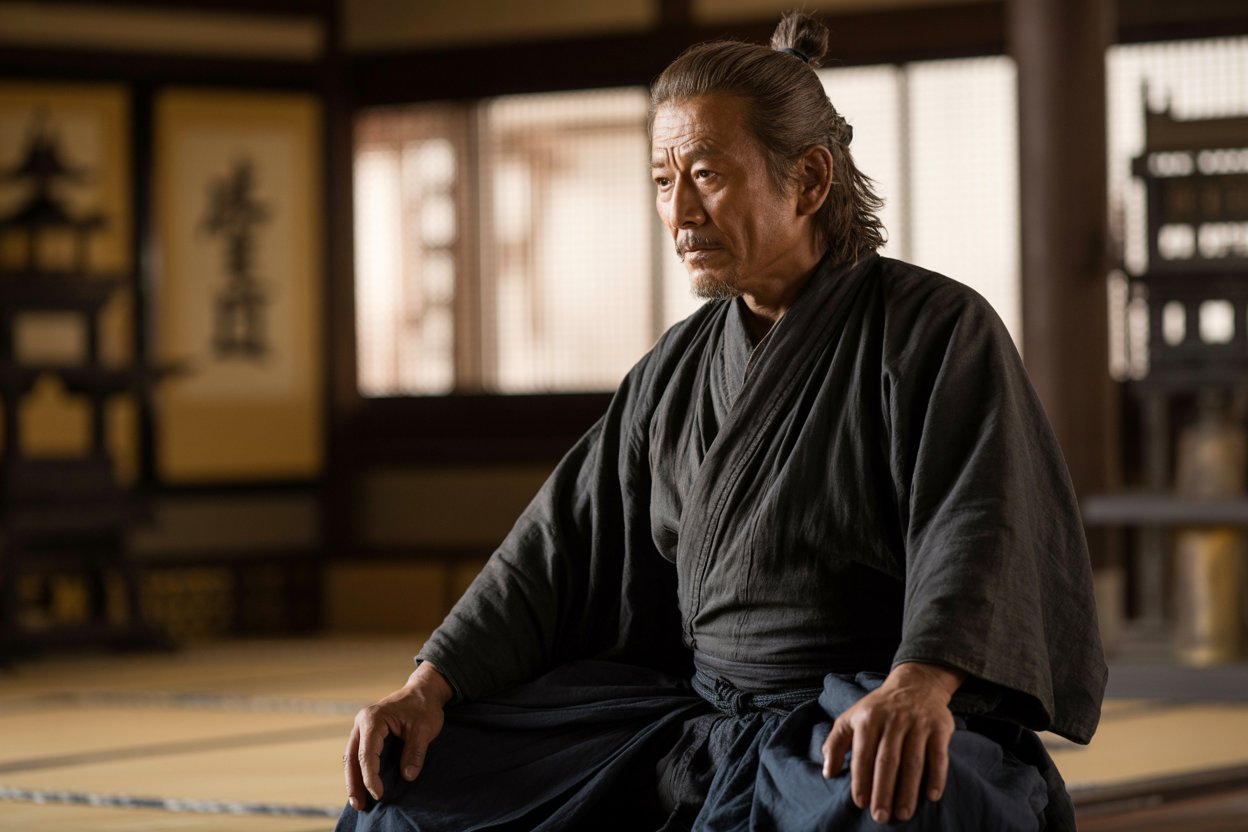
In the mountains of Japan during the winter of 1645, a legendary warrior sat alone in a cave putting the final touches on a manuscript that would transcend his era and influence strategists, entrepreneurs, and leaders for nearly four centuries.
Miyamoto Musashi had spent his life perfecting the art of the sword, engaging in over sixty duels without a single defeat. Still, his most incredible legacy wouldn’t be his combat record—it would be The Book of Five Rings, a philosophical treatise on strategy, discipline, and mastery that applies as powerfully to modern wealth-building and business competition as it did to 17th-century swordsmanship.
This isn’t just another ancient text gathering dust in academic circles; it’s a practical framework for anyone seeking to achieve excellence in competitive arenas where mental clarity, strategic thinking, and disciplined execution determine who wins and who loses.
The principles Musashi discovered on the battlefield offer timeless insights into human psychology, competitive advantage, and the path to mastery that remain as relevant today as they were when he first set brush to paper.
1. The Legend Behind the Warrior
Miyamoto Musashi stands as one of history’s most celebrated martial artists, not merely for his legendary combat prowess but for his profound philosophical insights into strategy, discipline, and mastery.
Born in late 16th-century Japan during a period of intense warfare and social transformation, Musashi emerged from obscurity to become an undefeated warrior whose reputation transcended the battlefield. His life embodied the samurai ideal of constant self-improvement; yet, his most significant contribution wasn’t his sword technique, but the wisdom he distilled into written form near the end of his life.
What makes Musashi particularly fascinating is that he achieved mastery through direct experience rather than inherited privilege or formal training under renowned masters.
He forged his own path, developing unique two-sword techniques and an approach to combat that emphasized adaptability over rigid adherence to any single school of thought. This independent spirit and relentless pursuit of excellence through practice would later form the foundation of his written teachings.
2. The Book That Transcends Combat
The Book of Five Rings, also known as “Go Rin No Sho” in Japanese, represents Musashi’s attempt to codify decades of combat experience and strategic thinking into a comprehensive guide for warriors.
Written in a cave during the final years of his life, the text goes far beyond simple fighting techniques. Musashi crafted a philosophical framework that addresses the mental, physical, and spiritual dimensions of conflict and competition.
The book’s structure divides his teachings into five “scrolls” or books, each named after a natural element that symbolizes different aspects of strategy and mindset. This wasn’t arbitrary symbolism but a deliberate pedagogical approach rooted in Buddhist and Shinto traditions that would have been familiar to his Japanese audience.
Each element represents a distinct phase of development and understanding that builds upon the previous ones, creating a holistic system for approaching any competitive endeavor.
3. The Ground of All Strategy
The Ground Book, representing the element of Earth, establishes the foundational principles that support everything else. Musashi emphasizes that a successful strategy requires a thorough understanding of the basics before attempting advanced techniques. He stresses the importance of studying multiple disciplines, avoiding narrow specialization, and developing a broad perspective on your chosen field.
This section introduces Musashi’s central philosophy: that the principles governing individual combat apply equally to larger conflicts, business competition, and life’s challenges. He argues that true mastery comes from understanding underlying patterns rather than memorizing countless specific techniques. The warrior who grasps fundamental principles can adapt to any situation, while those who only learn rigid forms will falter when faced with the unexpected.
4. Flowing Like Water
The Water Book addresses the practical application of strategy through the metaphor of water’s adaptability. Water takes the shape of whatever container holds it, flows around obstacles, and can be gentle or devastating depending on circumstances.
Musashi employs this imagery to illustrate how warriors must remain adaptable in their approach, never becoming overly attached to a single method or mindset.
This section contains detailed instructions on maintaining proper physical and mental posture during conflict. Musashi emphasizes that your external stance reflects your internal state, and both must remain balanced and centered.
He warns against becoming too tense or too relaxed, too aggressive or too passive. The goal is cultivating a state of heightened awareness combined with emotional equanimity, allowing you to respond appropriately to whatever unfolds.
5. The Intensity of Fire
The Fire Book shifts focus to the heat of actual combat, exploring tactics and timing when facing opponents directly. Musashi discusses reading your adversary’s intentions, creating and exploiting openings, and maintaining initiative.
He emphasizes that battles are won or lost based on both psychological factors and technical skill. The warrior who can control the rhythm of conflict holds a decisive advantage.
This section reveals Musashi’s understanding that combat is fundamentally about imposing your will and disrupting your opponent’s plans. He advocates for aggressive engagement when opportunities present themselves, arguing that hesitation in critical moments leads to defeat.
However, this aggression must be calculated and purposeful rather than reckless. The fire that consumes your enemies should be controlled and directed, not a wild blaze that destroys everything, including yourself.
6. Understanding Other Schools
The Wind Book explores various martial traditions and strategic approaches. Musashi critiques various schools not to disparage them but to help students understand the limitations inherent in any single methodology.
He argues that studying other approaches sharpens your own understanding and prevents the narrow thinking that develops when you only know one system. This comparative analysis reveals Musashi’s intellectual rigor and his conviction that true mastery requires a comprehensive understanding of the whole landscape of one’s discipline.
You can’t claim expertise if you’ve never seriously examined alternative viewpoints or tested your methods against different systems. This section encourages healthy skepticism toward dogma while respecting the genuine insights that other traditions offer.
7. The Emptiness Beyond Technique
The Void Book, also translated as the Book of Emptiness, represents the highest level of understanding. Musashi speaks of a state beyond conscious technique where action flows naturally without deliberate thought.
This isn’t mysticism but rather the mastery that emerges when fundamentals become so deeply ingrained that they operate unconsciously, freeing your mind to perceive and respond with perfect clarity.
This final section is deliberately brief and somewhat enigmatic because Musashi recognized that such understanding can’t be fully conveyed through words. It must be experienced directly through years of dedicated practice. The void represents both the starting point and the destination of mastery, an empty mind that paradoxically contains all possibilities.
Conclusion
Musashi’s Book of Five Rings endures because its insights extend far beyond the realm of swordsmanship. The principles he articulated apply to any competitive arena where strategy, discipline, and mental clarity are key determinants of outcomes.
Whether you’re building wealth, developing professional skills, or navigating complex decisions, Musashi’s framework offers guidance: master fundamentals, remain adaptable, act decisively when opportunities arise, study your competition, and ultimately transcend conscious technique through relentless practice.
His life demonstrated that mastery isn’t a destination but a continuous journey of refinement and growth, a lesson that resonates across centuries and cultures.