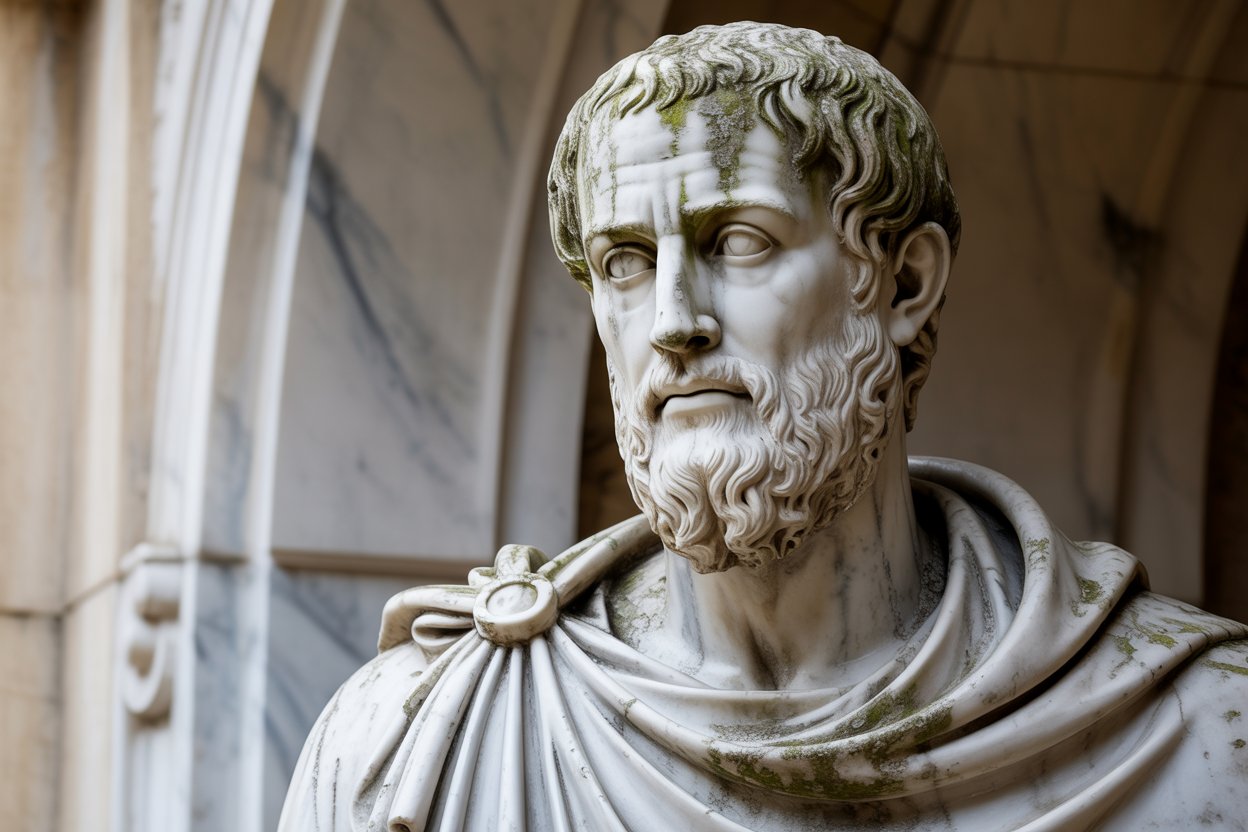
The ancient Stoics understood something that most men discover only after decades of struggle: peace comes not from controlling life’s circumstances, but from mastering one’s response to them. Marcus Aurelius, Epictetus, and Seneca lived centuries ago, yet their wisdom remains as relevant today as it was then.
These ten Stoic principles can save you years of frustration and regret—if you learn them now rather than later.
1. You Control Only Your Response, Not Your Circumstances
“You have power over your mind—not outside events. Realize this, and you will find strength.” — Marcus Aurelius.
Most men spend decades fighting reality, believing they can control their boss’s behavior, the economy, or their partner’s mood. The Stoics understood what modern psychology confirms: trying to control external circumstances creates suffering.
What you can control is remarkably small—your thoughts, actions, and character. Yet this small circle contains all the power you need. When you stop wasting energy on things beyond your influence and focus entirely on your response, you reclaim your life. The man who grasps this in his twenties saves himself from the bitterness that haunts those who learn it in their fifties.
2. Your Reactions Create Your Reality More Than Events Do
“It’s not what happens to you, but how you react to it that matters.” — Epictetus.
The job loss isn’t the problem—your interpretation of it is. Two men can experience identical setbacks, yet one emerges stronger while the other crumbles. The difference lies not in what happened but in the story each tells himself.
Epictetus taught that we suffer not from events but from our judgments about them. When you lose a promotion, you can view it as confirmation of inadequacy or valuable information about where to improve. The facts are the same, but the meanings you assign create entirely different realities.
3. Anxiety Lives in Imagined Futures, Not Present Moments
“We suffer more often in imagination than in reality.” — Seneca.
You’ve spent countless hours worrying about disasters that never materialized. The presentation you dreaded went fine. The difficult conversation wasn’t as bad as you imagined. Seneca observed that we torture ourselves with fictional scenarios far more painful than anything we actually experience.
The Stoics practiced staying present because anxiety is always about the future, while your actual problems exist only in the now. When you’re truly present, most mental suffering dissolves.
4. Obstacles Reveal Opportunities When You Stop Resisting Them
“The impediment to action advances action. What stands in the way becomes the way.” — Marcus Aurelius.
Your most significant breakthroughs will come disguised as your worst problems. The rejection that forced you to start your own business. The failure that taught you what actually matters. Most men waste years resisting obstacles, never realizing that resistance itself is the real problem.
The Stoics practiced seeing every difficulty as raw material for growth. When you stop asking “Why is this happening to me?” and start asking “What can I do with this?” you transform obstacles into advantages.
5. Gratitude for What You Have Beats Longing for What You Don’t
“He is a wise man who does not grieve for the things which he has not, but rejoices for those which he has.” — Epictetus.
You’ll spend years chasing the next milestone, believing happiness waits there. Then you’ll achieve it and discover the satisfaction lasts about a week before you’re chasing again. The Stoics understood that desire is insatiable—there’s always something more to want.
Epictetus taught that wealth isn’t about having everything you want, but about enjoying what you have. This doesn’t mean abandoning ambition, but fulfillment comes from appreciation, not acquisition.
6. Every Morning Is a Gift Most Take for Granted
“When you arise in the morning, think of what a precious privilege it is to be alive—to breathe, to think, to enjoy, to love.” — Marcus Aurelius.
The Stoics started each day with radical gratitude for existence itself. Not gratitude for circumstances being perfect, but for the fundamental miracle of being alive and aware. Marcus Aurelius, the most powerful man in the ancient world, still reminded himself each morning of this basic privilege.
Most men sleepwalk through years, treating consciousness as an obligation rather than an opportunity. When you truly grasp the temporary nature of life, every morning becomes remarkable.
7. Time Is Your Scarcest Resource, and You’re Wasting It
“Life is long if you know how to use it.” — Seneca.
Seneca challenged the complaint that life is short, arguing that life is actually long enough if you don’t squander it. Most men spend time as if it’s infinite, saying yes to every request, scrolling through feeds, attending pointless meetings.
Then they wake up at fifty, wondering where the decades went. The Stoics practiced treating time as sacred because it cannot be created. Every hour spent on something unimportant is an hour stolen from what matters.
8. Holding Grudges Hurts You More Than Them
“The best revenge is to be unlike him who performed the injury.” — Marcus Aurelius.
You’re still angry about something that happened years ago. The person who wronged you has moved on, while you’re mentally rehearsing confrontations and harboring resentment. The Stoics understood that carrying hatred is like drinking poison and expecting the other person to die.
Your anger doesn’t punish them—it punishes you. Marcus Aurelius practiced responding to injury by becoming better than those who harmed him. The past imprisons the man who can’t forgive.
9. Material Success Without Character Is Failure
“Wealth consists not in having great possessions, but in having few wants.” — Epictetus.
You’ll chase money, status, and possessions, thinking they’ll make you complete. Then you’ll get them and feel empty. The Stoics taught that true wealth is wanting less, not having more. Character, wisdom, and virtue are the only possessions that can’t be taken from you.
Men often sacrifice their integrity for promotions, neglect their families for career advancement, and compromise their values for financial gain. Then they reach the top and discover they climbed the wrong mountain.
10. Remembering Death Makes You Live Better
“You could leave life right now. Let that determine what you do and say and think.” — Marcus Aurelius.
You live as if you have unlimited time, postponing meaningful conversations, delaying dreams, and taking people for granted. The Stoics practiced memento mori—contemplating death daily—not to become morbid but to become alive.
When you truly internalize that this day might be your last, you stop tolerating toxic relationships, quit jobs you hate, and tell people you love them. Marcus Aurelius constantly reminded himself that death could come at any moment.
This awareness didn’t paralyze him—it liberated him to focus on what mattered. Most men avoid thinking about mortality until a health scare or loss forces them to confront it. By then, they’ve wasted years on trivial concerns.
Conclusion
The Stoics weren’t pessimists—they were realists who found profound peace by accepting what they couldn’t change and taking full responsibility for what they could. These lessons aren’t theoretical philosophy but practical wisdom earned through experience.
You can learn them now through study and practice, or later through pain and regret. The man who embraces these principles early builds a foundation that withstands any storm.
The man who learns them late spends years rebuilding what he could have protected from the start. The question isn’t whether these lessons are the right ones—it’s whether you’ll learn them in time to benefit from them.