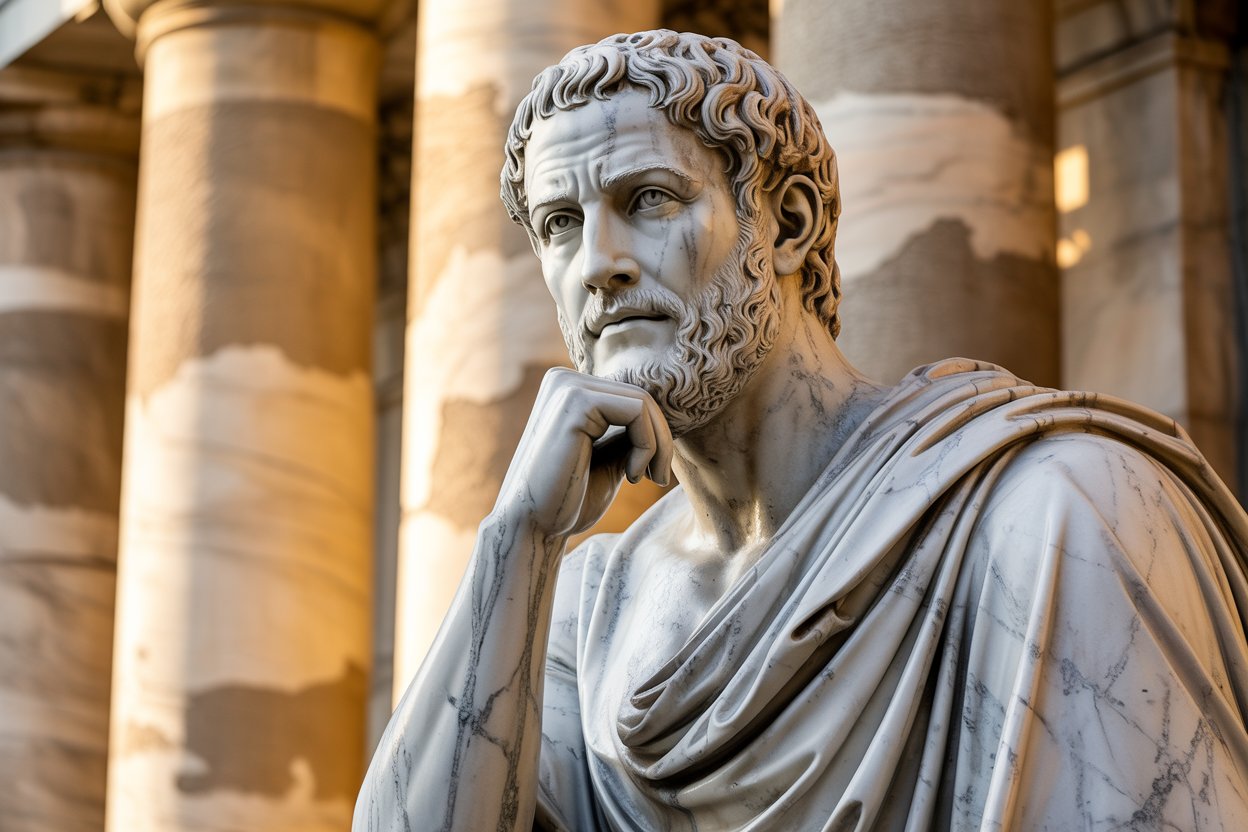
The ancient Stoics discovered something remarkable: true peace of mind doesn’t come from controlling external circumstances, but from mastering your internal responses to them. This philosophy, developed over two thousand years ago by thinkers such as Marcus Aurelius, Epictetus, and Seneca, offers practical wisdom that remains remarkably relevant to modern life.
Unlike abstract philosophies that offer little practical guidance, Stoicism provides concrete principles you can apply immediately to reduce anxiety, build resilience, and find genuine contentment regardless of external conditions. What follows are twelve foundational Stoic principles that create an unshakeable inner fortress.
1. The Dichotomy of Control
The cornerstone of Stoic philosophy rests on a simple distinction: some things are within your control, while others aren’t. Epictetus taught that one has complete control over one’s judgments, intentions, actions, and reactions.
Everything else falls outside your control—other people’s opinions, your reputation, health outcomes, death itself, and the past. When you direct all your energy toward what you can actually influence and fully accept what you can’t, you eliminate the vast majority of unnecessary suffering.
2. Live in Accordance with Nature
The Stoics believed that human flourishing requires accepting reality as it actually exists, rather than how one wishes it to be. The universe operates according to specific patterns: impermanence, interdependence, and unpredictability.
Living in accordance with nature means recognizing your role as a rational, social being and acting consistently with that nature. It means accepting that change is inevitable, that all things eventually pass, and that resisting these realities only compounds your difficulties.
3. Virtue Is the Only True Good
The Stoics made a radical claim: wisdom, justice, courage, and self-discipline are the only things that are genuinely good. Everything else—money, fame, pleasure, and even health—they classified as “preferred indifferents.”
This doesn’t mean these things have no value, but rather that they aren’t essential to living a good life. External circumstances may be pleasant or unpleasant, but they can’t make you a better or worse person unless you allow them to influence your character.
4. Amor Fati – Love of Fate
Most people aim to accept difficult circumstances as they are. The Stoics went further, advocating that you should actually love whatever happens to you.
Amor fati means embracing every obstacle as an opportunity to practice virtue. Marcus Aurelius expressed this beautifully: “The impediment to action advances action. What stands in the way becomes the way.” This completely transforms your relationship with adversity.
5. Premeditatio Malorum
This practice involves regularly visualizing worst-case scenarios as a form of preparation. By mentally rehearsing potential losses, such as your job, health, or loved ones, you reduce their emotional impact on you and prepare rational responses in advance.
This practice also creates profound gratitude for what you currently have. The goal isn’t to live in fear, but to eliminate the shock and paralysis that often accompany unexpected adversity.
6. Memento Mori – Keep Death in Mind
The Stoics advocated keeping mortality at the forefront of awareness to clarify priorities and eliminate procrastination. Marcus Aurelius wrote, “You could leave life right now. Let that determine what you do and say and think.”
When you genuinely internalize that your time is limited and uncertain, trivial concerns dissolve naturally. You stop postponing important conversations, meaningful work, and genuine connections.
7. View from Above
This exercise involves zooming out to see yourself from a cosmic perspective, as a speck on a pale blue dot floating in an incomprehensibly vast universe. From this vantage point, petty worries, ego concerns, and personal grudges shrink to their actual size.
The slight that offended you, the embarrassment that haunts you—all become absurdly small when viewed against the backdrop of infinite space and time. This perspective helps you distinguish between what truly matters and what doesn’t.
8. Take No One and Nothing for Granted
The Stoics practiced voluntary discomfort and deliberate gratitude to maintain appreciation for what they had. Occasional fasting, sleeping on hard surfaces, or mentally rehearsing the loss of loved ones prevents you from becoming entitled or complacent.
When you periodically experience or imagine deprivation, you develop visceral appreciation for ordinary comforts and blessings. This practice helps you become more present and grateful for the people and circumstances in your life at this moment.
9. Judge No One (Including Yourself) Harshly
The Stoics taught that most people are doing their best with the knowledge and circumstances they have available to them. When someone misbehaves, it’s typically due to ignorance, fear, or pain, rather than malice.
Replacing harsh judgment with understanding doesn’t mean excusing harmful behavior, but it does mean recognizing the common humanity that drives it. This principle extends to yourself as well—be gentle with your own mistakes, viewing them as learning opportunities rather than evidence of fundamental inadequacy.
10. Turn Every Impression Around Immediately
When something upsetting happens, the Stoics trained themselves to pause and examine their reaction immediately. Ask yourself whether the situation is actually within your control, what virtue this circumstance allows you to practice, and how a wise person would respond.
This rapid reframing prevents emotional reactions from solidifying into entrenched distress. Every difficult moment becomes a training ground for developing patience, courage, forgiveness, or wisdom.
11. Evening Reflection
Marcus Aurelius maintained a daily journaling practice that built exceptional self-awareness. Each night, ask yourself what you did well, where you fell short, and how you can improve tomorrow.
This honest self-examination, free from harsh judgment, creates a feedback loop that accelerates personal development. You become aware of patterns in your behavior and gradually refine your responses to life’s challenges.
12. Act with Reserved Clause
The Stoics pursued their goals with full effort while always adding the mental caveat “if nothing prevents me” or “fate permitting.” This practice allows you to plan and work diligently without becoming brittle when circumstances inevitably disrupt your plans.
You maintain the flexibility to adapt when reality doesn’t cooperate with your intentions. The reserved clause doesn’t reduce your commitment to your goals, but it prevents you from becoming devastated when obstacles arise.
Conclusion
These twelve Stoic principles form a complete framework for developing what the ancient philosophers called eudaimonia—a flourishing life characterized by virtue, wisdom, and tranquility. The power of these teachings lies not in merely understanding them intellectually, but in practicing them consistently until they become automatic responses.
When you genuinely internalize these principles, you build an inner citadel that remains unshaken regardless of external turbulence. The question isn’t whether these principles work, but whether you’re willing to put in the deliberate practice required to make them the foundation of your daily life.