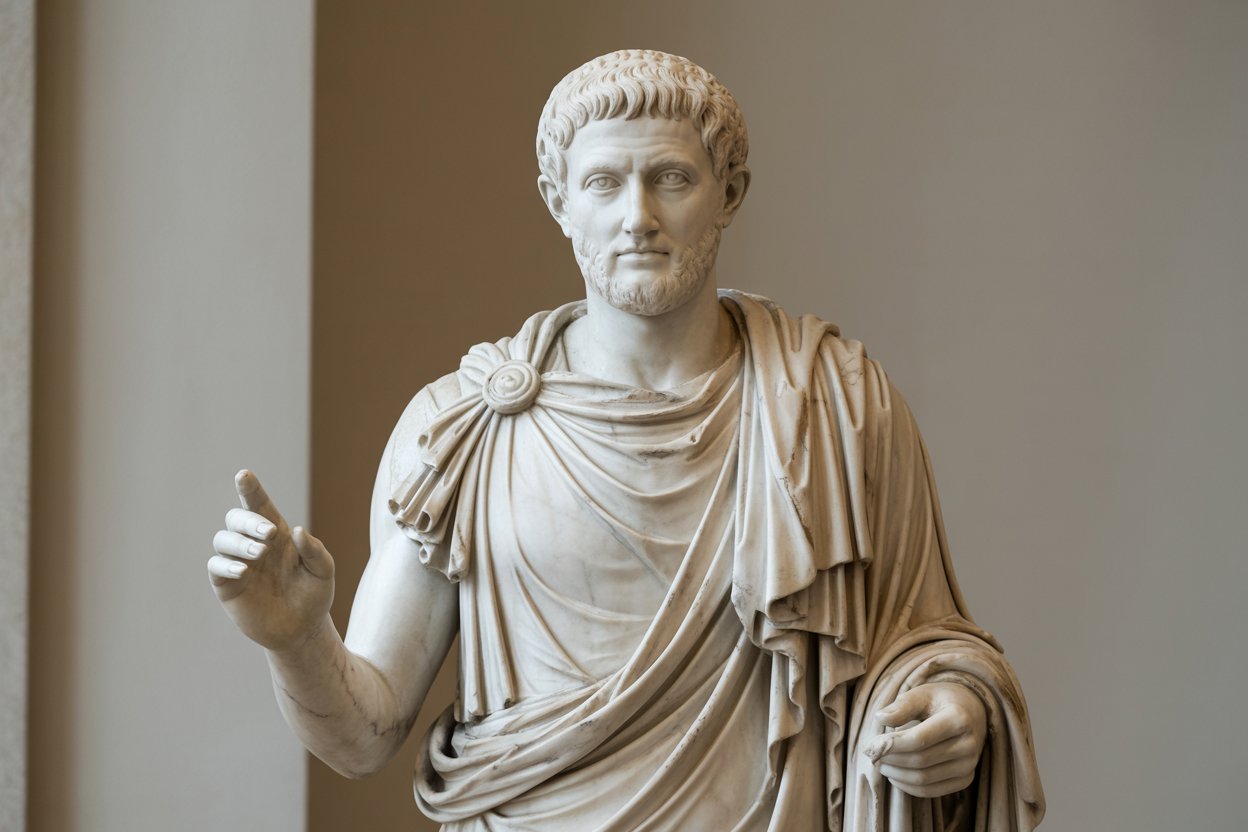
Self-discipline separates those who achieve their goals from those who merely dream about them. The ancient Stoics developed a practical philosophy centered on personal control, rational thinking, and emotional resilience. Their approach to self-discipline wasn’t about harsh restrictions or relying solely on willpower.
Instead, it focused on understanding what you can control, accepting what you can’t, and building habits that align with your deepest values. This philosophy remains remarkably relevant for modern challenges, offering a framework for developing the discipline needed to overcome obstacles and achieve meaningful success. Let’s explore how to cultivate the self-discipline of a Stoic and navigate life’s challenges wisely.
1. Focus Only On What You Control
The foundation of Stoic self-discipline begins with distinguishing between what lies within your control and what doesn’t. You control your thoughts, decisions, actions, and responses to circumstances. You don’t control external events, other people’s opinions, market conditions, or outcomes that depend on factors beyond your influence.
This distinction creates immediate clarity in how you direct your energy. When you waste effort worrying about uncontrollable factors, you deplete the discipline needed for what actually matters. The Stoics taught that attempting to control the uncontrollable leads to frustration and weakened resolve. Conversely, focusing exclusively on your controllable actions builds authentic power and sustainable discipline.
In practical terms, this means shifting your attention from outcomes to process. You can’t control whether you get promoted, but you control the quality of your work. You can’t control market volatility, but you control your investment strategy and emotional reactions. This focus conserves your discipline for areas where it actually produces results.
2. Develop Pre-Planned Responses To Obstacles
Stoic self-discipline thrives on preparation rather than improvisation. The practice of premeditatio malorum, or negative visualization, involves mentally rehearsing potential challenges before they occur. This isn’t pessimism but practical wisdom that transforms discipline from a reactive struggle into a proactive strength.
When you anticipate obstacles and plan your responses, you remove the surprise factor that often breaks discipline. The Stoics understood that emotional reactions gain power when they catch you unprepared. By visualizing challenging scenarios and deciding how you’ll respond, you create mental pathways that make disciplined choices automatic rather than exhausting.
This preparation extends to both external challenges and internal temptations. If you’re building financial discipline, you visualize the temptation to make impulsive purchases and decide your response beforehand. If you’re developing professional skills, you anticipate setbacks and plan how you’ll persist despite them.
The key is specificity. Vague intentions, such as “I’ll stay disciplined,” hold little power under pressure. Concrete plans, such as “When I feel the urge to abandon my budget, I’ll review my long-term financial goals and wait 24 hours before any unplanned purchase,” create reliable guardrails for your behavior.
3. Practice Voluntary Discomfort
True self-discipline requires periodic testing through deliberate discomfort. The Stoics regularly practiced voluntary hardship, not as a form of self-punishment, but as a means of training themselves to endure discomfort. They understood that untested discipline becomes brittle and breaks under real pressure. Strategic discomfort builds resilience, making everyday discipline feel effortless by comparison.
This practice takes many forms depending on your goals. It may involve occasional fasting to develop control over physical impulses, taking cold showers to strengthen mental fortitude, or deliberately choosing complex tasks when easier options are available. The specific discomfort matters less than the principle: regularly doing things that require you to override immediate comfort for longer-term benefit.
These exercises prove to yourself that you possess more control than you typically exercise. They normalize discomfort, removing its power to derail your plans. A person who voluntarily embraces cold showers won’t be defeated by the mild discomfort of doing complex work.
The practice also prevents comfort from becoming a hidden master. When you never voluntarily experience discomfort, you become increasingly dependent on ease and pleasure. Voluntary hardship reverses this pattern, transforming discomfort from an enemy into a tool for growth.
4. Live According To Your Core Values
Stoic self-discipline flows from clarity about your fundamental principles. When you lack a clear value system, discipline becomes arbitrary willpower applied to random goals. When you know what truly matters to you, discipline becomes the natural expression of your identity rather than an external force you must constantly summon.
The Stoics emphasized living in accordance with nature and reason, which meant aligning your daily choices with your most profound understanding of what constitutes a good life. This alignment creates powerful motivation that sustains discipline when willpower alone would fail.
This requires honest self-examination about what you actually value versus what you’ve been taught to value. Many people struggle with discipline because they’re pursuing goals that don’t genuinely matter to them, trying to satisfy external expectations rather than internal convictions. When you clarify your authentic values, discipline stops feeling like constant resistance and begins to feel like integrity.
The practical application involves regularly reviewing your actions against your stated values. If you claim to value financial security but make impulsive purchases, there’s a misalignment. This honest assessment eliminates the exhausting pretense that drains discipline, replacing it with aligned action that feels sustainable.
5. View Obstacles As Development Opportunities
The Stoic perspective on challenges fundamentally transforms how you relate to difficulty. Rather than seeing obstacles as problems that drain your discipline, you view them as the very mechanism through which discipline develops. This shift in perception doesn’t make challenges any less unpleasant, but it does make them more purposeful.
Every obstacle you face is an invitation to practice your principles under pressure. Financial setbacks test your patience and planning. Professional challenges test your persistence and adaptability. Personal difficulties test your character and values. The Stoics taught that these tests aren’t interruptions to your development but the substance of it. Discipline isn’t built in comfort but forged through repeated encounters with difficulty.
This perspective prevents the victim mentality that erodes self-discipline. When you see yourself as a passive victim of circumstances, you relinquish the agency that discipline requires. When you view challenges as training opportunities, you maintain the active stance necessary for disciplined response.
This doesn’t mean you seek out unnecessary hardship or pretend that difficulties don’t hurt. It means you extract value from challenges that arrive regardless of your preferences. You transform obstacles from pure loss into compound benefit: you work through the immediate problem while strengthening the discipline you’ll use for future challenges.
Conclusion
Stoic self-discipline offers a sustainable alternative to willpower-based approaches that inevitably exhaust themselves. By focusing on controllable factors, preparing for obstacles, practicing voluntary discomfort, aligning actions with values, and reframing challenges as opportunities, you build discipline that compounds over time rather than being depleted.
This ancient framework offers specific techniques that enhance your ability to overcome challenges and achieve meaningful objectives. The Stoics understood that self-discipline isn’t about suppressing one’s nature, but about expressing one’s highest nature through consistent, reasoned action.
Start with one principle, practice it deliberately, and watch how authentic discipline transforms both your daily choices and long-term outcomes.