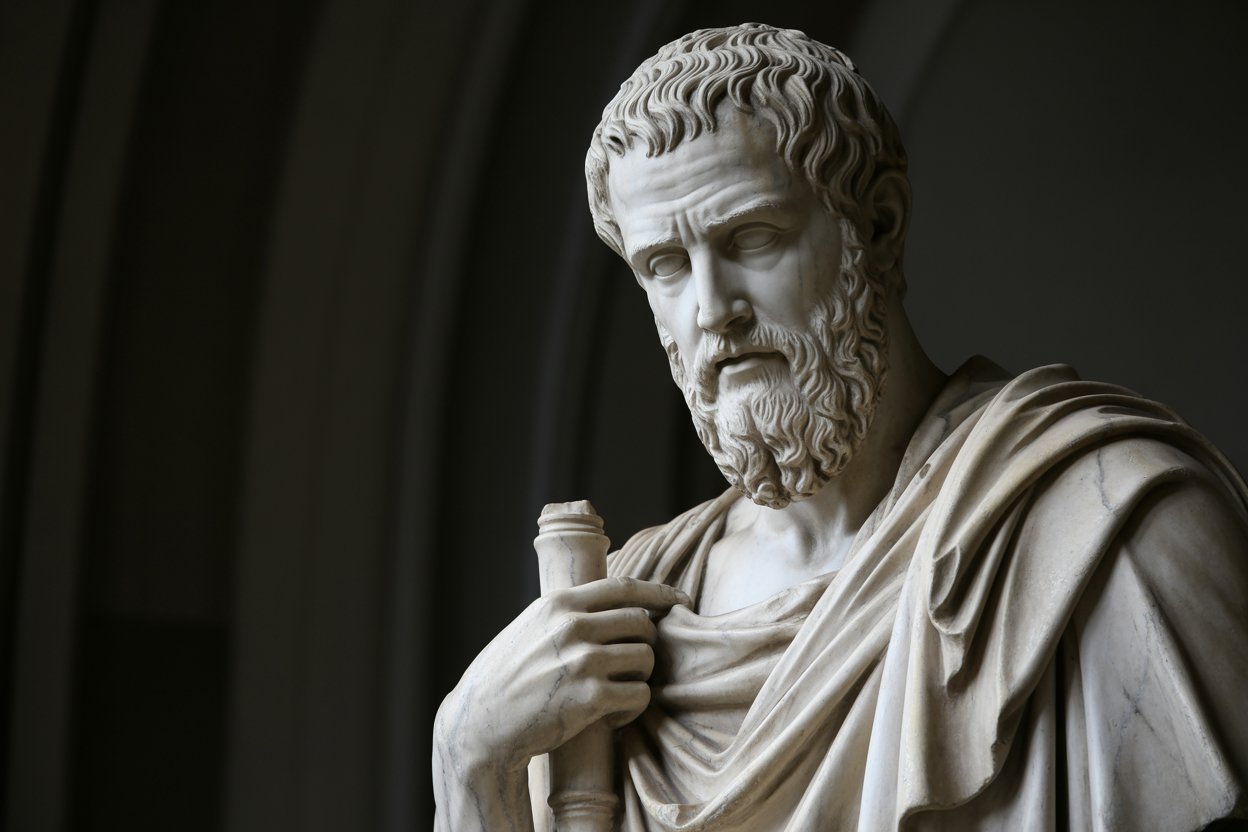
Stoicism isn’t a philosophy just for academics. It’s a decision-making framework built for managing chaos, uncertainty, and real-world pressure. The ancient Stoics—Marcus Aurelius, Epictetus, and Seneca—lived through wars, exile, and political turmoil. What they left behind wasn’t a theory. It was a manual for staying sane, practical, and grounded when everything around you is volatile.
Most people treat life as something that happens to them. Stoicism teaches the opposite: life is a series of choices you control. Not outcomes, not other people, not markets—just your decisions and responses.
The difference between a reactive life and a disciplined one comes down to ten fundamental choices. Make them consistently, and the trajectory of your life changes.
1. Choose Control Over Reaction
The first choice is simple: decide to govern your responses instead of trying to control people, outcomes, or circumstances. You can’t control market crashes, layoffs, or a bad driver. You can control how you respond.
This single decision can immediately reduce stress, anger, and impulsive behavior. The Stoics referred to this as the dichotomy of control—focus exclusively on what is within your control. Everything else is background noise. When you stop wasting energy trying to change external events, you reclaim it for productive action.
2. Choose Discipline Over Comfort
Comfort preserves the status quo. Discipline creates progress. The Stoics deliberately chose effort, structure, and consistency even when motivation was absent. This isn’t about punishing yourself. It’s about recognizing that meaningful change requires doing hard things when you don’t feel like it.
Voluntary hardship strengthens character. If you only act when it’s easy, you’re building a fragile life. Discipline is the decision to show up, regardless of one’s mood, fatigue, or distractions.
3. Choose Long-Term Character Over Short-Term Pleasure
You can’t build wealth, relationships, or health on instant gratification. The Stoic choice is to trade fleeting pleasure for integrity, reputation, and self-respect. This decision compounds across every area of your life.
The person who cheats today destroys trust from others tomorrow. The person who stays disciplined with savings sacrifices comfort now but gains freedom later. Virtue is the highest good because it’s the only asset that can’t be taken from you.
4. Choose Perception Before Judgment
Most suffering stems from our interpretation, not the events themselves. Before reacting emotionally, pause and ask: What is actually happening? Epictetus said it plainly: “Men are disturbed not by things, but by the views they take of them.”
Someone criticizes your work. The event is neutral. Your interpretation—”I’m a failure” versus “I can improve this”—determines your emotional state. When you choose perception before judgment, you reclaim control over your mental state.
5. Choose Responsibility Over Blame
You can blame circumstances, upbringing, or other people. Or you can accept that you’re accountable for your choices, not your excuses. The second option restores agency and accelerates personal growth.
The moment you stop outsourcing responsibility, you stop being a victim. This doesn’t mean ignoring external factors. It means refusing to let them define your response. Stoicism demands radical ownership of your decisions and their consequences.
6. Choose Self-Mastery Over External Validation
Approval becomes irrelevant when you act according to principle rather than applause, criticism, or social comparison. The Stoics believed the wise person is sufficient unto himself. This doesn’t mean isolation. It means your worth isn’t determined by likes, promotions, or what your neighbor thinks.
You do what’s right because it’s right, not because someone is watching. This choice eliminates anxiety about perception and builds unshakable confidence.
7. Choose Adversity as Training
Difficulties are either obstacles or opportunities. The Stoic reframes adversity as training—chances to practice courage, patience, and resilience rather than signals to quit. Marcus Aurelius wrote that obstacles are the path.
Financial setbacks teach discipline. Rejection teaches persistence. Failure teaches adaptation. When you choose to see adversity as training, you stop avoiding hard things and start seeking them out.
8. Choose Simplicity Over Excess
The Stoics intentionally reduced wants. Fewer dependencies mean fewer vulnerabilities—financially, emotionally, and psychologically. Wealth is wanting little.
This isn’t about poverty or deprivation. It’s about recognizing that the person with expensive tastes is more fragile than the person who is content with less. Simplicity creates resilience. The fewer things you need to be happy, the easier it is to be content with what you already have.
9. Choose Present Focus Over Mental Time Travel
Regret lives in the past. Anxiety lives in the future. Clarity lives in the present moment. The Stoics anchored their attention to the task at hand because the present is all you ever truly control.
When you stop replaying past mistakes or catastrophizing future scenarios, execution improves dramatically. Present focus isn’t mystical. It’s practical. The person obsessing over yesterday’s losses can’t see today’s opportunities.
10. Choose a Life Guided by Principles, Not Mood
This is the meta-choice that enables all others. Decide in advance how you will act—regardless of emotion, fear, or external pressure. The Stoics lived according to reason, not impulse.
You don’t need motivation when you have principles. You already decided how you respond to fear, greed, anger, and temptation. This fosters consistency and self-trust. People without principles are unpredictable. People with principles are influential.
Conclusion
Stoicism isn’t about suppressing emotion or retreating from ambition. It’s about choosing who you are in every situation. These ten choices are levers you pull consciously, daily. They’re not comfortable. They’re effective.
Make them consistently, and your life becomes calmer, more disciplined, and far more potent over time. The question isn’t whether you understand Stoicism. The question is whether you’re willing to choose it when it matters.