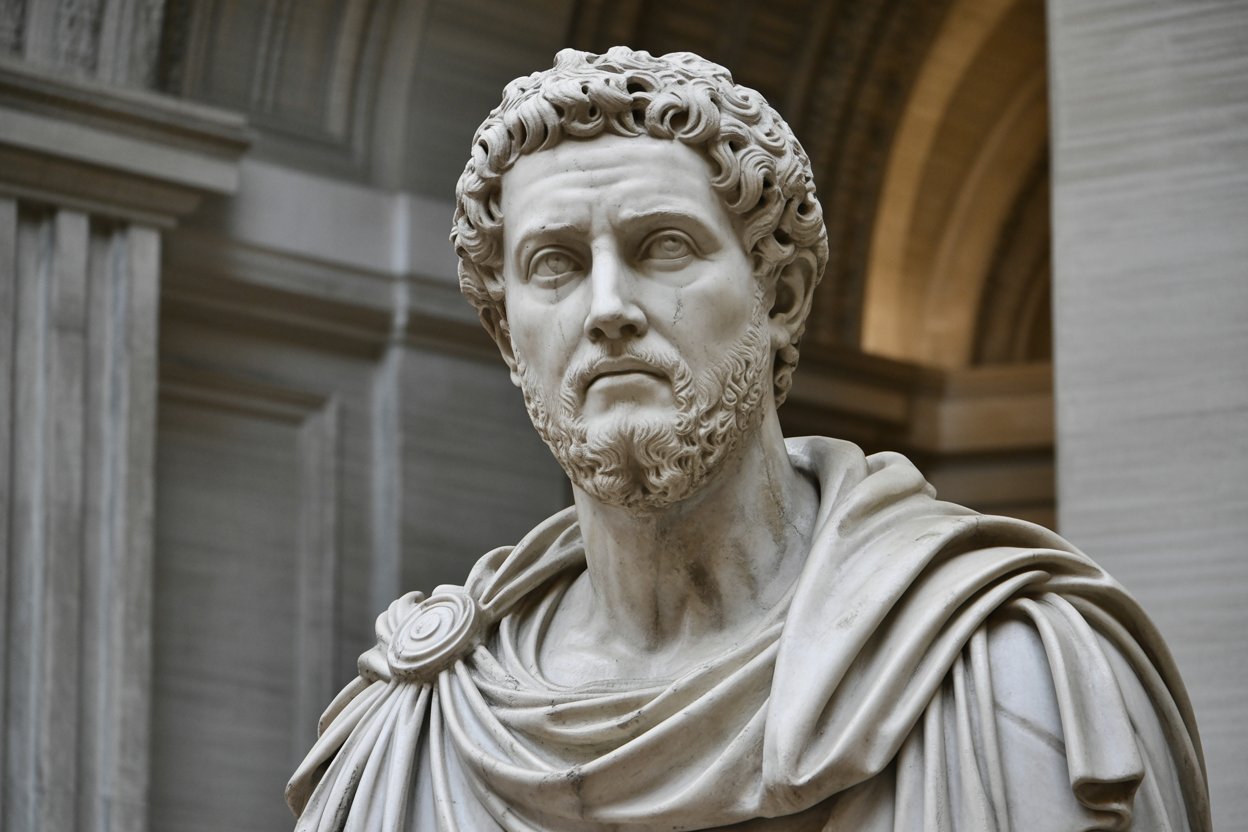
Marcus Aurelius, the Roman emperor and Stoic philosopher who lived from 121 to 180 AD, wrote his personal reflections in Meditations, a timeless guide to living wisely in the face of life’s challenges.
Nearly two millennia later, his insights on mindset, mortality, virtue, and resilience remain profoundly relevant, offering a life-changing perspective in a world of constant distraction and uncertainty.
What makes his wisdom so enduring? Unlike abstract philosophy, Marcus wrote practical advice for himself during times of war, plague, and political turmoil. His words weren’t meant for publication, making them remarkably honest and actionable.
1. Control What You Can Control
“You have power over your mind—not outside events. Realize this, and you will find strength.” – Marcus Aurelius.
This cornerstone of Stoic philosophy cuts through modern anxiety by identifying the trustworthy source of your power. You can’t control job markets, economic downturns, or other people’s decisions. You can control your responses, your effort, and your mindset. This distinction transforms helplessness into agency.
When workers face AI disruption or corporate restructuring, this principle becomes essential. Panicking about external forces wastes energy. Focusing on skill development, financial planning, and emotional resilience builds real strength.
2. The Quality of Your Thoughts Determines Your Life
“The happiness of your life depends upon the quality of your thoughts.” – Marcus Aurelius.
In an era of endless social media comparison and 24-hour news cycles, this wisdom feels revolutionary. Your thoughts create your emotional reality. If you constantly think about what you lack, you’ll feel impoverished regardless of your actual wealth.
Two people facing identical job losses will have completely different outcomes based on their mental narratives. One sees disaster; the other sees opportunity for reinvention. Your thoughts don’t change external reality, but they determine whether you thrive or suffer within it.
3. The Privilege of Being Alive
“When you arise in the morning, think of what a precious privilege it is to be alive—to breathe, to think, to enjoy, to love.” – Marcus Aurelius.
Modern life moves fast. You wake up, check your phone, worry about deadlines, and race through routines without pausing to appreciate existence itself. Emperor Aurelius reminds us that consciousness itself is a miraculous phenomenon.
This daily practice of gratitude counters the hedonic treadmill that keeps workers perpetually dissatisfied. Beginning each day with this mindset doesn’t ignore problems, but it prevents problems from defining your entire experience.
4. Your Thoughts Create Your Reality
“Our life is what our thoughts make it.” – Marcus Aurelius
This quote echoes principles found in modern cognitive behavioral therapy: your interpretations of events matter more than the events themselves. A market downturn isn’t inherently catastrophic or opportunistic until you assign it meaning through your thoughts.
Wealthy individuals often share this mindset shift as a turning point. They stopped seeing setbacks as permanent failures and began to view them as temporary obstacles that required different strategies.
5. Happiness Comes From Within
“Very little is needed to make a happy life; it is all within yourself, in your way of thinking.” – Marcus Aurelius.
Consumer culture insists that you need more: a bigger house, a newer car, the latest technology. Marcus argues the opposite. True contentment isn’t found in accumulation but in internal simplicity and perspective.
Workers often chase lifestyle inflation, believing the next purchase will finally satisfy them. It never does, because satisfaction isn’t something that can be purchased. It’s cultivated through gratitude, purpose, and relationships. The Roman emperor had vast resources, yet he understood that peace of mind came from his thoughts, not his possessions.
6. Find Wonder in Existence
“Dwell on the beauty of life. Watch the stars, and see yourself running with them.” – Marcus Aurelius.
Amid spreadsheets and deadlines, Aurelius urges cosmic perspective. You’re a conscious being in an incomprehensibly vast universe. This awareness doesn’t make daily challenges disappear, but it prevents them from consuming your entire field of vision.
This practice of awe combats the tunnel vision that traps people in cycles of worry. When you regularly contemplate the night sky or natural beauty, your brain shifts from a stress response to one of wonder.
7. Virtue Over Validation
“Live a good life. If there are gods and they are, then they will not care how devout you have been, but will welcome you based on the virtues you have lived by.” – Marcus Aurelius.
This profound statement prioritizes ethical action over external approval. Whether you believe in gods or not, the principle holds: integrity matters more than reputation. Focus on being honest, fair, and courageous rather than performing virtue for others’ approval.
In professional contexts, this means doing quality work because it’s right, not because someone’s watching. This internal standard creates genuine self-respect that external validation can’t provide or take away.
8. Be A Good Person Now
“Waste no more time arguing about what a good man should be. Be one.” – Marcus Aurelius.
Social media is full of people debating ethics and discussing what success looks like. Marcus cuts through this noise: stop talking and start doing. Embody the virtues you claim to value.
This action-oriented approach resonates particularly with wealth-building. Don’t endlessly research the perfect investment strategy—start investing. Don’t debate what disciplined people do—become disciplined. Implementation beats contemplation every time.
9. Live Like You’re Already Dead
“Think of yourself as dead. You have lived your life. Now take what’s left and live it properly.” – Marcus Aurelius.
This memento mori practice may seem morbid, but it produces clarity. If you imagined dying yesterday, how would you approach today? Probably with less fear and more boldness. You’d care less about others’ opinions and more about meaningful action.
Mortality awareness isn’t depressing—it’s liberating. It reveals that most daily anxieties are trivial. That job you’re afraid to leave? From a deathbed perspective, staying miserable for job security looks absurd. Use mortality to sharpen your focus on what genuinely matters.
10. Think for Yourself
“The object of life is not to be on the side of the majority, but to escape finding oneself in the ranks of the insane.” – Marcus Aurelius.
In polarized times, independent thinking feels revolutionary. Marcus warns against following crowds simply because they’re crowds. Popular opinions are often misguided, and conforming to collective madness doesn’t excuse your participation.
This principle applies directly to financial decision-making. Herd behavior drives market bubbles and crashes. The majority bought houses they couldn’t afford before the 2008 financial crisis. True success often requires thinking differently and acting on conviction despite social pressure.
Conclusion
Marcus Aurelius wrote these reflections during humanity’s challenges almost two millennia ago, yet they address our modern struggles with remarkable precision. His emphasis on internal control, quality thinking, gratitude, and virtuous action provides a framework for navigating uncertainty today.
These aren’t merely inspiring words but practical principles that shift perspective and behavior. You can’t control markets, technology disruption, or corporate decisions. You can control your mindset, actions, and character. That’s where real strength lives, and it’s sufficient for building a meaningful life regardless of external circumstances.