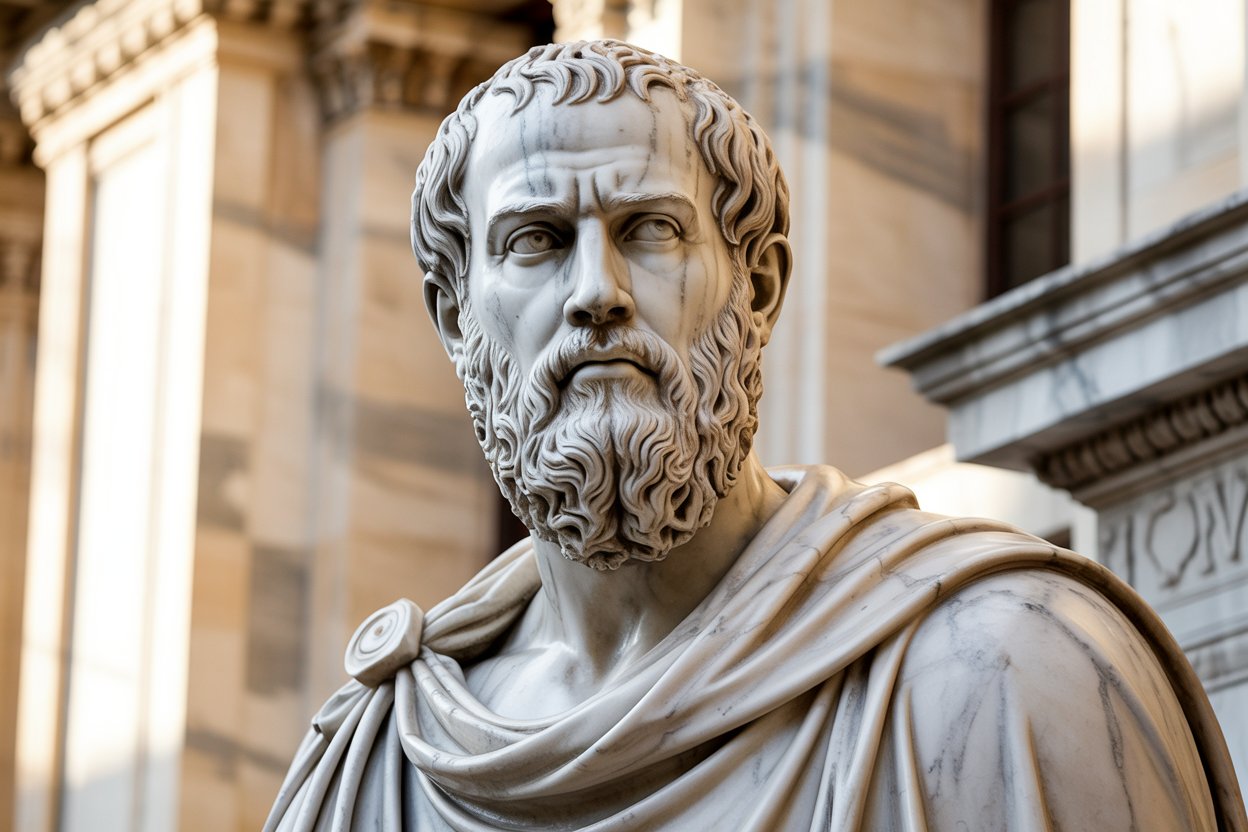
The ancient philosophy of Stoicism offers a practical framework for self-improvement that remains remarkably relevant today. Unlike modern self-help approaches that focus on external achievements or positive thinking, Stoicism teaches that genuine progress comes from cultivating inner virtue, developing resilience, and aligning our actions with rational principles.
The Stoic path isn’t about dramatic transformations or quick fixes. Instead, it’s built through consistent daily habits that strengthen character, reduce unnecessary suffering, and lead to what the Stoics called eudaimonia, a state of flourishing and tranquility.
This approach, practiced by Marcus Aurelius, Epictetus, and Seneca, provides a roadmap for meaningful personal growth through disciplined practice. Let’s explore the Stoic approach to self-improvement through the lens of Stoic habits.
1. Begin Each Day With An Intentional Morning Practice
The Stoics understood that how you start your day sets the tone for everything that follows. A purposeful morning routine creates a foundation for acting with virtue rather than reacting to circumstances. This habit involves rising with clear intentions, preparing mentally for challenges ahead, and affirming your commitment to living according to rational principles.
Upon waking, consider what you can control during the coming day and how you’ll respond to difficulties. Marcus Aurelius would journal each morning to prepare his mind for the day’s duties and challenges.
This morning ritual builds discipline and prevents you from drifting through the day without purpose. By establishing this habit, you train yourself to approach each day as an opportunity to practice wisdom, courage, justice, and self-control.
2. Master The Dichotomy Of Control
Central to Stoic practice is the distinction between what lies within your control and what doesn’t. This habit involves recognizing that you can control your thoughts, judgments, and actions, but you can’t control external events, other people’s opinions, or outcomes. This understanding is liberating because it allows you to direct your energy where it truly matters, while releasing anxiety about things beyond your control.
When facing any situation, pause and categorize what falls within your sphere of control. Your effort, perspective, and response are yours to command. Everything else exists outside your control. The Stoics taught that suffering comes not from events themselves but from our judgments about them. By focusing only on what you can control, you develop wisdom and reduce emotional turmoil.
3. Conduct Daily Self-Examination Through Journaling
The Stoics practiced rigorous self-examination, typically at the end of the day, to track their progress and identify areas needing improvement. Seneca recommended a nightly practice of reviewing the day, asking yourself what weaknesses you had mastered, what temptations you had resisted, and what virtues you had strengthened.
Keep a journal where you record what went well, where you fell short of your values, and how you’ll do better tomorrow. This isn’t about harsh self-criticism but about developing self-awareness and accountability.
The practice turns abstract ideals into concrete feedback loops. You might notice patterns in your behavior, recurring challenges, or situations where you consistently struggle. This awareness itself becomes a catalyst for change.
4. Strengthen Virtue Through Repetitive Action
The Stoics viewed character development as similar to physical training. Capabilities and virtues grow stronger through repeated use. To develop courage, you must act courageously. To build self-control, you must practice self-control. This habit involves choosing one virtue to focus on and consciously acting on it throughout the day.
Start small and specific. To develop justice, practice fairness in every interaction today. If temperance is your focus, exercise self-control in small ways. Every time you practice a virtue, you reinforce the neural pathways that make virtuous action more automatic.
The Stoics taught that transformation happens incrementally. You don’t become righteous by debating what virtue looks like but by practicing it repeatedly until it becomes your character.
5. Build Resilience Through Voluntary Discomfort
Stoic practice includes deliberately choosing minor hardships to toughen the mind and build resilience. This habit may involve taking cold showers, occasionally fasting, or temporarily giving up small comforts. The purpose isn’t masochism but preparation. By voluntarily experiencing discomfort, you become less vulnerable to involuntary hardships.
This practice also includes negative visualization, where one mentally rehearses potential losses or challenges that may arise. While this might seem pessimistic, it actually cultivates gratitude for what you have and reduces the shock when difficulties arise. By choosing small challenges, you develop the capacity to handle larger ones.
6. Transform Obstacles Into Opportunities
A core Stoic practice involves accepting and even embracing difficulties as opportunities for growth. Rather than viewing obstacles as impediments to your plans, see them as the raw material for developing virtue. When challenges arise, ask yourself what you can make of this situation. How can this difficulty help you become stronger, wiser, or more resilient?
The Stoics taught that obstacles aren’t separate from the path of self-improvement; they are the path. Every difficulty presents a chance to practice patience, courage, creativity, or perseverance. This habit involves accepting what happens and finding ways to use it constructively. It doesn’t mean passive resignation but active engagement with reality as it is, not as you wish it were.
7. Maintain Awareness Of Mortality
The Stoics regularly reflected on death, not morbidly but as a tool for clarifying priorities and living fully. This practice, known as memento mori, involves contemplating life’s brevity to avoid wasting time on trivial pursuits and to appreciate the significance of each day.
Daily meditation on mortality helps you identify what truly matters and act accordingly. When you recognize that time is limited, you become less likely to postpone meaningful actions or waste energy on petty concerns. This habit fosters a sense of urgency without anxiety, enabling you to live more intentionally and appreciate the present moment.
8. Pursue Wisdom Through Continuous Learning
The Stoics valued lifelong learning and saw reading as a means of conversing with the wisest minds throughout history. This habit involves regularly studying Stoic texts and other philosophical works to gain perspective, challenge your assumptions, and avoid repeating the mistakes of others.
Dedicate time daily to reading and reflecting on wisdom literature. This practice offers guidance during challenging times, broadens your perspective, and connects you to a tradition of philosophical inquiry. The goal isn’t merely accumulating knowledge, but rather embodying wisdom in your actions.
Conclusion
The Stoic path to self-improvement is built on consistent habits that align your actions with virtue and reason. These practices work together synergistically: morning intention-setting prepares you for the day, focusing on what you control reduces anxiety, evening reflection provides feedback, and repeated virtuous action builds character.
The beauty of this approach is its accessibility. You don’t need exceptional circumstances or resources to practice Stoicism, just commitment to daily improvement. Start with one habit, practice it consistently, and gradually add others. Progress may seem slow, but minor daily improvements compound into lasting transformation.