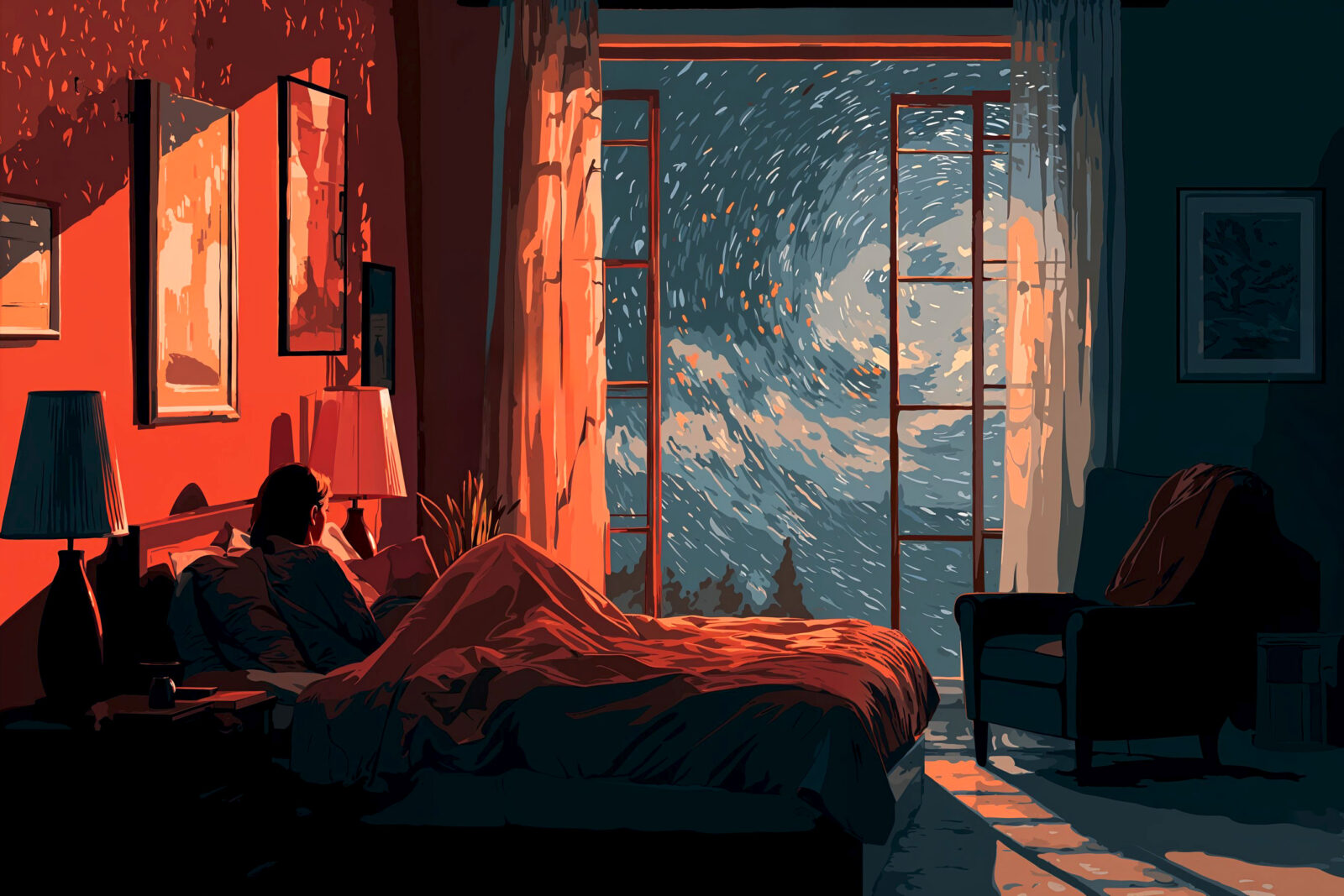
For some people, staying home isn’t dull. It’s deeply satisfying. While society often celebrates the extroverted go-getter who thrives in crowded spaces, there’s a quieter truth that deserves recognition: some of us genuinely prefer the sanctuary of home. This isn’t about laziness, social anxiety, or fear. It’s about a fundamental difference in how certain minds work, recharge, and find meaning.
Understanding this preference reveals specific psychological traits and mental patterns that make home the optimal environment for certain people to thrive. From cognitive processing styles to energy management strategies, the psychology behind this preference reveals something fascinating about human diversity and the many valid ways to lead a fulfilling life.
They Are Internally Stimulated
People who love staying home often possess vibrant inner worlds. Their minds are active, creative, and self-entertaining in ways that don’t require constant external input. While some people need the buzz of conversation or the energy of crowds to feel engaged, home-lovers generate their own mental stimulation through reading, thinking, creating, and learning.
This internal stimulation isn’t a deficit. It’s a different, equally valid way of engaging with life. Without the interruptions of the outside world, these individuals can immerse themselves in complex projects, lose themselves in books, or think deeply about topics that fascinate them. The richness of their internal experience often far exceeds what external activities could provide.
They Have Strong Emotional Self-Regulation
One of the most telling traits of people who prefer staying home is their capacity for emotional self-regulation. They don’t need constant distraction, entertainment, or social interaction to maintain emotional balance. Unlike those who become restless without external stimulation, home-lovers have developed the ability to sit with themselves and their feelings without discomfort.
This skill translates to remarkable comfort with silence and stillness. Where others might reach for their phones or seek company to avoid empty moments, people who love home view these moments as opportunities. Their emotional stability stems from within, rather than from external circumstances, which is a sign of psychological maturity and resilience.
They Are Highly Selective With Energy
For home-lovers, social energy isn’t unlimited. It’s a finite resource that must be carefully managed and protected. These individuals recognize that every social interaction and obligation carries an energy cost. Staying home isn’t avoidance but rather a form of self-protection and strategic energy management.
This selectivity leads to a preference for fewer, but more meaningful and deeper interactions. Rather than spreading themselves thin across dozens of casual acquaintances, people who love staying home invest their limited social energy in meaningful relationships. They’d rather have one profound conversation than ten shallow ones, allowing them to show up more fully for what truly matters.
They Value Psychological Safety
Home represents something profound: a space of complete psychological safety. It offers predictability in an unpredictable world, control over an environment otherwise beyond our control, and emotional security in the face of constant external demands. There are no surprises at home, no unexpected social situations to navigate.
This need becomes especially important for sensitive or intuitive personalities who experience the world more intensely than others. The sensory overload and social pressure of public spaces can be genuinely exhausting. Home provides relief from this intensity, offering a controlled environment where they can exist without the constant analysis and adaptation required in social settings.
They Tend to Be Observers, Not Performers
People who prefer staying home typically have less interest in being seen and more interest in understanding. They’re the watchers, listeners, and thinkers who operate most comfortably outside the social spotlight. While others derive energy from being noticed or admired, home-lovers find these dynamics draining. They don’t need an audience to feel fulfilled.
This observer orientation often correlates with reflective, analytical, or creative personality types. These are people who process the world deeply rather than quickly and find meaning in contemplation rather than performance. This perspective enables them to identify patterns, comprehend dynamics, and gain insights that more socially focused individuals might overlook.
They Associate Home With Freedom
Contrary to common perception, people who love home experience it as a space of profound freedom. It’s freedom from expectations, from the various roles we’re forced to play in public, and from exhausting social scripts. At home, there’s no need to perform competence, maintain appearances, or meet anyone else’s standards.
This freedom extends to every aspect of life. The ability to think without interruption, dress without judgment, and live without constant external input creates an environment where authentic self-expression becomes possible. For people who feel constrained by social expectations, this autonomy isn’t just pleasant. It’s essential for their mental health and sense of self.
They Often Have High introspection. An intense inner dialogue and deep self-awareness characterize individuals who prefer to be at home. They engage in regular reflection, examining their thoughts, feelings, and motivations with scrutiny that others might find exhausting. This introspective tendency leads to remarkable clarity and emotional insight over time.
Solitude sharpens this introspection and intuition. Without the constant noise of external opinions and stimuli, home-lovers can hear their own thoughts more clearly. They can identify patterns in their behavior, understand their emotional triggers, and develop genuine self-knowledge that often makes them insightful about others as well.
They Are Not Easily Bored
Boredom typically stems from dependence on external sources of stimulation. When those sources are unavailable, people who rely on them often feel empty and restless. In contrast, home-lovers generate meaning internally and find interest in simple activities that others might dismiss as dull.
This ability to self-entertain without constant novelty or external validation is actually a marker of psychological maturity. It demonstrates an internal richness that is independent of circumstances, other people, or continuous stimulation. These individuals have cultivated a genuine enjoyment of themselves rather than something to escape.
They Recover Through Solitude
Home is where the mental and emotional reset happens. While extroverts might recharge through social interaction, home-lovers restore their energy through solitude. Time alone isn’t depleting. It’s restorative. After dealing with the demands of work and social obligations, they need time in their own space to process and decompress.
This pattern is pervasive among introverts and deep thinkers. Solitude restores rather than isolates. It provides the space needed to process experiences and exist without needing to perform or respond to others. This need for regular alone time is what allows them to engage more authentically when they do interact with others.
Common Myths About People Who Love Staying Home
Several persistent myths surround people who prefer staying home. The first is that they’re antisocial. This is false. Preferring home doesn’t mean disliking people. It means being selective about social energy and valuing quality over quantity in relationships.
The second myth is that they’re lonely. This is often untrue. Loneliness and solitude are entirely different experiences. Solitude is the chosen experience of being alone, and for home-lovers, it’s genuinely enjoyable. The third myth is that they’re missing out on life. This assumption is culturally biased. Home-lovers aren’t missing out. They’re simply finding meaning in different ways.
Why This Trait Is Becoming More Common
The preference for staying home seems to be growing, and there are clear reasons for this shift. Modern life is characterized by overstimulation, burnout culture, and digital fatigue. We’re constantly bombarded with information and demands on our attention. For many people, this relentless stimulation has become exhausting.
There has also been a broader shift toward intentional living and increased mental health awareness. People are recognizing that constant activity isn’t the same as fulfillment. In this context, the home has become a sanctuary in an increasingly noisy world, offering control, predictability, and peace amidst chaos.
Conclusion
It’s time to reframe staying home as an intentional choice rather than a passive default. The psychological traits that drive this preference are actually markers of emotional maturity and self-awareness. These individuals have figured out what they need to thrive and are honoring those needs rather than conforming to external expectations.
If you love staying home, you’re not lazy, antisocial, or missing out on life. You’re wired differently, and that difference is a strength. You’ve developed the capacity to generate your own meaning, regulate your own emotions, and create a life that feels authentic to you. In a world that constantly demands more, choosing to protect your energy and honor your boundaries is an act of self-respect and wisdom that deserves recognition, not judgment.