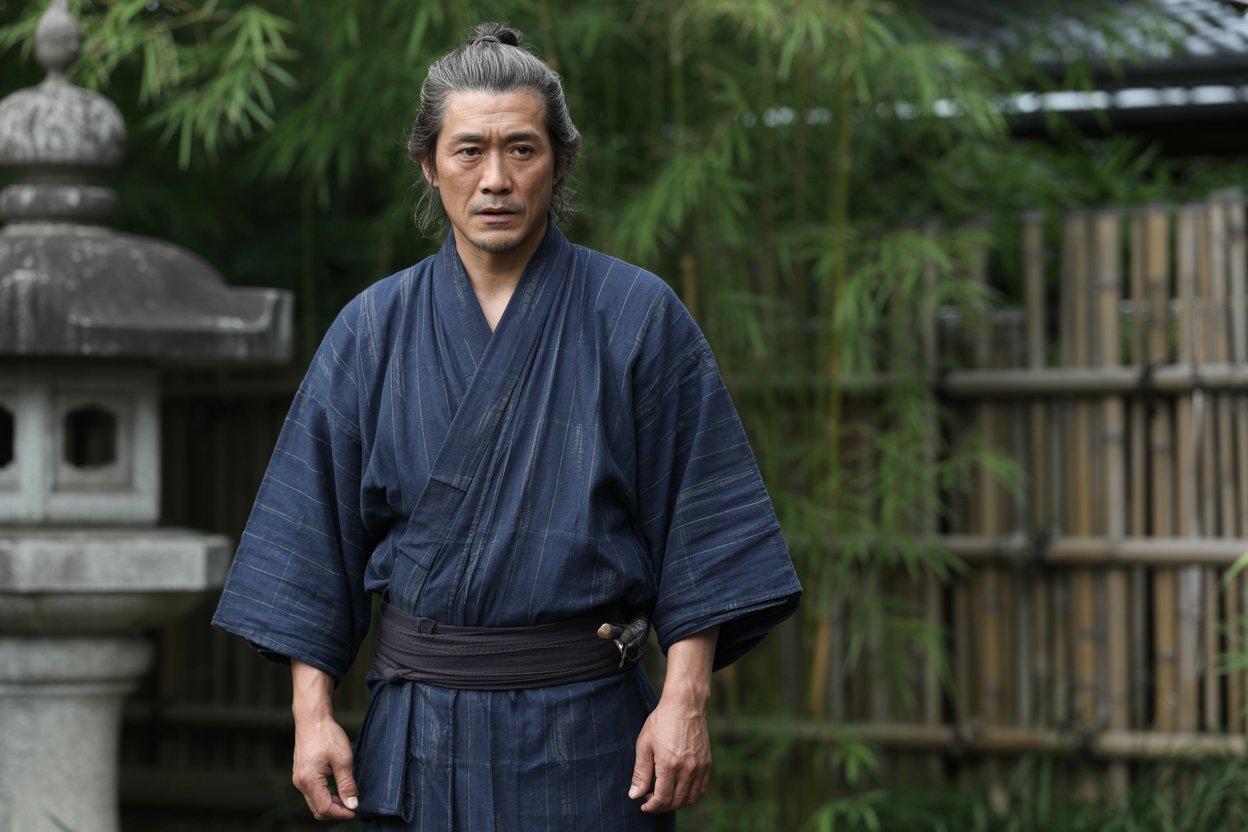
Miyamoto Musashi walked through 16th-century Japan as an undefeated swordsman, winning over 60 duels before age 30. His survival didn’t come from superior technique alone. It came from something more profound: the ability to remain calm when defeat stood inches away.
Most people today won’t face sword fights, but the principles Musashi developed translate directly to modern pressure. Whether you’re navigating a career crisis, financial stress, or personal conflict, his framework for maintaining composure remains devastatingly effective.
These aren’t motivational platitudes. They’re battle-tested strategies for emotional control that Musashi documented in his final work, The Book of Five Rings, which he wrote in a cave two years before his death.
1. Cultivate a Mind Unmoved by Circumstances
“In strategy, it is important to see distant things as if they were close and to take a distanced view of close things.” – Miyamoto Musashi.
Musashi taught that maintaining focus on your objective creates natural calm. When your mind fixes on the intended outcome rather than the obstacles, emotional turbulence decreases. This isn’t positive thinking. It’s strategic clarity.
In practice, this means identifying your actual goal in any stressful situation and focusing your attention on it. If you’re in a heated argument, your goal might be to reach understanding, not to win. If you’re facing a deadline, your goal is completion, not perfection. The distinction matters because scattered attention breeds anxiety while singular focus produces steadiness.
2. Accept What You Can’t Control, Act on What You Can
“You can only fight the way you practice.” – Miyamoto Musashi
Musashi prepared obsessively for variables within his control, while accepting those outside his control. He couldn’t control his opponent’s skill level, but he could control his own training. He couldn’t control weather conditions during a duel, but he could practice in rain, snow, and darkness. This separation created inner stability.
When stress arrives, most people waste energy resisting reality itself. They wish the situation were different, the timing were better, or the circumstances were easier. Musashi would call this a useless movement. Calm comes from acknowledging facts as they are, then directing all available energy toward actionable responses. Fighting reality creates internal chaos. Accepting it conserves the mental resources needed for effective action.
3. Train Your Response Before Pressure Arrives
“Today is victory over yourself of yesterday; tomorrow is your victory over lesser men.” – Miyamoto Musashi.
Musashi didn’t believe calm could be summoned on demand without preparation. He spent years training his nervous system to operate effectively under extreme stress. His practice wasn’t theoretical. It was physical, mental, and relentless.
The modern application is straightforward: you can’t develop composure during a crisis if you’ve never practiced it beforehand. This means deliberately exposing yourself to controlled stress. Take cold showers. Practice difficult conversations before they become necessary. Simulate high-pressure scenarios in your field. Your nervous system learns calm the same way it learns anything else—through repetition. When actual pressure arrives, your body defaults to its trained response rather than panic.
4. Eliminate Wasted Motion in Thought and Action
“Do nothing that is of no use.” – Miyamoto Musashi
Every unnecessary movement in combat creates vulnerability. Musashi applied this principle not only to the sword but also to mental activity. Anxious thinking, he recognized, is a waste of energy. It produces no tactical advantage.
When you find yourself spiraling into worst-case scenarios or replaying past mistakes, you’re engaged in useless motion. These thoughts don’t solve problems or improve outcomes. They drain the mental clarity needed for effective decisions.
Musashi’s approach was ruthless efficiency: if a thought or action doesn’t serve your objective, cut it. This creates space for genuine calm because you’re no longer carrying dead weight in your consciousness.
5. Hold Your Goals Loosely, Your Principles Firmly
“Think lightly of yourself and deeply of the world.” – Miyamoto Musashi
Musashi understood that attachment to specific outcomes creates internal tension. When your identity depends on winning a particular fight or achieving a specific result, you’ve made yourself fragile. Your emotional state becomes hostage to external events.
The solution isn’t to stop caring about results. It’s to ground your stability in something more profound than outcomes—your principles, your discipline, your character. When you shift focus from ego-driven goals to principle-driven action, calm becomes sustainable.
You can’t control whether you win or lose. You can control whether you act with integrity, courage, and discipline. That distinction transforms pressure from a threat into simple information about what action to take next.
Conclusion
Musashi’s calm wasn’t a personality trait he was born with. It was a skill he built through decades of deliberate practice, often in situations where failure meant death. His principles work because they address the actual mechanics of how composure develops: through focus, acceptance, preparation, efficiency, and detachment from outcome.
You don’t need a sword to apply these lessons. You need only the willingness to treat your emotional state as something that can be trained rather than something fixed. Start with one principle. Practice it until it becomes reflexive. Then add another. Over time, you’ll discover what Musashi knew: calm isn’t the absence of pressure. It’s mastery over your response to it.