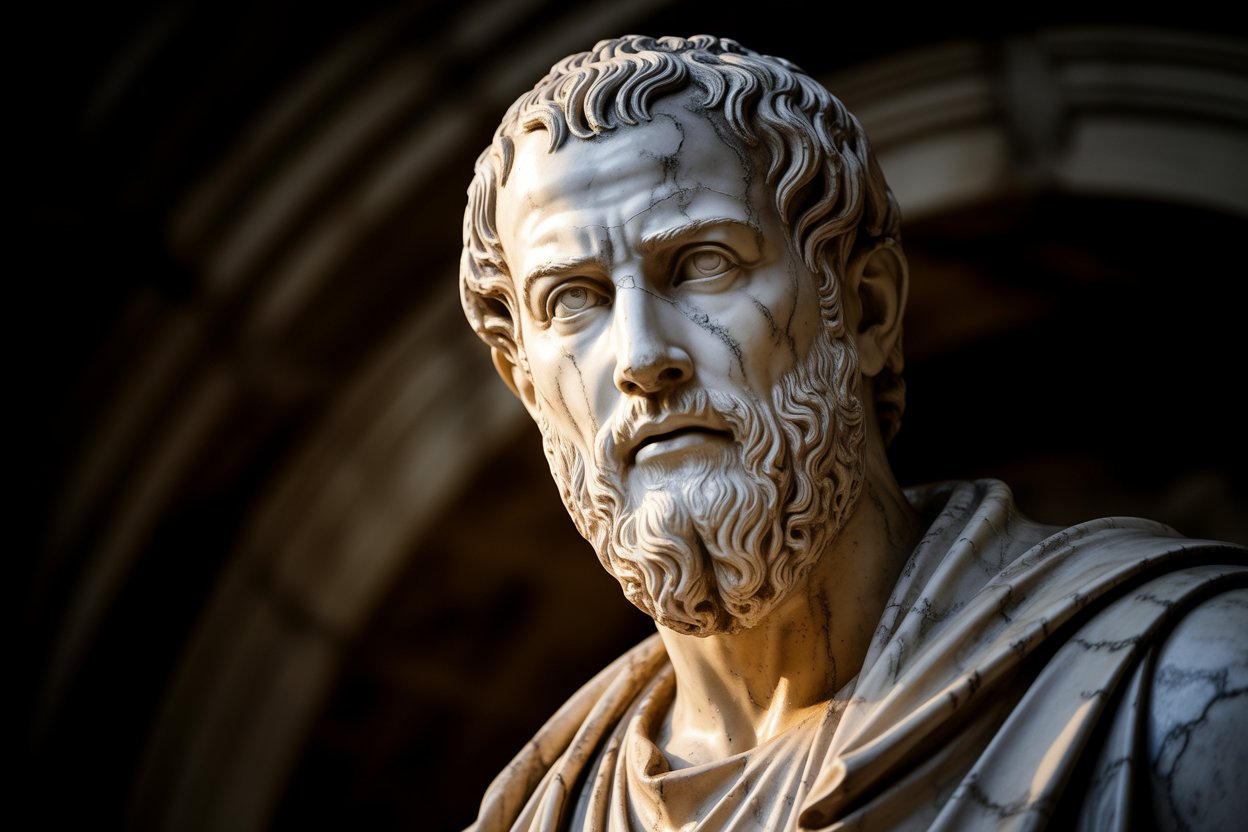
The ancient Stoics built a philosophy so practical and powerful that it remains relevant two millennia later. While modern self-help cycles through trends, Stoicism endures because it addresses the fundamental architecture of human consciousness.
These aren’t motivational platitudes. These are operating principles from Marcus Aurelius, Epictetus, and Seneca that shaped emperors, servants, and everyone in between. The lessons below represent the highest-level teachings from Stoic philosophy, distilled into frameworks you can apply immediately.
1. The Dichotomy of Control
Epictetus taught that you control exactly three things: your judgments, your intentions, and your responses. Everything else exists outside your control, including your reputation, your possessions, your body, and all outcomes.
True freedom emerges when you stop emotionally investing in externals. This isn’t resignation or passivity. It’s the recognition that trying to control the uncontrollable generates all human suffering, while mastering your internal responses creates unshakeable peace.
2. The Discipline of Assent
Between every external event and your reaction lives a space. In that space, you possess the power to choose your response. The Stoics referred to this as the discipline of assent, a practice of examining every impression before accepting it as accurate.
An event occurs, and your mind instantly generates a story about that event. Most people automatically assent to that story. The advanced Stoic pauses, questions the impression, and consciously decides whether to accept or reject it. Master this skill, and you master yourself.
3. Amor Fati
Marcus Aurelius didn’t just accept fate. He loved it. Amor fati means loving everything that happens, including loss, hardship, and obstacles. This goes beyond tolerance into active appreciation for reality exactly as it unfolds.
The highest Stoic transforms obstacles into fuel. When you love fate, you stop wasting energy resisting what already is. You channel that energy into responding with excellence instead. Necessity becomes beautiful when you align with it rather than fight it.
4. The View from Above
Marcus Aurelius regularly practiced zooming out mentally to see his life from a cosmic perspective. From this vantage point, you observe your city as a minor point, your civilization as a brief moment, and your concerns as temporary disturbances on an infinite timeline.
This practice doesn’t diminish your life. It calibrates your responses appropriately. What seems catastrophic from ground level appears manageable from a distance. The view from above provides the perspective necessary for wisdom.
5. The Expanding Circle
The Stoics taught that wisdom requires expanding your circle of concern. You naturally prioritize caring for yourself first, then for your family, and then for your community. However, the goal is to extend that care to encompass all humanity and ultimately all of nature.
Marcus Aurelius embodied this principle when governing Rome. What benefits the hive benefits the bee. Individual flourishing depends on collective flourishing. The highest Stoic virtue recognizes fundamental interconnection rather than false separation.
6. The Inner Citadel
Your mind is an impregnable fortress if you choose to make it so. External circumstances can’t breach it without your permission. No one can force you to abandon your principles, corrupt your judgment, or surrender your peace.
Build this citadel through disciplined thought. When you fortify your inner world, external chaos loses its power. You become unconquerable not by controlling events but by maintaining the proper internal relationship to external events.
7. Negative Visualization
Seneca advised regularly imagining the loss of everything you possess. Picture losing everything: your wealth, your relationships, your health, and ultimately, your life. This practice strips away false security and generates gratitude for what you currently have.
Those who practice negative visualization are never caught off guard when fortune turns against them. They’ve already mentally rehearsed catastrophe. When loss arrives, they respond with equanimity rather than shock because they’ve trained for precisely this scenario.
8. The Obstacle Is the Way
Marcus Aurelius taught that impediments to action advance action. What stands in the way becomes the way. This represents a fundamental reframing where every obstacle transforms into specific training for the virtue you need to develop.
A setback in business develops resilience. Criticism sharpens discernment. Betrayal teaches wisdom about human nature. The universe functions as your gymnasium, with each challenge precisely calibrated to build the strength you currently lack.
9. Cosmic Interconnection
The Stoics understood that all things are woven together in a vast web of cause and effect. Nothing happens in isolation. Every action ripples through the interconnected whole. Understanding this eliminates the illusion of separation.
Cooperation with nature, including other people, is cooperation with yourself. What harms the hive harms the bee. This isn’t abstract philosophy, but a practical recognition that your well-being is inextricably linked to the collective well-being.
10. Memento Mori
The Stoics used death not as a morbid obsession, but as a perspective generator. Seneca advised preparing your mind as if you’d reached the end of life. When you view each moment as potentially your last, pretense falls away, and priorities become instantly clear.
Death makes life vivid. The awareness that time is finite strips away trivial concerns and focuses attention on what genuinely matters. Memento mori isn’t about fear. It’s about intensity, presence, and the courage to live authentically.
Conclusion
These ten lessons form a complete system for navigating life. They’re not separate tips but interconnected principles that reinforce each other. The dichotomy of control provides a foundation. The discipline of assent builds skill. Amor fati generates resilience.
The Stoics weren’t theorizing from a comfortable position. Marcus Aurelius wrote his meditations during brutal military campaigns. Epictetus developed his philosophy while he was an owned servant. Seneca advised emperors as they navigated deadly political intrigue. They tested these principles under extreme pressure and found them reliable.
You don’t need to become a philosopher to apply Stoic wisdom. Start with one principle. Practice the dichotomy of control this week. Notice what you actually control versus what you’re trying to prevent. The shift in perspective alone will significantly reduce your stress while increasing your effectiveness in areas that truly matter.