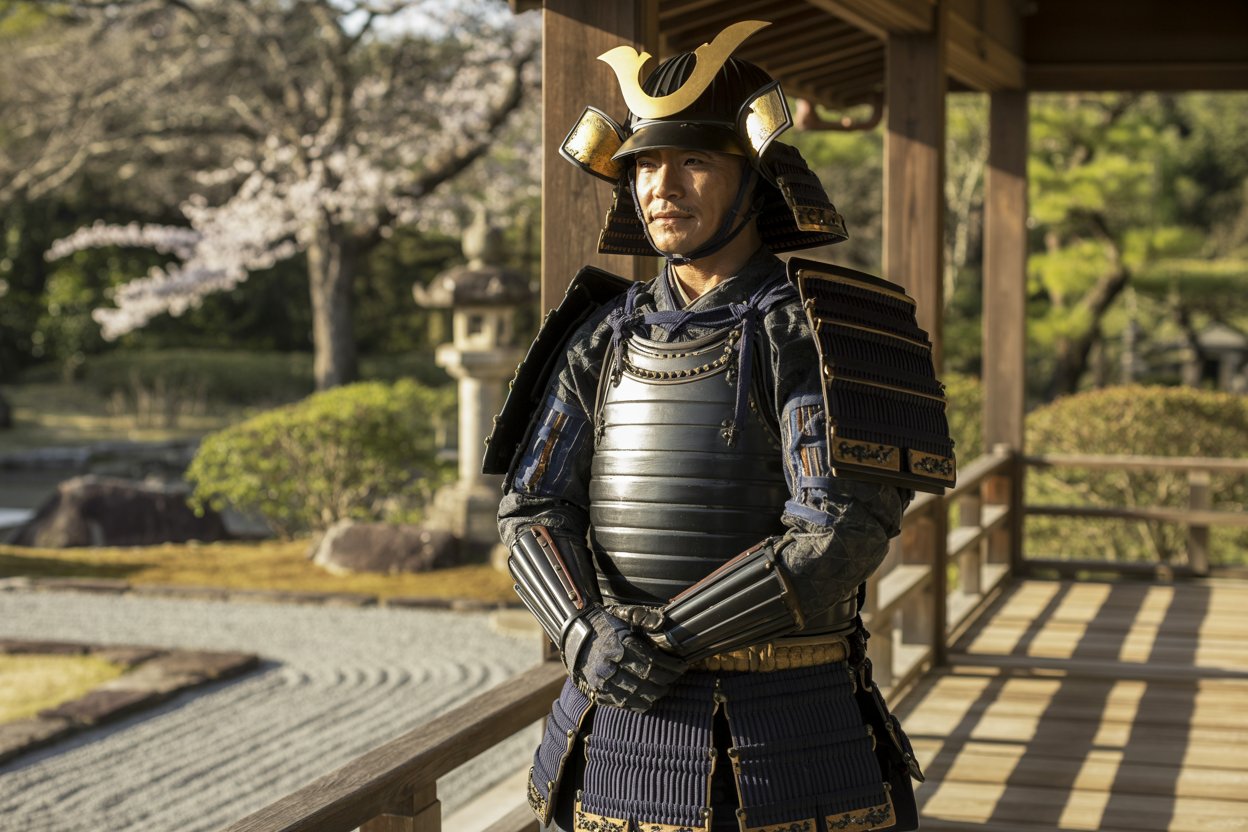
Miyamoto Musashi went undefeated in 61 duels during his lifetime, earning him the title of Japan’s greatest swordsman. But his legacy extends far beyond the battlefield.
Toward the end of his life, Musashi distilled decades of experience into two seminal works: The Book of Five Rings and the Dokkodo (The Path of Aloneness). These texts reveal that his mastery wasn’t about winning fights but about winning the daily battle against distraction, weakness, and wasted effort. The habits he developed as a warrior translate directly into principles for modern success, whether you’re building a business, strengthening relationships, or pursuing personal growth.
1. Accept Everything Just the Way It Is
“Accept everything just the way it is.” – Miyamoto Musashi
The first principle in Musashi’s Dokkodo addresses the root cause of most human suffering: resistance to reality. When you fight against circumstances you can’t control, you drain energy that could be directed toward solutions. Musashi understood that acceptance isn’t resignation; it’s the foundation for effective action.
In practice, this means acknowledging your current situation without the emotional weight of wishing it were different. If you lose your job, acceptance lets you focus on the next opportunity immediately rather than spiraling into “what if” scenarios. The samurai habit is to observe the situation clearly, accept it fully, and then take decisive action.
2. Don’t Waste Time On Meaningless Things
“Do nothing which is of no use.” – Miyamoto Musashi
Musashi lived by ruthless efficiency. Every movement in combat, every thought in strategy, had to serve a purpose. This principle applies equally to modern life, where wasted time and energy compound into missed opportunities.
The habit here is elimination. Audit your daily activities and ask whether each one contributes to your goals. If scrolling social media for an hour doesn’t improve your health, wealth, or relationships, it’s useless. Musashi’s warrior mindset demands that you cut away everything that doesn’t serve your ultimate purpose.
3. Take the World Seriously, Not Yourself
“Think lightly of yourself and deeply of the world.” – Miyamoto Musashi
A heavy ego makes you fragile. When you’re obsessed with your image or status, every criticism becomes a personal attack. Musashi taught that thinking “lightly” of yourself means detaching from self-importance. When you shift focus to understanding the world around you, you become antifragile.
This habit transforms conflicts. Instead of defending your position to “win” an argument, you can focus on discovering the truth. In business negotiations, you listen more than you talk. The samurai who thinks deeply of the world gains a strategic advantage through observation rather than ego-driven reaction.
4. Become Acquainted with Every Skill Set
“If you know the Way broadly, you will see it in everything.” – Miyamoto Musashi.
Musashi wasn’t just a swordsman. He was also a painter, calligrapher, sculptor, and strategist. He believed that mastery in one field is incomplete without understanding others. When you study multiple disciplines, you develop pattern recognition that reveals universal principles.
This habit means deliberately learning outside your profession. Suppose you’re a software engineer who studies psychology. If you’re in finance, learn about art or philosophy. The connections between disparate fields sharpen your thinking and reveal insights that specialists miss.
5. Do Not Be Led By Your Temporary Feelings
“Do not, under any circumstances, depend on a partial feeling.” – Miyamoto Musashi
Half-hearted commitment is a death sentence in combat. Musashi taught that warriors must never act on incomplete emotions or uncertain impulses. Indecision creates hesitation, and hesitation creates vulnerability.
The modern application is straightforward: don’t make significant decisions while riding temporary emotional waves. Avoid signing contracts when you’re euphoric or quitting your job when you’re angry. Wait for emotional clarity, then commit with your whole spirit. This habit prevents regret and ensures that when you do act, you act with conviction.
6. Focus on Potential Unseen Risk and Opportunities
“Perceive that which cannot be seen.” – Miyamoto Musashi
Musashi advised looking at distant things as if they were close and close things as if they were distant. This dual perspective prevents both short-sighted panic and long-term blindness. The warrior who develops this perception sees opportunities others miss and threats others ignore.
In practice, this means cultivating strategic vision. When a crisis emerges, ask whether it will matter in five years. When evaluating opportunities, consider second and third-order consequences. This habit trains you to see beyond the immediate and obvious.
7. Your Own Resentment and Complaints Weaken You
“Resentment and complaint are appropriate neither for oneself nor others.” – Miyamoto Musashi.
Complaining shifts responsibility away from yourself and keeps you trapped in victimhood. Musashi saw complaint as a weakness of spirit, a surrender of personal agency. The samurai takes complete ownership of circumstances, regardless of fairness.
Try going 24 hours without complaining about anything. Not the weather, not traffic, not other people. When you catch yourself complaining, notice how it changes nothing except your own energy level. This habit redirects that energy toward solutions and builds the mental resilience that separates those who succeed from those who make excuses.
8. The Way To Success is in the Training
“The ultimate aim of martial arts is not having to use them.” – Miyamoto Musashi.
For Musashi, there was no distinction between practice and reality. You can’t expect to be calm during a crisis if you’re chaotic in daily life. Excellence isn’t a special event; it’s a habit formed through consistent training in ordinary moments.
This principle means treating small tasks with the same discipline you’d bring to critical situations. Your morning routine, your email responses, and your daily exercise are each training for the moments that matter. When you practice excellence in the mundane, it becomes automatic when the stakes are high.
9. Distinguish Between Gain and Loss in Worldly Matters
“There is nothing outside of yourself that can ever enable you to get better, stronger, richer, quicker, or smarter. Everything is within.” – Miyamoto Musashi
Many apparent gains are actually disguised losses. A promotion that destroys your health is a net loss. A lucrative opportunity that compromises your values costs more than it pays. Musashi encouraged warriors to look beyond surface-level rewards and calculate actual costs.
Before committing to any new venture, evaluate hidden costs: time, stress, opportunity cost, and impact on other life areas. This habit protects you from pursuing short-term wins that create long-term problems.
10. You Must First Master Yourself Before Seeking Victory Over Others
“Today is victory over yourself of yesterday; tomorrow is your victory over lesser men.” – Miyamoto Musashi.
Musashi’s most powerful principle is that the only meaningful competition is with who you were yesterday. If you improve by even a small margin daily, you become formidable over time. This removes the anxiety of comparing yourself to others and focuses all energy on personal growth.
Each night, identify one thing you did better today than yesterday. Maybe you listened more carefully in a conversation. Perhaps you chose a healthier meal. These small victories compound into a transformation.
Conclusion
Musashi’s habits weren’t designed for the battlefield alone; they’re a complete system for self-mastery. When you accept reality instead of fighting it, eliminate what’s useless, develop broad knowledge, and compete only with your former self, you build the same resilience that kept Musashi undefeated through 61 duels.
The beauty of these samurai habits is their simplicity. They don’t require exceptional circumstances or resources. You can implement them today, starting with a single principle. Choose one habit, practice it for 30 days, then add another. Over time, you’ll develop the same focused power that made Musashi legendary through the daily discipline of improving every area of your life.