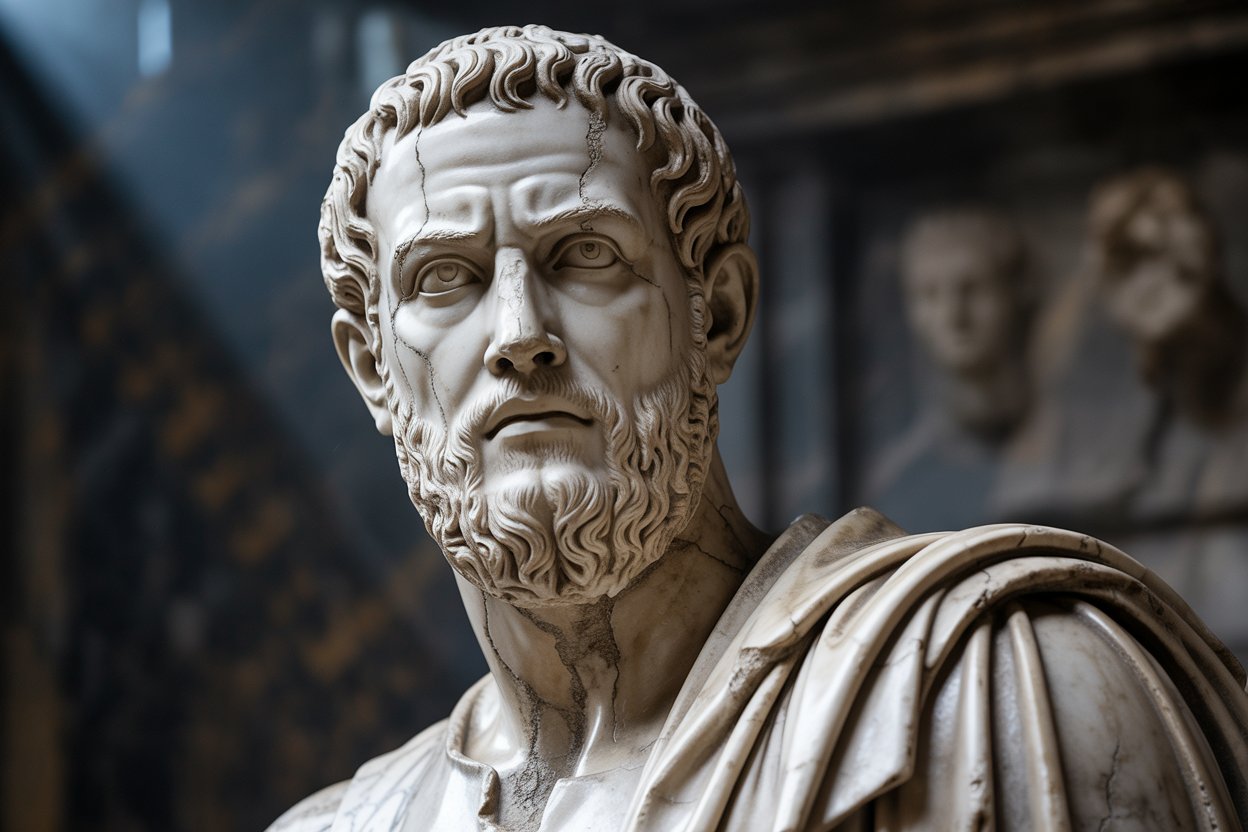
The ancient Stoics never sugarcoated reality. They lived through plagues, wars, and political chaos, yet they built mental frameworks that produced some of history’s most disciplined minds.
Marcus Aurelius ruled Rome while fighting battles on frozen frontiers. Epictetus went from being a servant to becoming one of philosophy’s most outstanding teachers. Seneca advised emperors while practicing self-imposed hardship.
These weren’t motivational speakers. They were practitioners of radical self-discipline in a world that offered no safety nets. Their teachings can’t make 2026 easier, but they can make you mentally stronger.
1. Practice Voluntary Hardship
Seneca taught a principle that sounds insane to modern ears: choose discomfort on purpose: cold showers, fasting, challenging workouts, and early mornings. Do hard things intentionally so life can’t beat you when difficulty arrives uninvited.
The logic is simple. If you’ve never trained yourself to endure discomfort, the first real hardship will flatten you. Voluntary hardship builds mental armor. It teaches your nervous system that discomfort won’t break you. Most people spend their entire lives avoiding any sensation that feels remotely uncomfortable, then wonder why they collapse when real adversity strikes.
2. Control What You Can, Ignore the Rest
Epictetus built his entire philosophy on one distinction: some things are in your control, others aren’t. Your effort, habits, and reactions are yours. Other people’s opinions, external outcomes, and random luck don’t.
Discipline starts when you stop wasting energy on things you can’t influence. You can’t control whether you get promoted, but you can control whether you do excellent work. You can’t control the economy, but you can control your savings rate. You can’t control other people’s behavior, but you can control your response.
3. Stop Making Excuses
Marcus Aurelius was ruthless with himself in his private journals. He wrote: “You could be good today. Instead, you choose tomorrow.” That single line destroys every excuse you’ve ever made.
“I’m tired” isn’t a reason to skip the workout. “I don’t feel motivated” isn’t a reason to avoid the challenging task. “I’ll start Monday” is just another way of saying you’re choosing weakness today. Stoics understood a truth that modern self-help actively hides: you don’t need to feel motivated to take action.
Feelings follow action, not the other way around. You don’t wait until you feel like doing something. You do it, then the feeling catches up.
4. Build a Non-Negotiable Daily Code
Create three to five rules you never break, regardless of circumstances. These become your identity markers. Train every day—no junk food on weekdays. Read twenty pages daily. Journal every morning. The specific rules matter less than the commitment.
A Stoic life runs on systems, not moods. Your discipline can’t depend on how you feel because feelings change hourly. When your code is non-negotiable, you remove decision fatigue. You don’t debate whether to work out. You do it because that’s who you are.
5. Use Negative Visualization
This practice sounds morbid until you understand its purpose. Daily, ask yourself: what if I lost my money, my health, my freedom? Not to scare yourself, but to wake yourself up to reality’s fragility.
You stop being soft when you realize life owes you nothing. Every day you wake up healthy is borrowed time. Every relationship could end tomorrow. Every comfort you enjoy is temporary. This isn’t pessimism. It’s clarity. When you understand how quickly everything can disappear, you stop taking good days for granted, and you stop complaining about minor discomfort.
6. Detach From Comfort Addiction
Modern life is engineered to make you weak—endless entertainment, easy dopamine, zero-effort rewards. Everything is designed to keep you comfortable, sedated, and compliant. The Stoics rejected comfort worship entirely.
They understood that hard work creates freedom while comfort creates slow decay. Every time you choose the easy path, you’re training yourself to be softer. Every time you pick comfort over challenge, you’re building a weaker version of yourself. Discipline means recognizing that the comfortable choice is almost always the wrong choice for long-term strength.
7. Become Your Own Drill Sergeant
Talk to yourself like a commander, not a victim. Instead of saying “I don’t feel like it,” say “Do it anyway.” That single habit will transform your entire life.
Most people negotiate with themselves constantly. They treat every task like it’s optional, every commitment like it’s negotiable. Stoics understood that your internal dialogue shapes your reality. If you speak to yourself like a weak person, you’ll act like one. If you talk to yourself like someone who does hard things regardless of how you feel, you’ll become that person.
Conclusion
Discipline isn’t motivation. Its identity. You don’t try to be disciplined. You become the person who does hard things.
The Stoics knew that self-discipline isn’t about forcing yourself to do things you hate. It’s about building a version of yourself who doesn’t need force. When discipline becomes your default setting, life gets simpler. You stop debating every decision. You stop negotiating with your weaker impulses.
To stop being soft in 2026 means accepting that comfort is not the goal. Strength is the goal. Resilience is the goal. Building a self that normal life circumstances can’t break is the goal. The Stoics proved this works. The question is whether you’ll actually apply it or just read about it and go back to being soft.