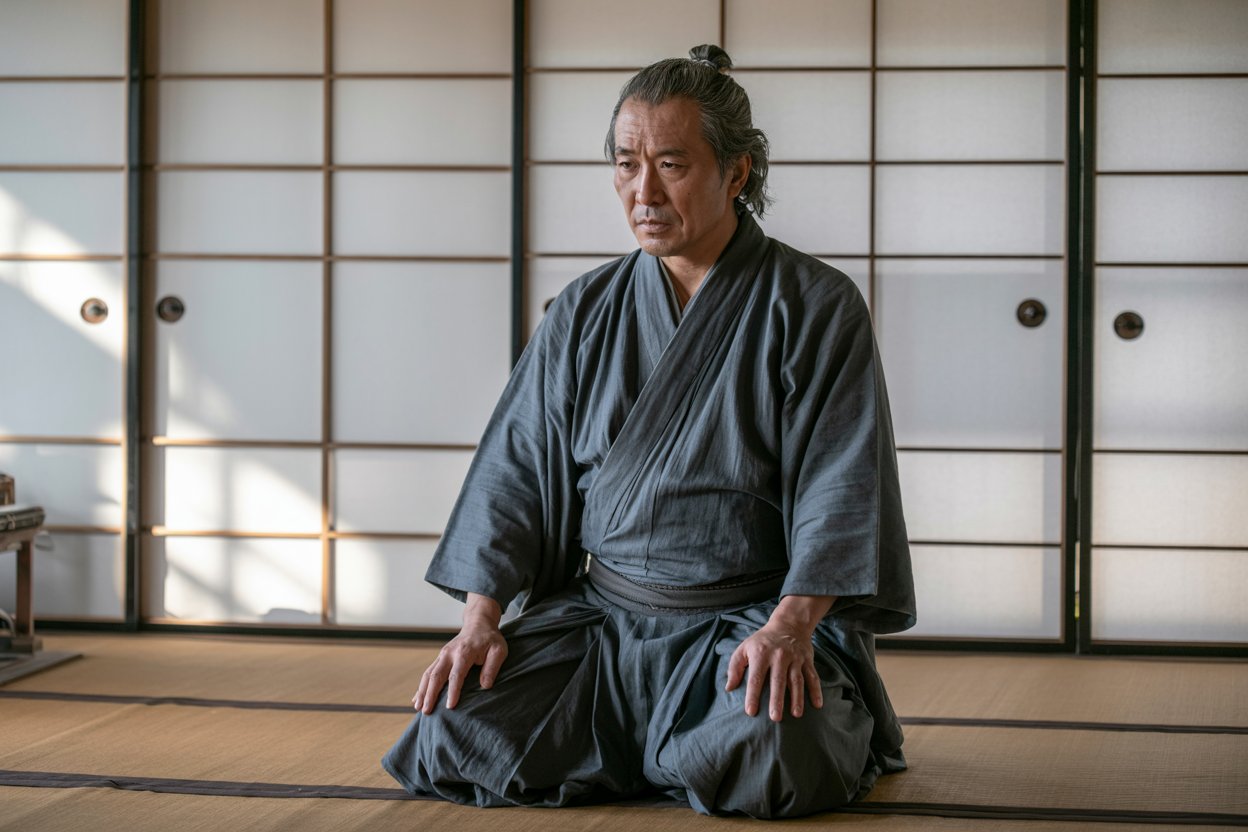
Miyamoto Musashi stands as one of history’s most formidable warriors, winning over 60 duels before retiring to write The Book of Five Rings. His approach to self-discipline wasn’t about willpower or forcing yourself through discomfort. Instead, Musashi developed a system of internal mastery that made external achievement almost inevitable.
His teachings reveal something most people miss about discipline. It’s not rigid rule-following or gritting your teeth through tasks you hate. Proper discipline, according to Musashi, flows from internal clarity and detachment from outcomes.
The five principles he outlined create a foundation for mastery in any domain, whether you’re trading markets, building a business, or developing any meaningful skill.
1. Master Yourself Before Trying to Master Anything Else
Musashi taught that self-discipline begins with internal control. A warrior who can’t govern his emotions, impulses, and ego will collapse under pressure regardless of technical skill. External mastery becomes impossible when internal chaos reigns.
This principle challenges the modern approach of jumping straight into tactics and strategies. Most people try to master their craft while their emotions swing wildly, their focus scatters across distractions, and their ego drives poor decisions.
Emotional neutrality creates clarity. When you can observe your fear, greed, or impatience without being controlled by them, you see situations as they actually are. This detachment doesn’t mean suppressing emotions. It means developing enough self-awareness that emotions inform your decisions without hijacking them.
The practical application starts with recognizing when you’re emotionally compromised. Can you sit with discomfort without reacting? Can you face criticism without defensiveness? Can you experience success without arrogance? These internal capabilities matter far more than any external technique.
2. Commit Fully to the Way (No Half-Measures)
Musashi warned against divided attention and half-hearted commitment. Discipline requires total dedication to your chosen path without distraction, hedging, or excuses. The principle is simple: depth beats dabbling every time.
This runs counter to modern advice to keep your options open or diversify your interests. Musashi recognized that mastery demands singular focus over extended periods. When you commit fully, you develop insights that superficial engagement never reveals.
Half-measures create the illusion of progress while preventing real progress. You can’t master trading by checking charts occasionally while pursuing three other ventures. You can’t build a meaningful business while keeping one foot in the comfortable job you’re planning to leave. You can’t develop genuine skill in anything without sustained, focused commitment.
The test of full commitment shows up in how you allocate your time, attention, and resources. Are you genuinely all-in on your path, or are you hedging with backup plans that drain your focus? Musashi’s approach demands clarity about what you’re committed to and ruthless elimination of everything that dilutes that commitment.
3. Train Constantly, Especially When No One Is Watching
Musashi emphasized relentless practice not for appearance or praise, but for mastery. Proper discipline reveals itself in private repetition, not public performance. Consistency creates inevitability over time.
Most people train sporadically or only when they’re motivated. They practice when they feel inspired, when others are watching, or when immediate results seem likely. This approach guarantees mediocrity. Mastery comes from showing up, especially when you don’t feel like it, when no one notices, and when progress seems invisible.
The gap between public performance and private preparation determines your actual skill level. What you do in private, when no recognition or reward is coming, reveals your real commitment. Warriors understood this instinctively. For samurai, their survival depended on reflexes developed through countless hours of practice that no one witnessed.
This principle applies directly to any skill worth developing. The trader who reviews charts daily, even when markets are closed. The writer who puts down words daily, even when unpublished. The entrepreneur who refines their business during years of obscurity. Consistency compounds into mastery, but only when maintained without external validation.
4. Detach From Comfort and Fear of Loss
Musashi lived ascetically by choice, believing that attachment to comfort, reputation, or outcomes weakens discipline and clouds judgment. Freedom comes from non-attachment to results. This might be his most challenging teaching for modern life.
We’re conditioned to pursue comfort and avoid loss at all costs. We make decisions based on preserving what we have rather than pursuing what we could become. This attachment creates fear, and fear destroys clear thinking. When you’re afraid of losing your comfort, status, or resources, you can’t make the bold moves that mastery requires.
Musashi’s detachment wasn’t about not caring. It was about not allowing attachment to distort your perception or paralyze your action. When you’re not clinging to comfort, you can act decisively. When you’re not terrified of loss, you can take calculated risks. When you’re not protecting your reputation, you can face your weaknesses honestly.
The practical application involves regularly doing things that challenge your comfort zone. Not for the sake of suffering, but to prove to yourself that comfort isn’t controlling your choices. Can you walk away from situations that serve your ego but not your growth? Can you risk failure in pursuit of mastery? Your attachments reveal themselves in what you’re unwilling to risk.
5. See Reality Exactly As It Is
Musashi demanded brutal honesty with yourself. Self-discipline requires seeing your weaknesses clearly and correcting them without denial or self-pity. Truth precedes improvement in every domain.
Most people live in carefully constructed delusions about their abilities, circumstances, and progress. They blame external factors for failures, credit themselves for successes, and avoid confronting uncomfortable truths about where they actually stand. This self-deception makes improvement impossible.
Seeing reality precisely as it is means stripping away comforting narratives and facing facts. Are you actually progressing or just staying busy? Is your strategy working, or are you rationalizing poor results? Are your skills developing, or have you plateaued while pretending otherwise? These questions require unflinching self-assessment.
The discipline of seeing things clearly extends beyond self-assessment to accurately reading situations. Can you see opportunities without letting greed distort your perception? Can you recognize threats without letting fear magnify them? Can you evaluate people and circumstances without projecting your wishes onto them? This clarity creates a decisive advantage in any competitive domain.
Conclusion
Musashi’s five rules for self-discipline create a complete system for internal mastery. They’re not separate principles but interconnected practices that reinforce each other.
Mastering yourself enables full commitment. Full commitment demands consistent skill training. Consistent training requires detachment from comfort. Detachment depends on seeing reality clearly. Clear seeing reveals areas needing self-mastery.
The approach challenges the modern quick-fix mentality. These aren’t tactics you implement for a week to see results. They’re practices you develop over the years to transform how you operate. Musashi’s discipline wasn’t rigid or forced. It was calm, focused, and consistent, applied over time until it became second nature.