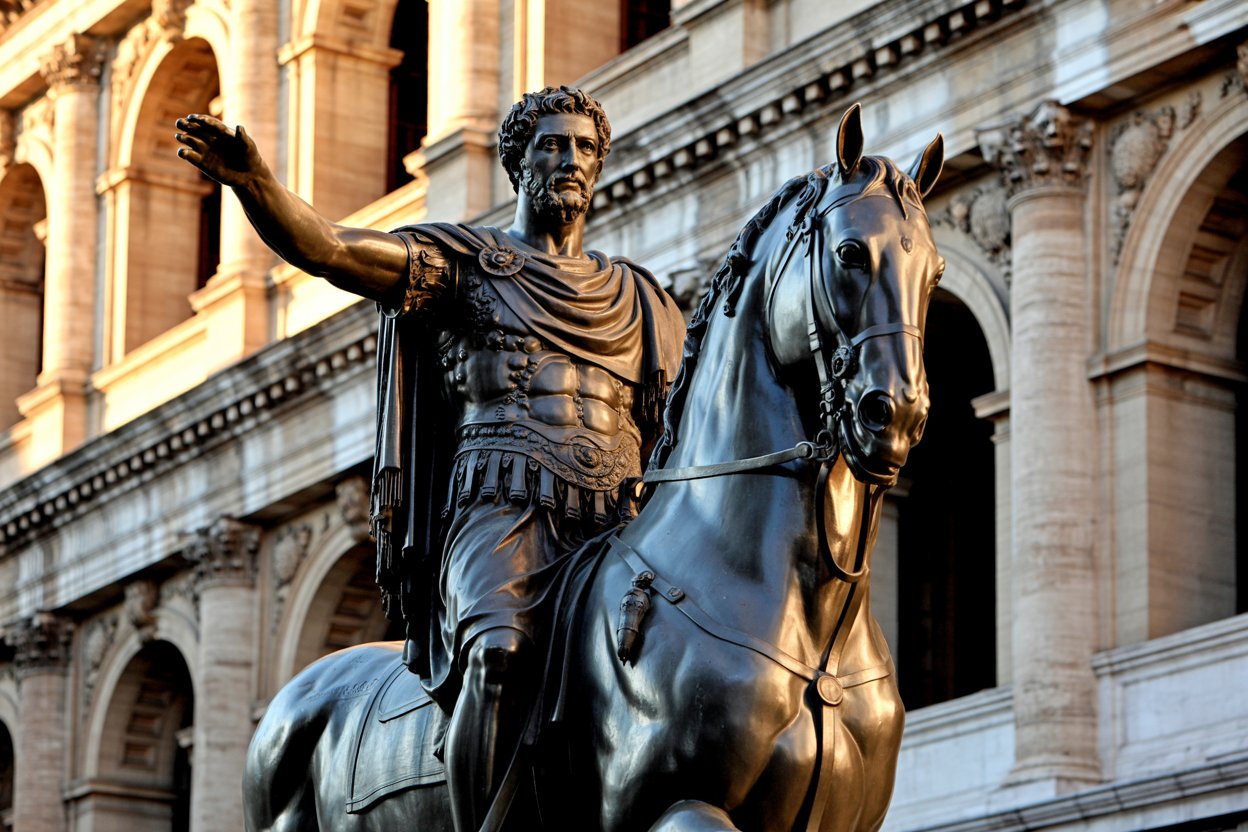
Marcus Aurelius wrote his Meditations as private notes to himself, not as a book for public consumption. The Roman emperor’s personal journal has become one of the most influential philosophical texts in Western history.
His reflections offer a practical framework for living with wisdom, discipline, and inner peace. The principles below distill the core themes of the text into actionable insights for anyone seeking clarity in an uncertain world.
1. Control Your Judgments, Not Events
Events themselves are neutral. Your suffering doesn’t come from what happens to you but from the meaning you assign to it.
Marcus understood that external circumstances hold no inherent power over your peace of mind. The interpretation you choose determines your emotional state, not the event itself.
2. Focus Only on What Is Within Your Power
Your thoughts, intentions, and actions belong to you. Everything else exists beyond your control.
This distinction forms the foundation of Stoic practice. Waste no energy trying to control what you can’t influence.
3. Live According to Nature and Reason
A good life aligns with rational thought and the natural order of the universe. You are designed to think clearly and act with purpose.
Fighting against reason creates internal conflict. Harmony comes from accepting your nature as a rational being.
4. Accept Impermanence Without Resistance
Everything changes. People die, empires fall, health deteriorates, and status evaporates.
This isn’t a tragedy. It’s the natural flow of existence. Resisting this truth creates unnecessary suffering.
5. Do Your Duty Without Complaint
Act rightly because it’s right, not because you expect recognition. Your character isn’t built through applause.
Marcus believed in performing your role without resentment. The work itself is the reward, not external validation.
6. Do Not Waste Time on What Others Think
Concern yourself with being good, not appearing reasonable. The opinions of others are outside your control.
Most people barely think about you at all. They’re too busy worrying about their own concerns to judge yours.
7. Meet Adversity as Training for the Mind
Obstacles exist to strengthen character, not to defeat it. Every challenge offers an opportunity to practice virtue.
Marcus viewed difficulties as a gymnasium for the soul. Without resistance, there can be no growth.
8. Detach from Outcomes
You are responsible for your effort, not the results. Once you’ve acted with integrity, the outcome is beyond your control.
This principle liberates you from anxiety. Success and failure both lie outside your circle of control.
9. Choose Virtue Over Comfort
Ease and pleasure aren’t measures of a good life. Character is the only reliable metric.
Marcus had access to every luxury the Roman Empire could provide. He still recognized that comfort doesn’t produce meaning or fulfillment.
10. Remain Calm Amid Chaos
A steady mind is possible regardless of external disorder. Inner tranquility doesn’t require perfect external conditions.
You can’t control the storm, but you can control your response to it. Peace exists in your judgments, not your circumstances.
11. Respond, Don’t React
Pause before forming judgment. Rash reactions surrender your power to external events.
The space between stimulus and response is where your freedom lives. Use that gap wisely.
12. Practice Humility
You are a small part of a vast whole. The universe doesn’t revolve around your preferences or timeline.
Marcus ruled the known world yet maintained perspective about his cosmic insignificance. This awareness kept him grounded.
13. Forgive Ignorance in Others
People act wrongly primarily because of misunderstanding; most of the time, it’s not usually malicious. They’re doing what seems right based on their current knowledge.
Getting angry at someone’s ignorance is like getting angry at a blind person for not seeing. They lack the capacity you expect of them.
14. Do Not Argue with Reality
Accept what happens as necessary, even when it’s unpleasant. Resistance to reality only creates internal friction.
What has happened is now unchangeable. Your acceptance or rejection can’t alter the past.
15. Live as if This Were Your Last Day
Act with urgency, integrity, and presence. Death isn’t something that happens later; it’s happening now with every passing moment.
Marcus frequently reminded himself of mortality. This awareness focused his attention on what truly mattered.
16. Reject Unnecessary Desires
Wanting less leads to freedom and tranquility. Most of what you think you need is actually optional.
The path to satisfaction isn’t getting more but wanting less. Reduce your desires, and you reduce your suffering.
17. Be Indifferent to Praise and Blame
Both are fleeting and outside your control. They reveal more about the speaker than about you.
Marcus received both worship and criticism. He recognized that neither changed his fundamental nature or duty.
18. Align Your Actions with the Common Good
You exist to contribute, not withdraw. Humans are social creatures designed for cooperation.
Your personal flourishing is inseparable from the welfare of others. Self-interest and social duty aren’t opposing forces.
19. Keep Your Mind Disciplined and Orderly
A cluttered mind leads to a disordered life. Your thoughts shape your reality and determine your peace.
Mental discipline requires constant attention. Left untended, your mind defaults to chaos and distraction.
20. Return Constantly to Self-Examination
Daily reflection is essential to moral progress. Without honest self-assessment, you can’t improve.
Marcus wrote Meditations as a practice of self-examination. He knew that philosophy without application is worthless.
Conclusion
Marcus Aurelius practiced these principles daily while managing an empire, fighting wars, and facing personal tragedy. His Meditations prove that philosophy isn’t abstract theory but a practical toolkit for navigating reality.
These twenty principles offer a framework for living with clarity and purpose. The question isn’t whether they’re true but whether you’ll apply them.