Rejection stings. Whether it’s a job you didn’t get, a relationship that ended, or a project that failed, the emotional impact feels personal and final. But what if rejection, rather than being an end, is actually raw material for building strength, as Marcus Aurelius thought?
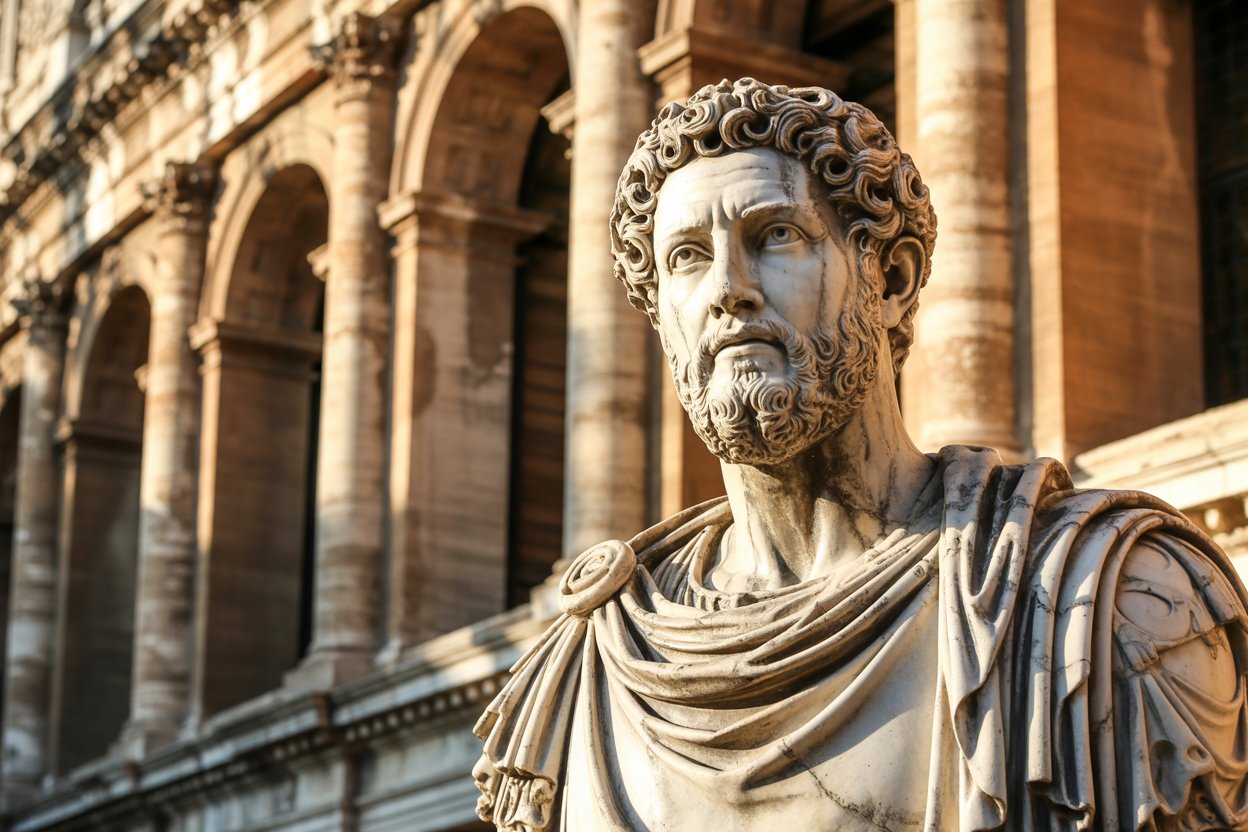
Marcus Aurelius, the Roman Emperor and Stoic philosopher, saw rejection not as a dead end but as the foundation for resilience and personal growth. His private journal, Meditations, reveals how he trained himself to transform every obstacle—including rejection—into an opportunity for self-mastery. This isn’t modern self-help repackaged as ancient wisdom, but classical Stoicism applied to one of life’s most universal challenges: how to use rejection as a tool for growth.
With that perspective, here are five lessons from Marcus Aurelius on how to use rejection to your advantage.
1. Rejection Reveals What Isn’t in Your Control
Marcus Aurelius spent his life distinguishing between what he could control and what he couldn’t. Other people’s opinions, decisions, and reactions fell firmly in the second category.
He wrote in Meditations, “You have power over your mind, not outside events. Realize this, and you will find strength.”
When someone rejects you, they’re making a choice rooted in their own preferences, biases, and circumstances. These factors are outside your sphere of influence.
Rejection becomes useful when you stop trying to control it.
Key takeaway: Accept what you can’t control and focus your energy on your own response and next steps.
2. Rejection Is Proof You Acted, Not Failed
Marcus valued action guided by reason over comfort or approval. He understood that hesitation driven by fear of rejection was a form of self-sabotage.
In Meditations, he wrote, “Do not act as if you were going to live ten thousand years. Death hangs over you. While you live, while it is in your power, be good.”
This passage isn’t about morbid pessimism. It’s a reminder that life is finite and action is urgent.
From a Stoic perspective, rejection means you acted. You put yourself in the arena and took the risk.
Key takeaway: Taking action, even if it leads to rejection, is more valuable than avoiding risk and missing growth.
3. Rejection Trains Emotional Self-Command
Marcus Aurelius repeatedly practiced emotional detachment from both praise and blame. He treated external judgments as noise that shouldn’t dictate his internal state.
He wrote, “Be like the rock that the waves keep crashing over. It stands unmoved, and the raging of the sea still falls around it.”
This metaphor captures the Stoic ideal of apatheia, which doesn’t mean apathy but rather freedom from the control of emotions. Each rejection is resistance training for your mind.
Just as lifting weights builds physical strength, enduring rejection builds emotional resilience. The first rejection might knock you off balance. The tenth might sting less. The fiftieth becomes background noise.
Key takeaway: Regularly facing rejection builds emotional strength, much as physical muscles grow through practice.
4. Rejection Clarifies Your Values
Marcus Aurelius warned repeatedly against living for reputation or external validation. He believed that basing your decisions on what others think is a form of servitude.
In Meditations, he wrote, “I do my duty; other things trouble me not.”
When you stop chasing approval, rejection can’t derail you.
Rejection becomes a filtering mechanism. It exposes which paths depend on external validation and which align with your actual values. What remains after rejection is work guided by duty, character, and reason, not popularity.
If you’re building something meaningful, pursuing a challenging goal, or taking a contrarian position, rejection is inevitable. The Stoic response is to use it as confirmation that you’re not living for applause.
Key takeaway: Rejection helps you identify if you are acting for your values or for others’ approval.
5. Rejection Is Raw Material for Growth
One of Marcus Aurelius’ most famous principles applies directly to rejection. He wrote in Meditations, “The impediment to action advances action. What stands in the way becomes the way.”
This idea, often summarized as “the obstacle is the way,” flips rejection on its head. Instead of seeing it as a roadblock, Stoicism teaches you to view it as feedback and fuel.
Rejection is not a stop sign. It’s information.
It tells you where your strategy fell short, where your skills need refinement, or where your assumptions were wrong. Treating rejection as raw material converts resistance into progress.
Marcus didn’t expect life to be easy. He anticipated obstacles and trained himself to extract value from every setback. Rejection was just another form of resistance.
Conclusion
Marcus Aurelius didn’t teach you to avoid rejection. He taught you to harness it—to turn each setback into a stepping stone for personal strength, clarity, and resilience.
Rejection becomes an advantage when you stop negotiating with externals, focus on duty over approval, and treat resistance as training. It forces you to clarify what matters, test your emotional resilience, and refine your approach.
This is Stoic reverse psychology, not manipulation or mental tricks, but mastery of self. The person who learns to process rejection without losing composure gains a permanent edge. They act more freely, recover faster, and build something durable instead of fragile.
Marcus faced rejection, criticism, and betrayal throughout his life. He didn’t let it define him. He used it to sharpen his character and deepen his philosophy. You can do the same.