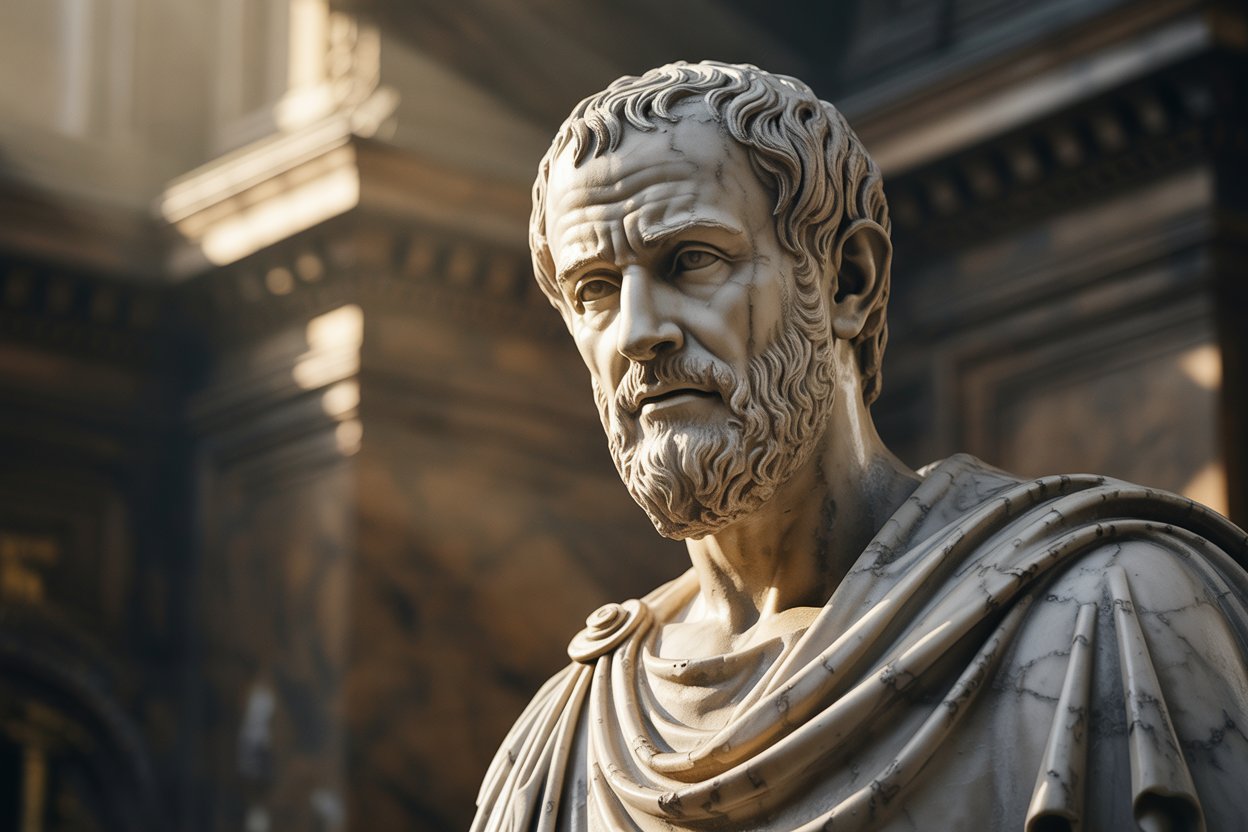
Seneca, the statesman and dramatist of Ancient Rome, had a knack for turning the rigorous discipline of Stoicism into punchy, relatable wisdom. He didn’t just want people to think better; he wanted them to live better. His letters and essays overflow with practical advice that still resonates two millennia later.
Here are five of his most transformative quotes, along with the Stoic logic that makes them so powerful.
1. On Imaginary Suffering
“We suffer more often in imagination than in reality.” – Seneca
This is perhaps his most famous insight. Seneca observed that we spend a massive amount of mental energy “pre-living” disasters that never actually happen.
Think about your typical worry cycle. You imagine getting fired, losing your savings, or embarrassing yourself in front of colleagues. You play out entire catastrophic scenarios in vivid detail.
Yet most of these disasters never materialize. By the time the actual “bad thing” happens, you’ve already suffered through it dozens of times in your head. You’ve essentially volunteered for psychological torture.
The Stoic approach offers a different path. Focus on the present moment, which is the only place where you actually have control. The future hasn’t happened yet, and the past is unchangeable.
When you catch yourself spiraling into anxious predictions, ask a simple question: “Is this happening right now?” If the answer is no, you’re suffering needlessly. A ghost is attacking your anxiety.
2. On the Value of Time
“It is not that we have a short time to live, but that we waste a lot of it.” – Seneca.
Seneca was ruthless about time management, but not in a “hustle culture” way. He believed we are stingy with our money but incredibly reckless with our minutes.
We track every dollar that leaves our bank account. We comparison shop to save a few bucks on groceries. Yet we freely give away hours to people who drain us, activities that don’t serve us, and distractions that leave us empty.
Life is plenty long enough if you stop giving your time away to things that don’t matter. The problem isn’t that you lack time. The problem is that you treat it as if it’s infinite.
Seneca pushed back against the common complaint of “not having enough time.” You have the same hours as everyone else. The difference is how you protect them.
Treat your time as your most non-renewable resource. Money can be earned back. Time can’t. Once a minute is gone, it’s gone forever.
3. On Luck and Preparation
“Luck is what happens when preparation meets opportunity.” – Seneca
Instead of viewing success as a lightning strike, Seneca viewed it as a mathematical certainty for those who are ready. Luck isn’t random. It’s what happens when skill intersects with chance.
You can’t control when an opportunity appears. Market conditions shift. Jobs open unexpectedly. Connections emerge at random moments.
But you have total control over whether you are skilled enough to grab an opportunity when it does appear. The trader who has studied for years is “lucky” when the market presents a setup. The job applicant who has built their skills is “lucky” when a position opens.
Stop waiting for a “lucky break” and start building the foundation to handle one. When opportunity knocks, most people aren’t ready to answer the door. They haven’t done the work.
The Stoics believed in controlling what you can control. You can’t summon opportunities on command. But you can make yourself ready for them.
4. On True Wealth
“It is not the man who has too little, but the man who craves more, who is poor.” – Seneca.
Stoicism teaches that wealth isn’t a dollar amount. It’s a state of contentment. This concept challenges everything modern consumer culture tells us.
If your desires always stay one step ahead of your income, you will always feel “poor,” regardless of your bank balance. You earn more, so you want more. You upgrade your lifestyle, so you need more. The finish line keeps moving.
The man earning fifty thousand dollars a year who is satisfied is wealthier than the man earning five hundred thousand dollars who feels deprived. Poverty is a mental state, not a financial one.
Practice gratitude for what you already have. Being satisfied with your current situation is the only way to be truly “rich.” This doesn’t mean you can’t pursue growth or improvement.
It means you can pursue those things from a place of contentment rather than desperation. The difference is profound.
5. On Resilience
“Difficulties strengthen the mind, as labor does the body.” – Seneca
Seneca viewed obstacles not as interruptions to life, but as the very training required to live well. Just as lifting weights tears down muscle fibers so they rebuild stronger, challenges tear down your mental comfort so resilience can grow. Comfort makes us soft. Resistance makes us strong. This isn’t motivational fluff—It’an s observable reality.
The person who has never faced adversity crumbles at the first real challenge. The person who has weathered storms knows they can survive the next one. Experience with difficulty builds confidence.
When you face a challenge, don’t ask “Why me?” That question leads nowhere productive. Instead, ask “How can I use this to grow?” That question opens possibilities.
The Stoics didn’t seek out suffering for its own sake. They simply recognized that obstacles are inevitable. Since you can’t avoid them, you might as well extract their benefits.
Conclusion
Seneca’s wisdom endures because it addresses timeless human struggles. We still worry about imaginary futures, waste our precious time, wait for luck instead of preparing, chase endless desires, and resist the difficulties that would make us stronger.
The beauty of these quotes is their simplicity. You don’t need to study philosophy for years to apply it. You just need to recognize the patterns in your own life.
Start with one quote that resonates most. When you catch yourself suffering in imagination, return to the present. When you notice time slipping away, protect it more fiercely. When you crave more, practice gratitude for what exists now.
Stoicism isn’t about perfection. It’s about progress. These five principles offer a roadmap for that journey.