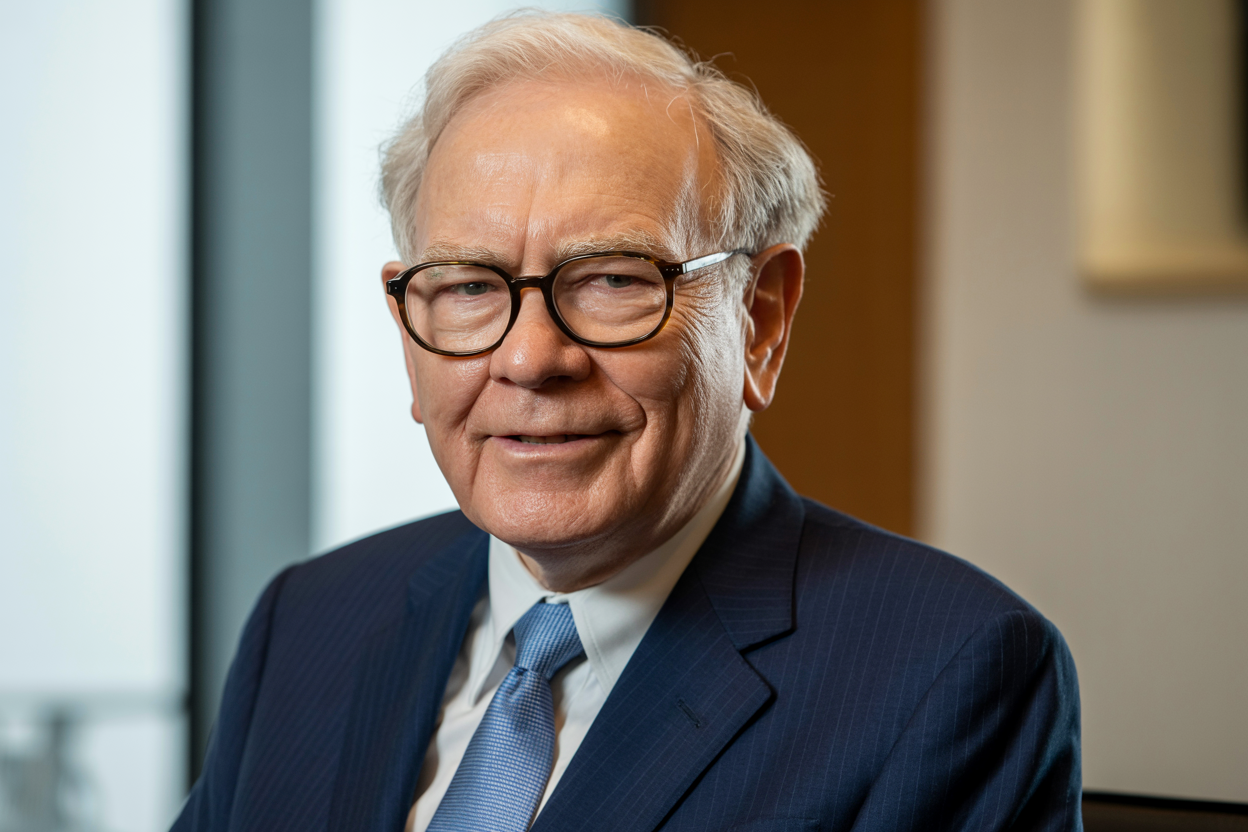
Warren Buffett built one of history’s greatest fortunes not through complex strategies, but by avoiding simple financial mistakes. Despite his immense wealth, he still lives in the same Omaha house he purchased in 1958 and maintains surprisingly frugal habits. His financial wisdom extends beyond stock picks to practical advice about everyday spending decisions that quietly drain bank accounts and derail long-term financial goals.
What makes Buffett’s guidance particularly valuable is that the same discipline that helped him build wealth can help middle-class families avoid financial traps. Over decades, through shareholder letters and public appearances, he has consistently warned about everyday spending habits that prevent wealth accumulation. These aren’t abstract concepts but practical insights into how middle-class consumption patterns actively undermine the building of lasting financial security.
1. High-Interest Credit Card Debt
At Berkshire Hathaway’s 2020 shareholder meeting, Buffett shared advice he gave a friend carrying credit card debt at 18% interest. “If I owed any money at 18%, the first thing I’d do with any money I had would be to pay it off,” he stated. “It’s going to be way better than any investment idea I’ve got.”
This statement reveals why credit card debt represents such a destructive force. Even Buffett, one of history’s most successful investors, acknowledges he can’t reliably earn returns that beat typical credit card interest rates. When cards charge 18% or higher, consumers fight an uphill battle against mathematics itself.
The same compound interest that builds wealth through investing becomes destructive when working against borrowers. Buffett himself pays cash for most purchases and views high-interest debt as financial poison. Every dollar spent on credit card interest is a dollar that can’t be invested in appreciating assets where compound interest works in your favor.
2. New Car Purchases
Buffett famously drove a 2006 Cadillac DTS for eight years, only replacing it when his daughter convinced him to upgrade for appearances. “The truth is, I only drive about 3,500 miles a year, so I will buy a new car very infrequently,” he explained. His approach treats cars purely as means of transportation rather than as status symbols.
The financial mathematics behind new car purchases reveals their wealth-destroying nature. A new vehicle loses a significant portion of its value in the first year alone. This immediate depreciation represents one of the most efficient ways to destroy wealth, a practice middle-class families regularly engage in without fully understanding the consequences.
When families spend tens of thousands on new vehicles, they miss the opportunity to invest that money in appreciating assets. Buffett’s approach involves buying used cars at reduced prices and holding them for extended periods. The advantage is clear: depreciation has already occurred, transportation needs are met, and capital remains available for wealth-building investments.
3. Gambling and Lottery Tickets
At a 2007 Berkshire Hathaway shareholders meeting, Buffett called gambling “socially revolting.” He has also described lottery tickets as “a tax on people who don’t understand mathematics.” His characterization reveals his understanding of the mathematics behind these activities.
Unlike investing in productive businesses that create economic value and generate cash flows, gambling creates no value. It’s a mathematically designed system to transfer money from participants to operators. The house always has an edge, and over time, the mathematical certainty of losses becomes unavoidable for gamblers.
The opportunity cost becomes particularly damaging when you consider alternative uses for that money. Even modest amounts spent regularly on lottery tickets or gambling could be invested in productive assets instead. Buffett’s criticism extends to all forms of gambling that people use as substitutes for systematic wealth building through patient investing.
4. Oversized Homes
Buffett still lives in the same Omaha house he purchased in 1958 for $31,500. Despite his massive wealth, his continued residence in this modest property illustrates his belief that housing should serve practical needs rather than ego or status. He has stated that “our country’s social goal should not be to put families into the house of their dreams, but rather to put them into a house they can afford.”
The concept of being “house poor” occurs when housing costs consume such a large portion of income that little remains for other financial goals. Buffett’s housing philosophy emphasizes buying what you need, not what you might want or what others expect based on your income level.
Larger properties require proportionally higher property taxes, utilities, maintenance expenses, and furnishing costs. These ongoing expenses can consume so much of a family’s income that little remains for investing and building wealth. The opportunity cost becomes enormous when considering what those extra housing dollars could accomplish through decades of compound growth in the stock market.
5. Immediate Gratification Over Saving
Buffett’s most powerful teaching addresses time preference: “Someone’s sitting in the shade today because someone planted a tree a long time ago.” This principle explains how the middle class wastes money by consistently choosing immediate consumption over delayed gratification.
His famous quote, “Do not save what is left after spending; instead, spend what is left after saving,” reflects a complete reversal of how most people approach money. The middle class typically experiences lifestyle inflation as income increases, with spending rising proportionally or even faster than earnings.
Buffett’s lifestyle choices during his wealth-building years enabled him to allocate capital to investments in the most efficient way. His modest home, simple meals, and inexpensive hobbies demonstrate that every dollar spent on immediate consumption is a future dollar not earned through compound interest. The psychological barrier for the middle class involves the ability to delay gratification.
Spending money today provides immediate satisfaction, while investing requires sacrificing present pleasure for future security. Buffett’s insight is that wealthy individuals master this trade-off. Small sacrifices compounded over decades create extraordinary results, yet most middle-class families struggle to internalize this mathematical truth.
Conclusion
The common thread throughout Buffett’s teachings is recognizing that every spending decision represents an opportunity cost. Money spent on high-interest debt, new cars, gambling, oversized housing, or excessive immediate consumption can’t be invested in productive assets that compound over time.
Buffett’s spending philosophy reveals an uncomfortable truth: middle-class financial struggles stem less from insufficient income than from consumption patterns that prevent capital accumulation. His teachings provide a blueprint for avoiding depreciating assets, eliminating high-interest debt, disregarding status symbols, and prioritizing long-term wealth over immediate gratification.
For middle-class families working with limited resources, these decisions determine the difference between financial struggle and financial security.