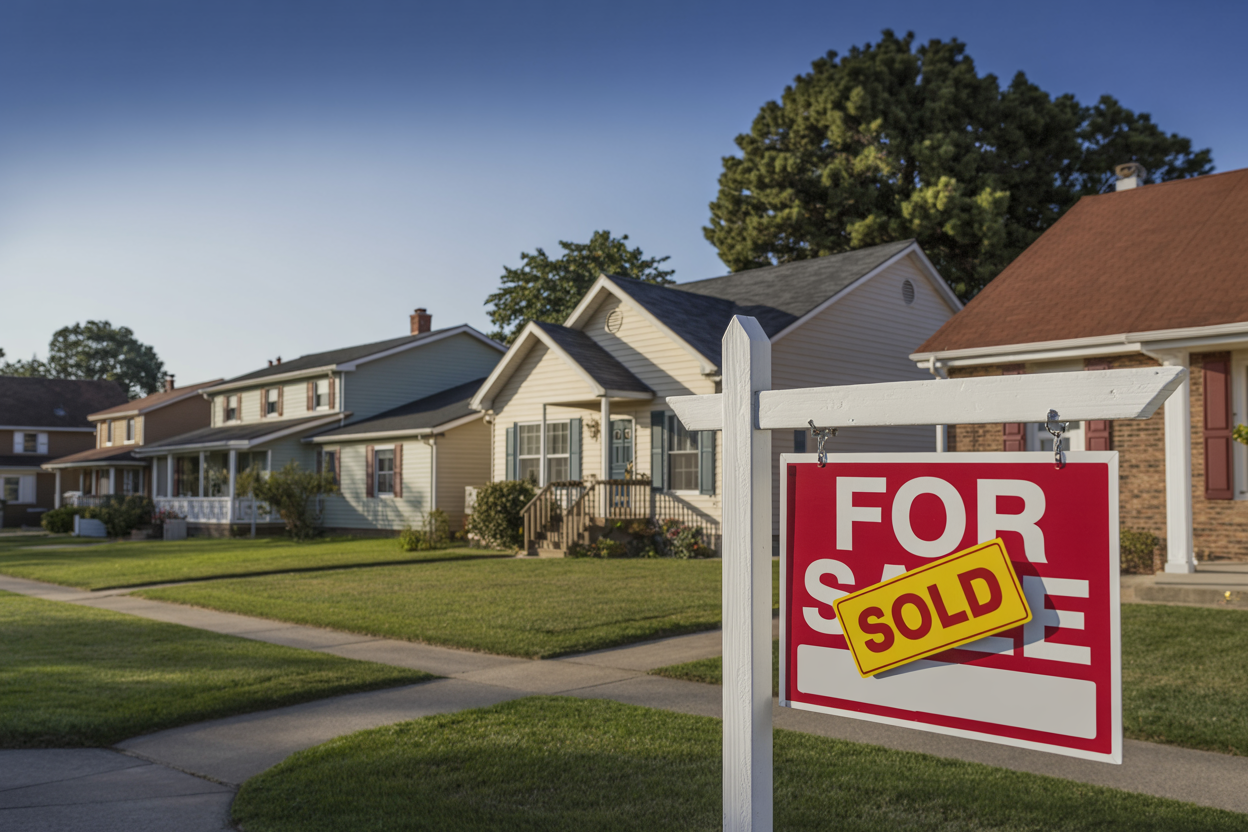
The American Dream of homeownership feels increasingly out of reach for middle-class families in 2026, especially in high-cost coastal markets where six-figure incomes barely cover median home prices.
Yet while markets like California and New York grab headlines with million-dollar starter homes, ten states offer genuine affordability for households willing to challenge geographic assumptions about where quality of life is better.
This ranking examines the cheapest states for middle-class homebuyers based on a comprehensive affordability analysis that weighs median home prices, estimated monthly mortgage payments, household income-to-mortgage ratios, property taxes, homeowners’ insurance, and overall cost of living. The data reveals opportunities that conventional wisdom often overlooks.
1. West Virginia
West Virginia claims the top position for middle-class home affordability in 2026, with a median home price of $225,506 and an estimated monthly mortgage payment of just $871. The state’s median household income of $57,917 creates a favorable income-to-mortgage ratio, making homeownership accessible without the financial strain common in higher-cost markets.
The Mountain State’s affordability extends beyond housing costs. Lower property taxes and insurance premiums reduce total housing expenses, leaving more income available for wealth-building activities such as retirement contributions and investment accounts. This financial breathing room represents the fundamental value proposition for middle-class families focused on asset accumulation rather than geography-based status.
2. Arkansas
Arkansas offers middle-class buyers a median home price of $239,654 with an exceptionally low monthly mortgage estimate of $821. This combination creates one of the most favorable payment-to-income ratios in the nation, supported by a median household income of $58,773.
The Natural State’s affordability profile challenges the assumption that career advancement requires expensive coastal markets. Remote work opportunities and lower living costs create conditions where middle-class households can build equity faster than their higher-earning counterparts in high-cost markets, where inflated housing expenses consume 40% or more of gross income.
3. Mississippi
Mississippi ranks third with a median home price of $235,408 and the lowest estimated monthly mortgage payment on this list at $790. While the state’s median household income of $54,915 sits below that of other markets, the extraordinarily low housing costs create affordability that transcends simple income comparisons.
The Magnolia State demonstrates how housing cost efficiency can outweigh higher nominal incomes elsewhere. A family spending $790 monthly on housing has substantially more discretionary income for wealth building than a household earning $20,000 more annually but spending $2,500 on rent or mortgage payments in a higher-cost market.
4. Alabama
Alabama features a median home price of $284,090 with an estimated monthly mortgage of $933, supported by a median household income of $62,027. The state’s affordability ranking reflects not just low housing costs but a comprehensive cost-of-living advantage that amplifies purchasing power.
The Heart of Dixie offers middle-class families a critical wealth-building advantage: the ability to become homeowners earlier in their financial journey. Earlier homeownership means more years of equity accumulation and protection from rent increases that steadily erode the saving capacity of renter households in expensive markets.
5. Louisiana
Louisiana offers middle-class buyers a median home price of $249,857 and an estimated monthly mortgage payment of $956. The state’s median household income of $60,023 supports manageable housing costs, though potential homeowners must carefully evaluate insurance expenses that can vary significantly by location and property characteristics.
The Pelican State illustrates an important affordability consideration often overlooked in simple price comparisons. Homeowners’ insurance in Gulf Coast regions can add thousands of dollars annually to total housing costs, particularly for properties in wind or flood zones. This reality check doesn’t eliminate Louisiana’s affordability advantages, but it does require more thorough due diligence than in markets with more predictable insurance expenses.
6. Indiana
Indiana offers a median home price of $255,311, with an estimated monthly mortgage of $1,129, supported by a higher median household income of $70,051. This combination creates solid affordability despite higher mortgage payments than several states ranked below it in overall housing costs.
The Hoosier State’s value proposition centers on economic stability and manageable housing costs in metro areas with genuine employment opportunities. Indianapolis and surrounding markets provide middle-class families access to urban amenities and career options without the crushing housing costs that define comparable cities in higher-cost states.
7. Kentucky
Kentucky has a median home price of $269,938, an estimated monthly mortgage of $932, and a median household income of $62,417. The state’s relatively low mortgage payments despite higher home prices reflect favorable property tax and insurance environments that reduce total monthly obligations.
The Bluegrass State demonstrates how comprehensive affordability factors matter more than headline home prices alone. A $270,000 home with $932 monthly payments offers better value than a $240,000 property with $1,100 monthly obligations driven by high taxes and insurance premiums.
8. Michigan
Michigan offers middle-class buyers a median home price of $230,075 and an estimated monthly mortgage payment of $1,152, supported by a median household income of $71,149. The state’s relatively high mortgage payment reflects property taxes and insurance costs that exceed several markets with higher home prices.
The Great Lakes State offers affordability concentrated in specific markets rather than statewide uniformity. Metro Detroit and Grand Rapids provide middle-class families with access to major employment centers, with housing costs that remain manageable compared to those in equivalent markets in coastal states.
9. Missouri
Missouri ranks ninth with a median home price of $258,586 and an estimated monthly mortgage of $990, supported by a median household income of $68,920. The Show-Me State’s affordability profile benefits from major metro areas like Kansas City and St. Louis, offering urban opportunities without prohibitive housing costs.
Missouri illustrates the wealth-building advantage of mid-tier affordability markets. Households earning near the state median income can realistically achieve homeownership while maintaining the capacity to fund retirement accounts and build emergency reserves, goals that remain theoretical for higher-earning families drowning in housing costs elsewhere.
10. Ohio
Ohio rounds out the ranking with a median home price of $231,798 and an estimated monthly mortgage of $1,166, supported by a median household income of $69,680. Despite higher monthly payments than several states with pricier homes, Ohio’s strong income levels and diverse employment opportunities support manageable affordability.
The Buckeye State offers middle-class families access to major metros like Columbus, Cleveland, and Cincinnati with housing costs that preserve wealth-building capacity. This combination of employment opportunities and housing affordability creates conditions in which middle-class incomes can actually build net worth rather than cover living expenses.
Conclusion
The cheapest states for middle-class homebuyers in 2026 share common characteristics: housing costs that preserve discretionary income, property tax environments that don’t devour equity gains, and total monthly obligations that leave room for actual wealth building. These markets challenge the assumption that career success requires expensive coastal locations where high incomes get consumed by even higher living costs.
The data reveals a critical truth often lost in conventional career and financial advice: affordability creates wealth-building capacity that high incomes in expensive markets can’t match. A family earning $60,000 in West Virginia with an $871 mortgage payment has more discretionary income for savings and investment than a household earning $100,000 in California with a $3,500 mortgage payment. This mathematical reality matters more than geographic prestige when building actual net worth over decades.