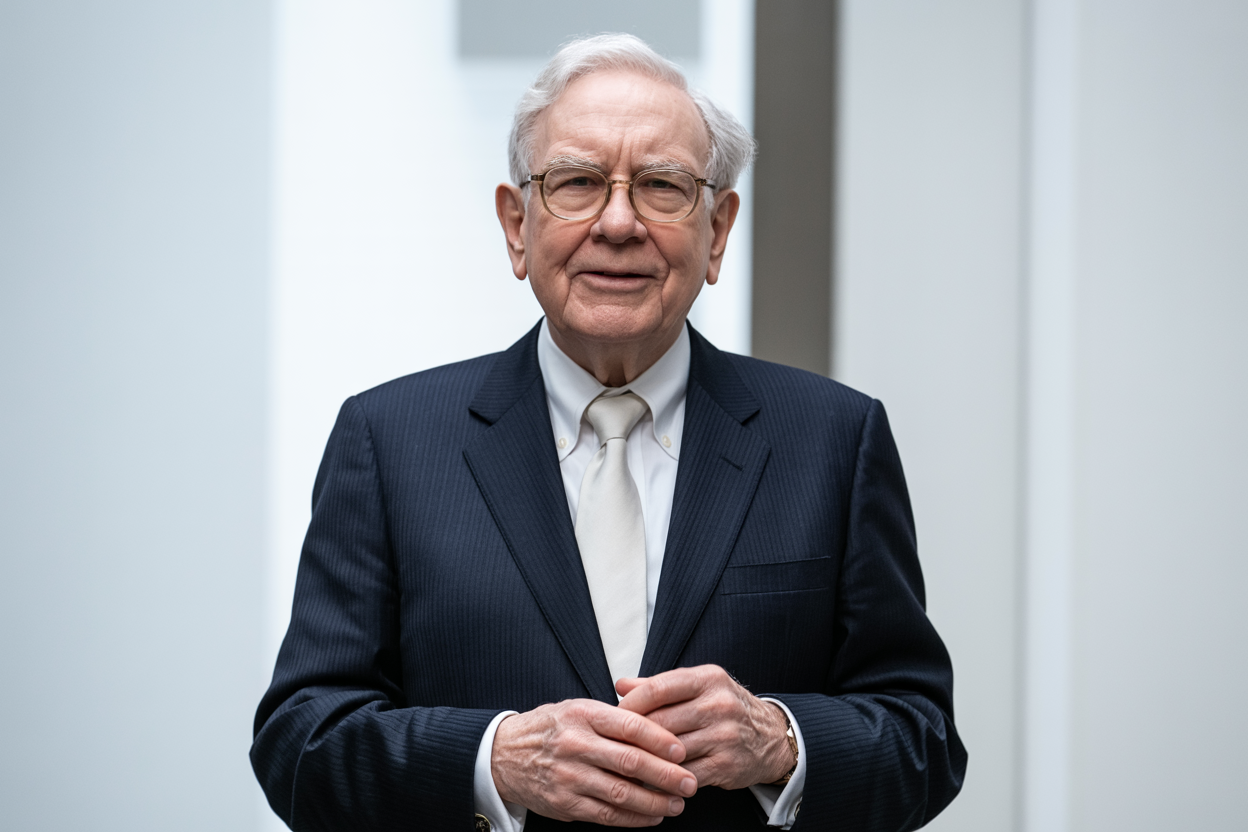
Warren Buffett built one of history’s great fortunes not through complex strategies or insider advantages, but through principles anyone can follow. His advice to the middle class has been remarkably consistent across decades of shareholder letters, Berkshire Hathaway annual meetings, and interviews.
The purchases he recommends aren’t exotic or expensive. They’re decisions are ones that most people can make starting today, and every single one is backed by their own performance over a lifetime of wealth building.
1. Low-Cost S&P 500 Index Funds
Buffett has spent decades telling ordinary investors who have no interest in research or active investing to skip stock picking and buy index funds instead. In his 2013 Berkshire Hathaway shareholder letter, he wrote that “a low-cost index fund is the most sensible equity investment for the great majority of investors.” This isn’t casual advice. Buffett specified in his own will that 90% of the cash left to his wife should be invested in a low-cost S&P 500 index fund.
His point is that trying to beat the market usually means underperforming it. He famously won a million-dollar bet that an S&P 500 index fund would outperform a selection of top hedge funds over a decade.
Most people would build substantial wealth simply by capturing the market’s long-term return consistently, rather than chasing higher returns and getting lower ones. The middle class can’t outsmart Wall Street, but they don’t need to. They need to own the whole market cheaply and stay the course.
2. Education, Skills, and Books
Buffett has called knowledge the best investment a person can make, particularly early in life. At the 2023 Berkshire Hathaway annual meeting, he told the audience: “The best thing you can do is to be exceptionally good at something. Whatever abilities you have can’t be taken away from you. They can’t actually be inflated away from you. So, the best investment by far is anything that develops yourself, and it’s not taxed at all.”
His own life proves the principle. Early in his career, Buffett took a Dale Carnegie public speaking course because he was terrified of speaking in public. He credits that course as one of his best investments because it permanently increased his earning power by improving his communication skills.
Skills compound faster than capital when you’re just starting. A $500 course that increases your income by $10,000 a year delivers returns no stock can match. The middle class often overlooks this because it doesn’t feel like a “real” investment, but Buffett considers it the single most important one.
3. A Modest Home You Can Afford
In his 2010 letter to Berkshire Hathaway shareholders, Buffett wrote: “Home ownership makes sense for most Americans. All things considered, the third best investment I ever made was the purchase of my home, though I would have made far more money had I instead rented and used the purchase money to buy stocks.” He bought his Omaha home in 1958 for $31,500 and still lives there today despite being worth over $147 billion.
But Buffett’s endorsement of homeownership comes with a sharp warning. In that same letter, he wrote: “Our country’s social goal should not be to put families into the house of their dreams, but rather to put them into a house they can afford.” The lesson isn’t just to buy a home. It’s to buy one that doesn’t destroy your ability to invest everywhere else.
The middle class often stretches for the maximum mortgage a lender will approve, leaving nothing for wealth-building investments. Buffett’s approach is the opposite: buy modestly, live below your means, and redirect the difference into assets that compound over decades.
4. Time in the Market Through Early and Consistent Investing
Buffett’s most valuable purchase is something the middle class can afford right now: time. At the 1999 Berkshire Hathaway annual meeting, he explained his wealth-building formula by saying, “We started building this little snowball on top of a very long hill. So we started at a very early age rolling the snowball down.” He has also described the stock market as “a device for transferring money from the impatient to the patient.”
The middle class often sabotages wealth building through impatience, trying to get rich quickly instead of getting rich slowly and reliably. The power of compounding requires time to create meaningful results, and every year you delay is a year of growth you can’t get back.
The middle class frequently interrupts compounding by selling investments during downturns, chasing hot trends, or withdrawing funds for consumption. Buffett’s advice is to buy quality assets early and let decades of patient ownership do the heavy lifting. His fortune wasn’t built through perfect timing every time. It was constructed by starting young and never stopping.
5. Shares of Quality Businesses Held for Decades
Buffett has consistently taught that buying pieces of wonderful companies and holding them indefinitely is how real wealth compounds. He has stated, “Our favorite holding period is forever.” He has also explained the underlying logic: “Time is the friend of the wonderful business, the enemy of the mediocre.”
When Buffett purchased Coca-Cola stock in the late 1980s, he wasn’t looking for a quick trade. He was buying a global brand with durable competitive advantages and letting decades of compounding do the work. The middle class tends to trade in and out of stocks based on headlines, opinions, and emotions.
This behavior guarantees buying high and selling low. Buffett buys quality businesses at reasonable prices and then holds them through every market cycle. For the middle class, this might mean owning shares of strong companies inside a retirement account and refusing to touch them regardless of what the news says on any given day.
Conclusion
The middle class can afford all five of these purchases. What separates wealth builders from perpetual employees isn’t access to secret strategies or a high salary. It’s the willingness to make boring, patient decisions repeatedly over many years. Index funds, education, a modest home, early investing, and long-term ownership of quality businesses are all within reach of ordinary incomes.
Buffett’s advice works precisely because it’s simple, accessible, and focused on not losing rather than on winning big. The middle class doesn’t need a financial breakthrough. They need the discipline to follow proven principles that one of history’s greatest investors has been sharing freely for over six decades.