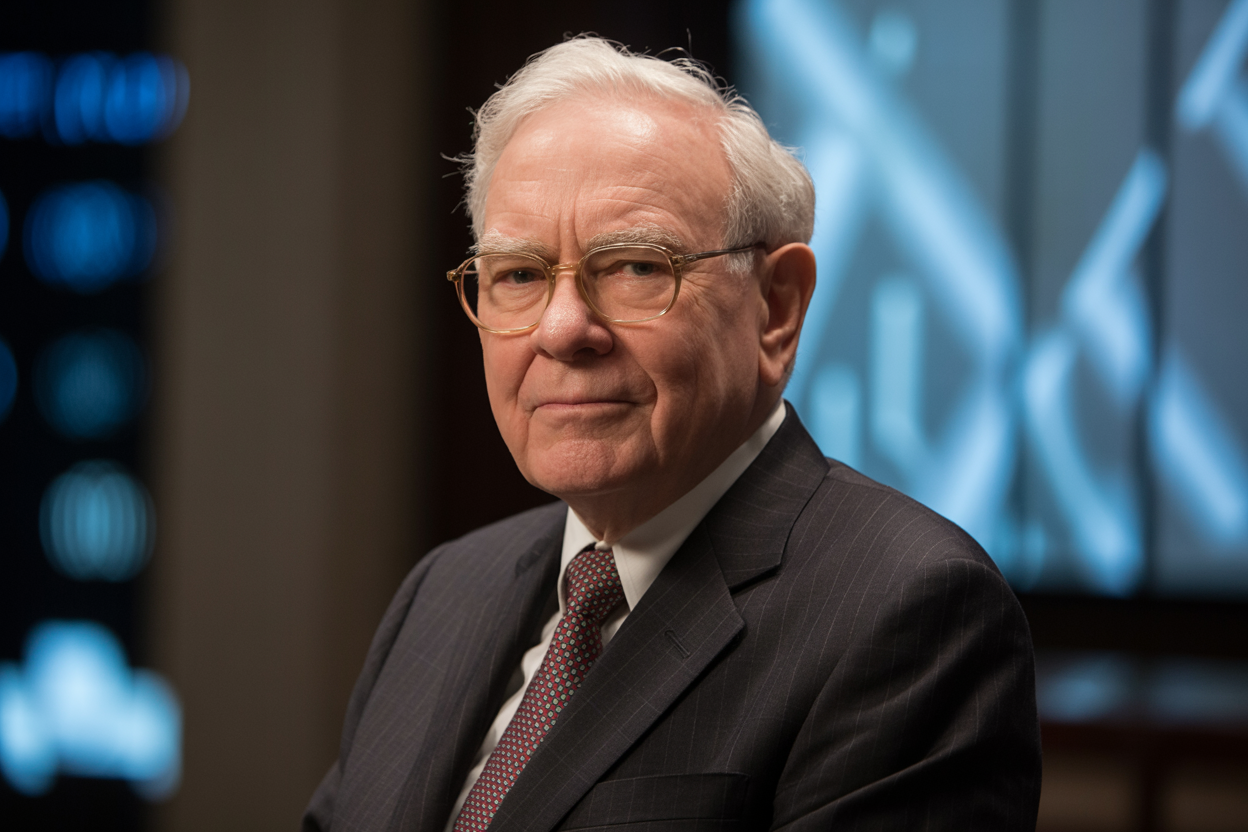
Warren Buffett built one of history’s greatest fortunes through principles he openly shared for 6 decades in Berkshire Hathaway shareholder letters and annual meeting Q&A sessions.
His teachings consistently reveal the behavioral patterns that keep the middle class trapped in a cycle of earning and spending without ever building real wealth. Here are the top five reasons the middle class never gets rich, drawn directly from Buffett’s own words.
1. They Spend First and Save What’s Left
At the 2023 Berkshire Hathaway annual meeting, Buffett gave the audience deceptively simple advice: “You should just spend a little bit less than you earn.” This single principle separates those who build wealth from those who don’t, and Buffett has repeated it in various forms for decades.
The middle class operates with a reversed financial equation. They earn money, pay bills, spend on lifestyle, and then try to save whatever remains. Buffett’s approach flips this completely. His famous formulation captures it perfectly: “Do not save what is left after spending, but spend what is left after saving.”
In his 2019 shareholder letter, Buffett wrote that combining savings with compound interest “works wonders.” But those wonders require savings to exist in the first place.
The middle class habitually spends to the edges of their income, leaving nothing to compound. Buffett himself still lives in the Omaha house he purchased in 1958, despite being worth well over $147 billion. His frugality isn’t deprivation. It’s choosing wealth-building over lifestyle inflation, the silent killer of middle-class financial progress.
2. They Let Consumer Debt Compound Against Them
At the 2021 Berkshire Hathaway annual meeting, Buffett shared an anecdote about a friend who came into some money and asked for his investment advice. His first question wasn’t about stocks. It was whether she carried credit card debt. She did, at roughly 18% interest. Buffett’s response was blunt: paying that off would be “way better than any investment idea I’ve got.”
During the 2004 annual meeting, a 14-year-old shareholder asked Buffett for his single best piece of financial advice. His answer: don’t get into debt. He told the young investor that it’s very tempting to spend more than you earn, but it’s not a good idea. In a 1999 speech, Buffett was even more direct, guaranteeing that anyone who runs up enormous credit card debts will be in financial trouble, probably for the rest of their life.
The middle class routinely carries high-interest consumer debt, effectively running compounding in reverse. Every dollar paid in credit card interest is a dollar that can’t be invested and grown. The wealthy understand that compounding should work in their favor, not against them.
3. They Interrupt Compounding Through Impatience
At the 1999 Berkshire Hathaway annual meeting, Buffett explained his wealth-building formula with a metaphor about rolling a snowball down a very long hill from a very early age. That metaphor captures everything the middle class gets wrong about building wealth: they don’t start early enough, and they don’t let the snowball keep rolling.
Buffett has described the stock market as a device for transferring money from the impatient to the patient. In his 2022 shareholder letter, he wrote that his favorite holding period is forever and that having a long attention span and discipline are what separate successful investors from the rest.
The middle class consistently sabotages its own wealth through impatience. They sell investments during market downturns, chase hot trends, move money based on headlines, and withdraw funds for consumption. Each interruption resets the compounding clock. The gains in year twenty dwarf the gains in year two, but most people never experience that acceleration because they sell too early or react emotionally to temporary price declines.
At the 2023 Berkshire Hathaway annual meeting, Buffett noted that if you’d invested in a low-cost index fund and averaged in over 10 years, you’d do better than 90% of people who started investing at the same time. But most people can’t resist the urge to tinker, trade, and time the market.
4. They Fail to Invest in Themselves
At the 2023 Berkshire Hathaway annual meeting, Buffett told the audience that the best investment by far is anything that develops yourself, and that whatever abilities you create can’t be taken away or inflated away, and they aren’t taxed at all.
His own life demonstrates this principle powerfully. Early in his career, Buffett was terrified of public speaking. He enrolled in a Dale Carnegie course and has since called it one of the most valuable investments he ever made. The return on that single decision compounded throughout his entire career, enabling him to communicate with shareholders, recruit business partners, and build the relationships that powered Berkshire Hathaway’s growth.
The middle class tends to view education and skill development as expenses rather than investments. They stop learning after formal schooling ends. Buffett, by contrast, has said he reads 500 pages a day and spends much of his time sitting and thinking. The wealthy invest continuously in expanding their knowledge and capabilities, understanding that human capital is the one asset that can’t be lost in a market crash.
5. They Buy Things They Don’t Need
In his 2014 shareholder letter, Buffett warned that it is madness to risk losing what you need in pursuing what you desire. This single sentence explains why the middle class stays stuck.
Buffett has been quoted as saying that if you buy things you do not need, you will soon have to sell things you need. The middle class frequently stretches for the maximum mortgage a lender will approve, finances depreciating vehicles, and fills homes with purchases driven by social comparison rather than genuine necessity.
In his 2010 shareholder letter, Buffett wrote that the country’s social goal should not be to put families into the house of their dreams, but into a home they can afford. The distinction matters enormously for wealth building. Every dollar committed to an oversized mortgage, luxury car payment, or status purchase is a dollar permanently removed from the wealth-building equation.
Conclusion
Buffett’s lifestyle proves the point. He drives modest cars, eats at the same local restaurants, and has lived in the same house for nearly seven decades. His wealth comes not from earning an extraordinary income, but from refusing to spend it on things that don’t matter.
The path from the middle class to wealth isn’t complicated. Buffett has been teaching it openly for 60 years in shareholder letters and at annual meetings. The problem isn’t access to information. It’s the discipline to act on it consistently over the course of decades.