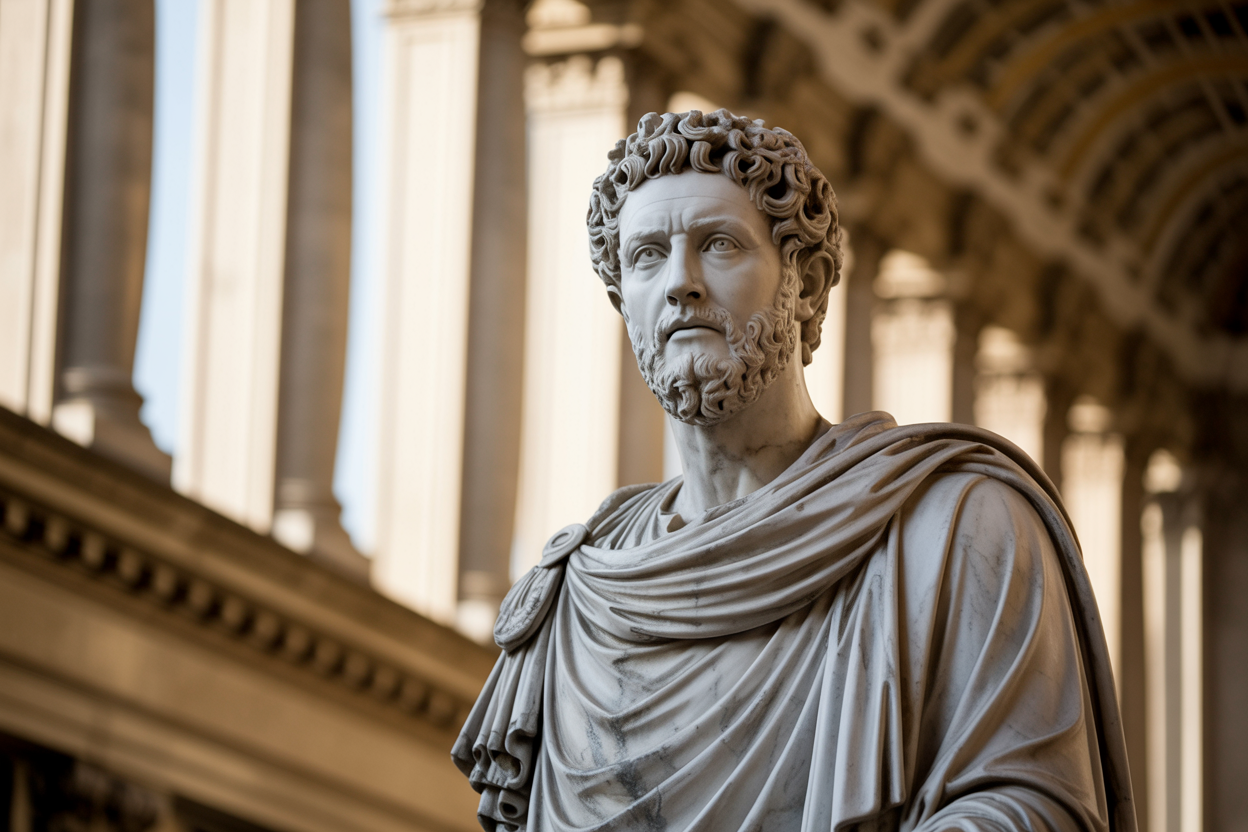
Stoicism is one of the oldest and most practical philosophies ever developed. It teaches self-discipline, emotional control, and the ability to focus only on what you can influence. These principles are just as powerful today as they were in ancient Rome.
The following ten books offer a complete education in Stoic thinking. Whether you are new to philosophy or looking to deepen your understanding, these are the essential reads that every man should have on his shelf.
1. Meditations by Marcus Aurelius
This is the most critical Stoic text ever written. Marcus Aurelius was the Emperor of Rome, and he wrote these private journal entries as reminders to himself on how to live with virtue, patience, and purpose. He never intended for anyone else to read them.
What makes this book so powerful is its honesty. Marcus Aurelius wrestled with frustration, fatigue, and the burden of leadership. His entries reveal a man constantly working to master his own mind. If you only read one book on Stoicism, this should be it.
2. Letters from a Stoic by Seneca
Seneca was a philosopher, statesman, and one of the wealthiest men in Rome. His letters to his friend Lucilius cover topics like managing time, dealing with anger, handling grief, and building wealth without becoming enslaved to it.
What sets Seneca apart is his ability to write about deep ideas in a conversational tone. His advice feels personal and direct. For anyone trying to balance ambition with inner peace, Seneca’s letters offer timeless guidance.
3. Discourses by Epictetus
Epictetus was born into servitude and later became one of the most respected Stoic teachers in history. His Discourses were recorded by his student, Arrian, and focus on the core Stoic principle that we can’t control external events, but we can always control our responses.
This book is the most systematic and instructional of the ancient Stoic texts. Epictetus breaks down how to handle insults, loss, fear, and desire with clarity and logic. His background lends his teachings authority and is hard to match.
4. Enchiridion (The Manual) by Epictetus
The Enchiridion is a condensed handbook of Epictetus’s core teachings. It is short enough to read in a single sitting, but the ideas inside are dense and practical. Every sentence is designed to be applied immediately to daily life.
This is one of the best books to carry with you and revisit often. It strips Stoic philosophy down to its most essential lessons. If the Discourses are the whole course, the Enchiridion is the field manual.
5. The Obstacle Is the Way by Ryan Holiday
Ryan Holiday brought Stoicism to a modern audience with this book, which is built on the principle that Marcus Aurelius held: the impediment to action advances action. Holiday uses historical examples of leaders, athletes, and entrepreneurs who turned setbacks into stepping stones.
This book is especially valuable for men facing challenges in business, careers, or personal life. It reframes obstacles not as problems to avoid but as opportunities to grow. The writing is clear, fast-paced, and actionable.
6. Ego Is the Enemy by Ryan Holiday
The ego is one of the most destructive forces in a man’s life. Holiday explores how unchecked ego sabotages people at every stage, whether they are aspiring toward a goal, experiencing success, or recovering from failure.
The book draws on examples from history, sports, and business to show how ego blinds people to reality. It is a sobering read that forces honest self-reflection. For anyone who has ever let pride get in the way of progress, this book is essential.
7. Stillness Is the Key by Ryan Holiday
In a world filled with noise and distraction, the ability to find stillness is a competitive advantage. Holiday draws on Stoic, Buddhist, and other philosophical traditions to argue that clarity of mind is the foundation of outstanding achievement.
This book is about slowing down to think clearly, making better decisions under pressure, and protecting your mental energy. It is particularly relevant for men who feel overwhelmed by the pace of modern life and the constant pull of technology.
8. A Guide to the Good Life: The Ancient Art of Stoic Joy by William B. Irvine
William Irvine is a philosophy professor who wrote one of the most accessible introductions to practicing Stoicism in everyday life. He explains techniques like negative visualization, voluntary discomfort, and the dichotomy of control in plain language.
What makes this book stand out is that it goes beyond theory. Irvine provides a practical framework for adopting Stoic habits. If you want to understand not just what Stoicism teaches but how to live it daily, this is the book to start with.
9. How to Think Like a Roman Emperor by Donald Robertson
Donald Robertson combines a biography of Marcus Aurelius with modern cognitive-behavioral therapy techniques rooted in Stoic practice. He traces the Emperor’s life from childhood through his reign and connects each phase to specific Stoic strategies for managing emotions and adversity.
This book is unique because it bridges ancient philosophy and modern psychology. Robertson shows that the techniques therapists use today have direct roots in the practices of the Stoics centuries ago. It is both a history lesson and a self-improvement guide.
10. The Daily Stoic by Ryan Holiday
The Daily Stoic offers 366 daily meditations, each built around a quote from a Stoic philosopher followed by a brief reflection. It is designed to be read one entry per day, making it an excellent tool for building a consistent reading and reflection habit.
This book works best as a companion to the deeper texts on this list. After reading the primary works of Marcus Aurelius, Seneca, and Epictetus, The Daily Stoic keeps those lessons alive in your daily routine. It is a simple but effective way to stay grounded in Stoic principles throughout the year.
Conclusion
Stoicism is not just a philosophy to study. It is a way of living that demands daily practice and self-awareness. The ten books on this list provide everything you need to build a strong foundation in Stoic thinking, from the original ancient texts to the best modern interpretations.
Start with Marcus Aurelius and work through the list at your own pace. Each book adds a new layer of understanding. The goal is not just to read about self-discipline and resilience but to practice these principles every day until they become part of who you are.