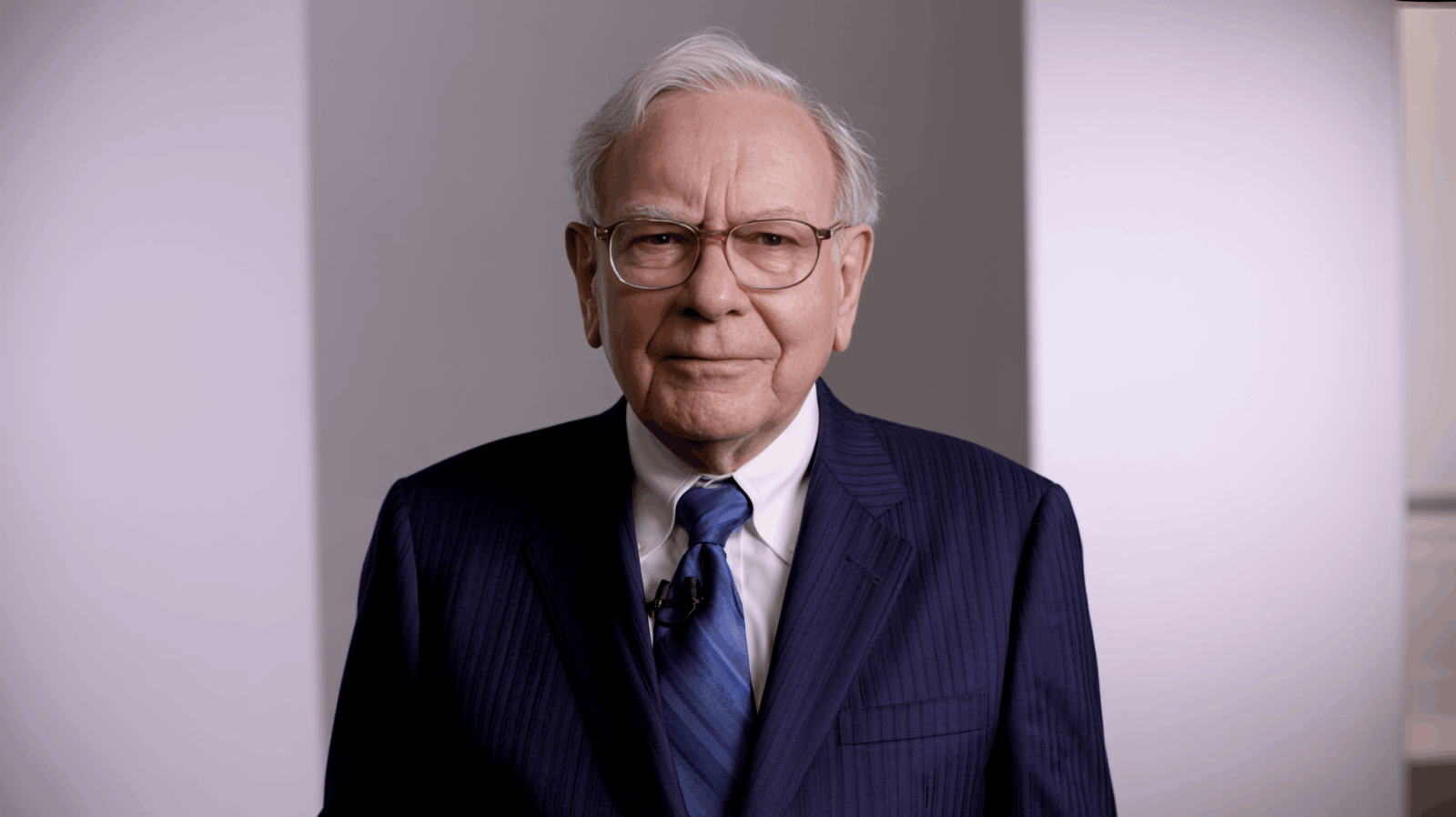
Warren Buffett is widely regarded as the greatest investor of the modern era. But many who study him closely argue that his real edge was never purely analytical.
Buffett himself has said that investing is largely a test of character, not intellect. The behaviors that destroy wealth, he believes, almost always trace back to emotional dysfunction rather than a lack of knowledge.
Here are five behaviors people with low emotional intelligence display, based on Warren Buffett’s teachings over the past 50 years.
1. Living by an Outer Scorecard
One of the earliest lessons Buffett learned from his father was the distinction between an inner scorecard and an outer scorecard. People with low emotional intelligence gauge their worth entirely by how others see them.
They make career choices, financial decisions, and lifestyle purchases based on what earns applause rather than what aligns with their own values. This habit quietly transfers control of your life to the crowd.
“The big question about how people behave is whether they’ve got an Inner Scorecard or an Outer Scorecard. It helps if you’re satisfied with an Inner Scorecard.” — Warren Buffett.
When investors operate from an outer scorecard, they buy what is popular and sell what is unpopular, which is precisely the opposite of what creates long-term wealth. Buffett built Berkshire Hathaway by ignoring consensus and trusting his own analysis.
The practical cost is enormous. Chasing social validation in markets means buying at peaks driven by hype and panic-selling during downturns when confidence is needed most.
2. Inability to Control Impulses
Buffett has spoken extensively about the role of temperament in investing success. He does not believe the highest IQ wins in markets. He believes the steadiest temperament does.
Low emotional intelligence shows up as reactive decision-making. A bad earnings report triggers a sell. A bullish headline triggers a buy. Every stimulus produces an immediate emotional response, and that reactivity is expensive.
“The most important quality for an investor is temperament, not intellect.” — Warren Buffett
Creating a gap between a stimulus and a response is one of the core disciplines Buffett practices and teaches. Without that gap, the market essentially controls your behavior rather than your own reasoned judgment.
Buffett has often noted that the investor’s biggest enemy is not the economy or a bad CEO. It is the investor who looks back at them in the mirror.
3. Succumbing to Herd Mentality
Buffett coined the term “Institutional Imperative” in his 1989 shareholder letter to describe the dangerous tendency of executives and investors to imitate their peers rather than think independently. This is low emotional intelligence made institutional.
The fear of standing apart from the group is a powerful psychological force. For people with low EQ, the discomfort of being contrarian is too great to tolerate, so they drift with the herd even when they sense danger.
“Be fearful when others are greedy and greedy when others are fearful.” — Warren Buffett
This quote is perhaps Buffett’s most cited instruction, and it is fundamentally a call to emotional courage. Acting on it requires the willingness to look foolish in the short term while the crowd is celebrating.
The herd mentality has sustained every major market bubble in history. Low EQ investors don’t just participate in bubbles. They accelerate them.
4. Dwelling on Past Mistakes
Buffett is candid about his own errors. His shareholder letters are unusual in financial writing precisely because he names his mistakes openly and analyzes them without apparent shame.
What he does not do is dwell on them. Low emotional intelligence leads to what behavioral economists call “sunk cost thinking,” in which a person stays locked in a failing position because admitting the error feels psychologically unbearable.
“The most important thing to do if you find yourself in a hole is to stop digging.” — Warren Buffett.
This principle sounds obvious. But emotionally immature investors routinely double down on losing stocks, losing strategies, and losing businesses because reversing course feels like a confession of failure.
Buffett argues for the rational pivot. Acknowledge the mistake, understand what went wrong, and redirect capital toward better opportunities. Emotional attachment to a bad decision is not loyalty. It is self-sabotage.
5. Overcomplicating Simple Truths
Buffett has long been skeptical of complexity for its own sake. He writes his shareholder letters as though explaining things to a bright but non-specialist family member, a choice that is deliberate and revealing.
People with low emotional intelligence often use complexity as a defense mechanism. Sophisticated-sounding strategies, dense jargon, and elaborate frameworks can all serve as cover for an unwillingness to confront simple but uncomfortable truths.
“There seems to be some perverse human characteristic that likes to make easy things difficult.” — Warren Buffett.
The core principles of sound investing are not complicated. Spend less than you earn. Buy good businesses at fair prices. Think long term. Be patient. Low EQ investors reject these principles not because they are wrong, but because following them lacks the ego gratification of a complex strategy.
Buffett’s own approach has remained straightforward for decades, and that simplicity is a product of emotional maturity, not limited thinking.
Conclusion
The thread connecting all five of these behaviors is the same. Each one is a failure to manage emotion under pressure, uncertainty, or social influence.
Buffett’s investing genius is inseparable from his emotional discipline. He has built one of the great fortunes in history not by being the smartest person in the room, but by being the most emotionally grounded person in the market.
You can’t control the economy, interest rates, or what other investors do. What you can control is your own behavior, your own standards, and your own response to fear and greed.
That, more than any financial formula, is the real lesson Warren Buffett has spent decades trying to teach.