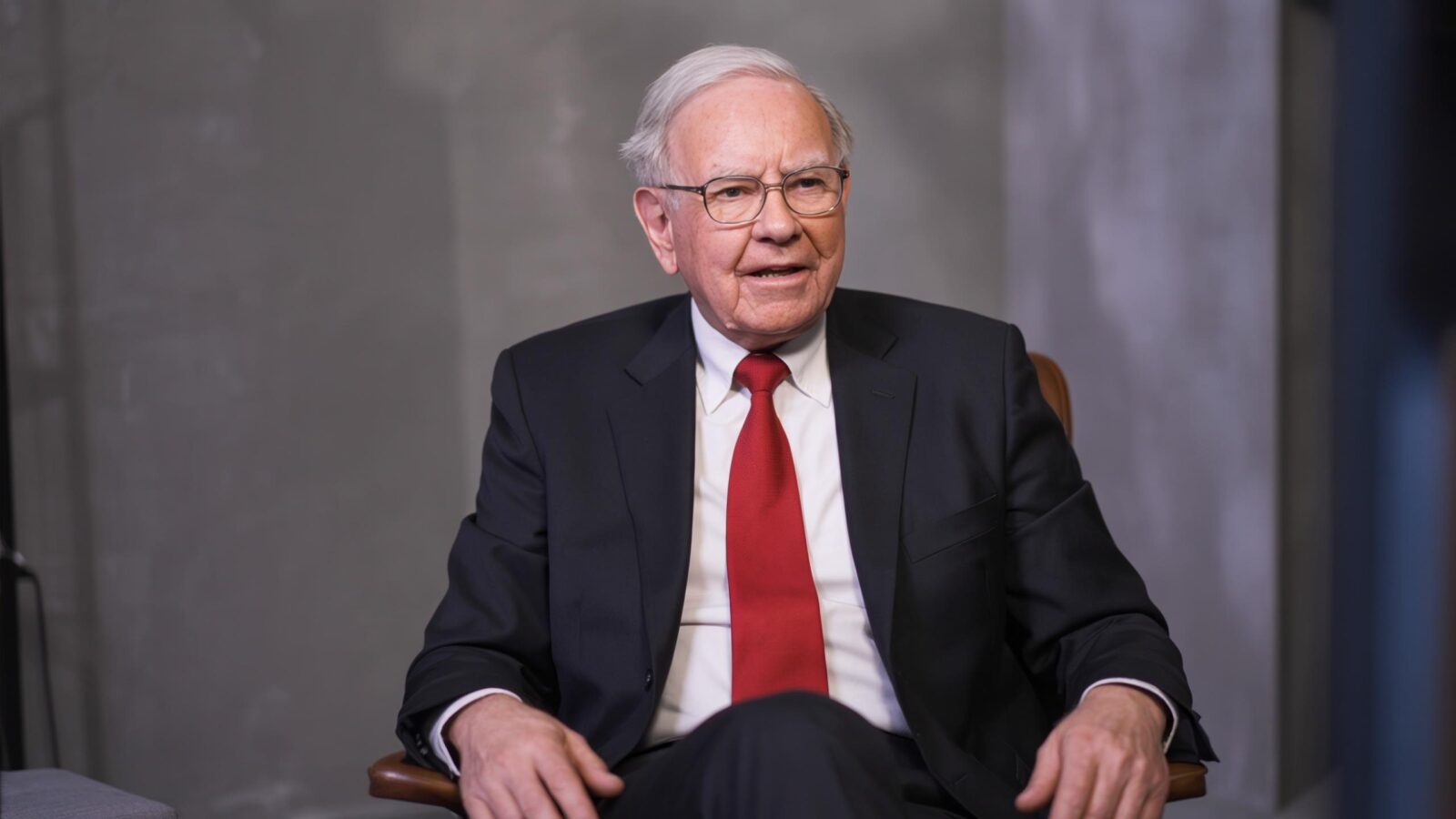
Warren Buffett is worth well over $150 billion. He still drives himself to work. Despite officially retiring as the CEO of Berkshire Hathaway, he remains the company’s Chairman and travels to the downtown Omaha office five days a week
That financial gap between his net worth and his daily habits is not an accident. Buffett decided a long time ago that money spent on appearances was money wasted, and he built an entire life from a young age around avoiding the spending traps that quietly drain most people’s wealth.
Some of these habits look small on their own. Together, they explain how one man kept getting richer while so many people around him had stagnant net worths, even as their incomes increased.
Below are ten spending habits Buffett has avoided for over eight decades, in his own words.
1. Lifestyle Creep and Status Housing
Buffett bought his house in Omaha in 1958. He still lives there.
No mega-mansion. No compound. No upgrade every time his fortune grew by another few billion, and by any measure, it grew a lot. Most people do the opposite. Their spending rises right alongside their income, sometimes faster, until the bigger paycheck buys them nothing but a bigger mortgage and the same stress they had before.
“I’m warm in the winter, I’m cool in the summer, it’s convenient for me. I can’t imagine having a better house.” – Warren Buffett, on why he refuses to move into a mega-mansion.
2. Buying Brand-New Luxury Cars
A car gets him from one place to another. That is the whole job description, as far as Buffett is concerned.
He does not chase the newest model or the flashiest brand emblem on the hood. Low mileage plays a role, too. When you barely drive, a brand-new car sitting mostly in the driveway is just money losing value in slow motion.
“The truth is, I only drive about 3,500 miles a year,r so that I will buy a new car very infrequently.” – Warren Buffett, on why he keeps his cars for years and often buys used at a discount.
3. High-End Fine Dining and Status Food
Buffett is famously loyal to McDonald’s and Dairy Queen, not as a joke, not as a publicity stunt. It is how he actually eats.
He has no interest in restaurants that exist to impress a table full of strangers. Other people’s opinions of his dinner order have never factored into his decision-making, and that indifference to being judged is worth more than the meal itself.
“I checked the actuarial tables, and the lowest death rate is among six-year-olds. So I decided to eat like a six-year-old. It’s the safest course I can take.” – Warren Buffett.
4. Keeping Up with the Herd
Trends cost money, and Buffett has never seen the appeal. New gadgets, new fashion, whatever everyone else happens to be buying this year, none of it moves him.
His happiness was not built by matching his neighbors’ purchase for purchase. It was built by walking in the opposite direction while everyone else followed the crowd. Spending as much as they earned was a bad financial plan in Buffett’s opinion.
“If you buy things you do not need, soon you will have to sell things you need.” – Warren Buffett.
5. Spending First and Saving Second
Here is the order most people follow. Paycheck arrives, bills get paid, fun money gets spent, and whatever survives that spending spree gets saved. Usually, not much does.
Buffett reverses it. Saving happens first, before a single discretionary dollar goes out the door, and everything else has to fit inside whatever is left. The math works out completely differently depending on which order you choose, even if the paycheck is identical.
“Do not save what is left after spending, but spend what is left after saving.” – Warren Buffett.
6. Paying Premium Prices for Low Value
Socks or stocks, Buffett applies the same filter to both. Price is one number. Value is a completely different number, and he refuses to confuse the two just because a label says otherwise.
A brand name alone has never justified a markup in his mind. He wants quality, and he wants it at a fair price or a discount, full stop.
“Price is what you pay. Value is what you get. Whether we’re talking about socks or stocks, I like buying quality merchandise when it is marked down.” – Warren Buffett.
7. Relying on Credit Cards and High-Interest Debt
Debt is a wealth destroyer, according to Buffett, and he has said so plainly for decades. Borrowed money fights against compounding instead of working with it.
Smart people do not need to borrow their way to a fortune. He has watched leverage take down people far more talented than he is, and he has never forgotten the lesson.
“If you’re smart, you’re going to make a lot of money without borrowing. I’ve seen more people fail because of liquor and leverage, leverage being borrowed money.” – Warren Buffett.
8. Gambling and Lottery Tickets
Negative odds are negative odds. Buffett does not need better luck to see that lottery tickets and casino games are built to take money, not give it.
He has also aimed at governments that lean on gambling and lottery revenue to fill budget gaps; in his view, revenue comes disproportionately from people who can least afford to lose it.
“It’s a tax on stupidity. Rich people love it, because they don’t have to pay. To the extent that states raise money from people who—the dollar really means something to them—it actually relieves the taxes on me or other rich people. It’s not direct, but it’s the net effect. I don’t think the function of the government is to play its people for suckers.” – Warren Buffett.
9. Paying for Speed Over Substance
Rush fees. Expedited shipping. Last-minute everything. Buffett has built his entire career around the opposite instinct, letting time do the heavy lifting instead of throwing money at urgency.
Nine months can’t be compressed into one, no matter how many people you assign to the job, and neither can real wealth. It compounds on its own schedule, not on a schedule money can buy.
“You can’t produce a baby in one month by getting nine women pregnant.” – Warren Buffett, on why great things, and great wealth, require patience and time instead of money for rushing a process.
10. Bypassing Discounts Out of Pride
Coupons don’t care about your net worth, and neither does Buffett. He has pulled them out of his own pocket at McDonald’s, in front of Bill Gates, without a hint of embarrassment.
Most people at his income level would rather overpay than be seen clipping coupons. Buffett has never cared how a discount looks to anyone standing next to him.
“Remember the laugh we had when we traveled together to Hong Kong and decided to get lunch at McDonald’s? You offered to pay, dug into your pocket, and pulled out… coupons!” – Bill Gates, recalling in a 2017 letter how Buffett paid for their lunch with coupons.
Conclusion
Nothing on this list requires a finance degree. A modest house for your income level. An older car. A cheap lunch. Coupons pulled out in front of a billionaire friend without blinking.
What ties these ten habits together is not frugality for its own sake. It is a refusal to let other people’s expectations set the price tag on his own life. Buffett got rich on his investments. He stayed rich and grew richer by never spending like someone trying to prove it.