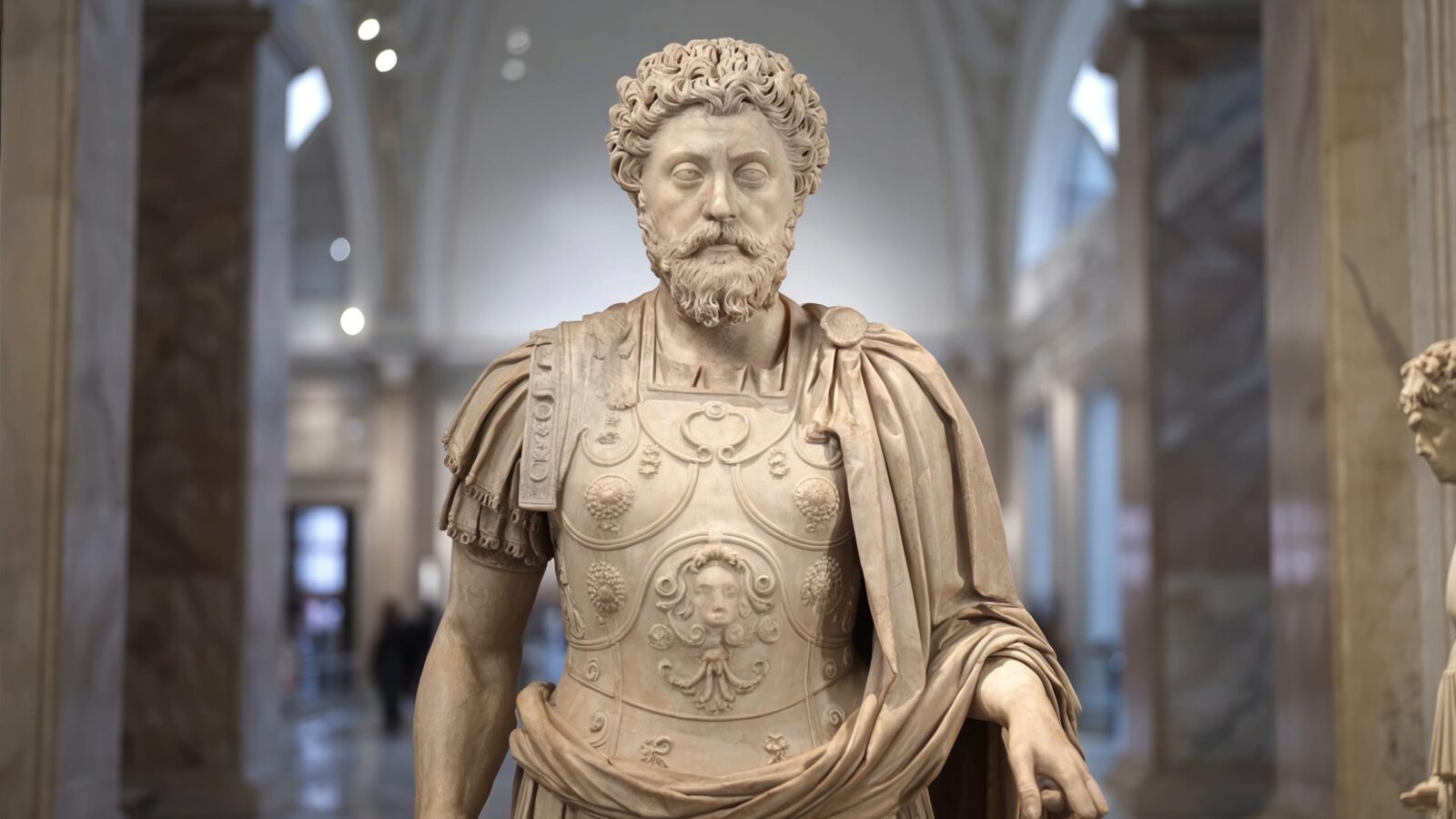
Marcus Aurelius ran the Roman Empire for nearly two decades. He also kept a private notebook full of reminders to himself, which became Meditations.
He never planned for anyone to read it. That’s part of why it still works so well as a personal checklist, because he was writing to correct his own habits. Here are five signs from his notes that show you’re growing into a better person.
1. You Stop Seeking External Approval
The first sign is a quiet one. You stop checking how other people see you before deciding how you feel about yourself. Your sense of worth starts to come from your own principles. You set a standard, and you judge yourself by whether you met it.
“I have often wondered how it is that every man loves himself more than all the rest of men, but yet sets less value on his own opinion of himself than on the opinion of others.” Marcus Aurelius, Meditations, Book 12 (translated by George Long)
Marcus found this contradiction strange, and he was right to. People will defend their own interests all day, then hand over their self-respect to a coworker, a stranger online, or a relative who barely knows them.
Outside opinion changes with moods and trends. If your confidence depends on it, your confidence will rise and fall with every comment.
He put it even more plainly in Book 3. “A man then must stand erect, not be kept erect by others.” Marcus Aurelius, Meditations, Book 3 (translated by George Long)
You still listen to honest feedback at this stage. You stop needing applause to know you did the right thing.
2. You Direct Energy Only Toward What You Can Control
Someone cuts you off on the highway. It rains on the day of your outdoor event, your boss plays favorites, and your neighbor parks in front of your house again.
A growing person notices all of this and lets most of it go. Your attention turns to the two things you actually own: your choices and your effort.
“How much trouble he avoids who does not look to see what his neighbor says or does or thinks, but only to what he does himself, that it may be just and pure.” Marcus Aurelius, Meditations, Book 4 (translated by George Long)
Watching and judging other people takes a surprising amount of energy. Every hour spent replaying what someone else said is an hour you could have spent on your own work.
You still care about the people around you. You put your effort where it can make a difference, and you accept the rest without stewing over it for days. This shift is easy to describe and hard to practice. Most people need years of small reminders before it becomes a habit, and Marcus Aurelius was clearly still reminding himself as an emperor.
3. You View Obstacles as Fuel for Growth
When something goes wrong, you stop treating it as proof that the world is against you. Complaining loses its appeal because it never fixes anything. A setback becomes a chance to practice a skill. A delay trains patience, and a difficult person trains self-control.
“That which is an obstacle on the road helps us on this road.” Marcus Aurelius, Meditations, Book 5 (translated by George Long)
Emperor Aurelius wrote this while leading armies on the frontier and dealing with plague and rebellion. He had more obstacles than most people will ever face, so he had plenty of material to test the idea on.
His point is practical. Whatever blocks your plan also gives you something to work with, and a strong mind can use it to learn and adjust to a better path. Over time, frustration turns into training. You start asking what a problem can teach you before you ask who is to blame for it.
4. You Master Your Own Internal Dialogue
Much of your stress comes from the story you tell about an event. Someone forgets to reply to your message, and within an hour you’ve decided they’re angry with you. Nothing happened yet except silence. Your mind filled in the rest.
“Take away thy opinion, and then there is taken away the complaint, ‘I have been harmed.’ Take away the complaint, ‘I have been harmed,’ and the harm is taken away.” Marcus Aurelius, Meditations, Book 4 (translated by George Long)
Pain is real, and Marcus knew it. He suffered from poor health for much of his life and buried several of his children. His argument is about the extra layer of suffering you add on top. The insult you replay for a week usually hurts more than the moment it was said.
Building this skill takes practice. You learn to pause before reacting and check whether your judgment is accurate or just a familiar habit. Some people find it helps to write their thoughts down, as Aurelius did. Seeing a worry on paper often makes it look smaller than it felt in your head.
5. You Actively Value Time Over Distractions
As you grow, you start to feel a healthy urgency about your life. Your time is limited, so petty arguments and mindless scrolling start to feel expensive.
“Do not act as if thou wert going to live ten thousand years. Death hangs over thee. While thou livest, while it is in thy power, be good.” Marcus Aurelius, Meditations, Book 4 (translated by George Long)
Thinking about death sounds grim. For Marcus, it worked as a deadline, and deadlines get things done. He also warned about a quieter risk. He wrote that a person should fear “never to have begun to live according to nature” more than the fact that life ends (Meditations, Book 12, translated by George Long).
That line hits hard for anyone who keeps waiting for the right moment to start. The plan to change next month can turn into ten years of next months. This sign shows up in small choices. You put the phone down, skip the pointless fight, and spend the evening on something important you have been putting off, but you’ll be glad you did.
Conclusion
Marcus Aurelius was still working on these habits near the end of his life. His notebook is full of the same corrections written again and again, which suggests he slipped as often as anyone.
You won’t show all five signs every day. Pick the one that gives you the most trouble and practice it this week, then come back to the others as you go.