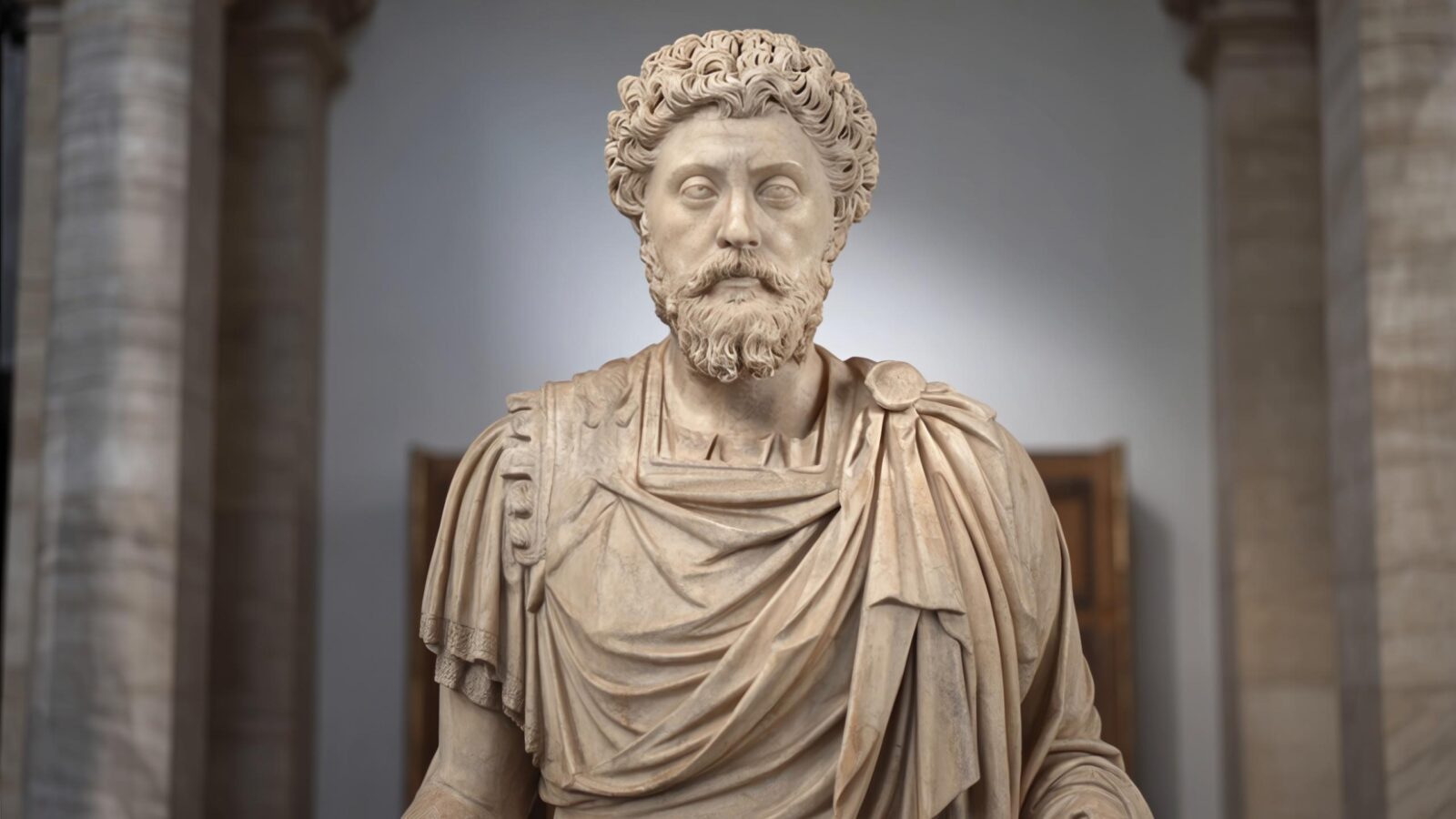
Marcus Aurelius ruled the Roman Empire from 161 to 180 AD. His reign brought years of war on the northern frontier along with a devastating plague, and he spent long stretches of it living in military camps far from Rome.
Through all of that, he kept a private journal. We know it today as Meditations, though he never meant for anyone else to read it.
The entries are blunt notes to himself about how to act well and think clearly. Five daily habits show up again and again in those pages, and they still mark the difference between men who get things done and men who drift aimlessly through life. Here’s what one of the most effective Roman Emperors said about success.
1. Frame the Day Before Leaving Bed
“In the morning, when thou risest unwillingly, let this thought be present: I am rising to the work of a human being. Why then am I dissatisfied if I am going to do the things for which I exist and for which I was brought into the world? Or have I been made for this, to lie in the bedclothes and keep myself warm?” – Marcus Aurelius
The most powerful man in the world had trouble getting out of bed. He admitted it in writing, which tells you how seriously he took honesty with himself.
His fix was to argue with himself. He reasoned that he was built for useful work, and staying wrapped in warm blankets meant ignoring the very thing he existed to do.
You can use the same trick. Before you grab your phone, decide on the most important task of the day and why it matters to you. It takes a few seconds. Men who make this a habit walk into the day already aiming to accomplish their goals, while everyone else spends the first hour reacting to whatever happens to them.
2. Mentally Prepare for Difficult People
“Begin the morning by saying to thyself, I shall meet with the busybody, the ungrateful, arrogant, deceitful, envious, unsocial. All these things happen to them by reason of their ignorance of what is good and evil.” – Marcus Aurelius
Marcus expected to deal with rude and dishonest people every single day. So he rehearsed those encounters in his head before he ever left the room.
Oddly, the passage turns generous a few lines later. He wrote that none of these people could truly injure him, since no one could force him to do wrong, and he described them as kin he was made to work alongside.
Anticipation drains most of the sting out of conflict. A hostile email or a snide comment in a meeting lands softer when you see it coming at breakfast.
Leaders who practice this stay level while others lose their temper. People notice, and over time, they start trusting the calm person in the room more than the loud one.
3. Cut Out What Isn’t Necessary
“For the greatest part of what we say and do being unnecessary, if a man takes this away, he will have more leisure and less uneasiness.” – Marcus Aurelius
Marcus ran an empire with endless demands on his attention. He still believed most of what fills a day could be thrown out with no real loss.
In the same passage, he told himself to ask, on every occasion, whether the thing in front of him was one of the unnecessary ones. He applied the test to thoughts as well, since a useless thought tends to drag useless actions along behind it.
Try running that question against your schedule this week. The long meeting with no agenda and the side project you agreed to out of guilt will probably need to be changed to optimize effectiveness.
Cutting them won’t feel heroic. It frees up hours for the work that actually moves your career or business forward, and Marcus promised a calmer mind as part of the deal.
4. Focus on Your Own Conduct, Not Others’ Opinions
“Do not waste the remainder of thy life in thoughts about others, when thou dost not refer thy thoughts to some object of common utility.” – Marcus Aurelius
Few people have lived under more scrutiny than a Roman emperor. In 175 A.D., one of his most trusted generals, Avidius Cassius, declared himself emperor after a false rumor of Marcus’s death spread through the eastern provinces.
Even so, Marcus warned himself about wasting his life wondering what others were doing or saying. Unless those thoughts served some common good, he counted them as lost time.
Approval is a hard habit to quit. Once you start checking how other people see you, their opinions slowly become the scoreboard you play for. The men who get the most done set their own standards and judge themselves against those. A compliment is pleasant enough, and a harsh criticism deserves a fair hearing, but neither one gets to decide what you do next.
5. Review Your Actions Honestly
“On the occasion of every act, ask thyself, How is this with respect to me? Shall I repent of it?” – Marcus Aurelius
Meditations reads like one long act of self-examination. Marcus questioned his own motives and scolded himself for impatience, all in notes nobody else was supposed to see.
He even used it as a rule for judging other people. “But begin with thyself, and examine thyself first,” he wrote, before turning his attention to anyone else’s behavior.
Other Stoics made the review a nightly ritual. Seneca described going over his entire day each evening after the lamp was put out, looking at everything he had said and done without hiding anything from himself.
Five minutes before bed is enough. Ask where you acted the way you want to act and where you slipped, then pick one thing to fix tomorrow while the details are still fresh.
Conclusion
Marcus Aurelius had no productivity apps and no business coach. What he had was a private journal and the stubbornness to keep returning to the same principles on brutal days.
Pick one of these habits and run it for a month before adding another. The morning intention is the easiest place to start, though plenty of men find the evening review is the one they end up keeping for good.