Most people hear the phrase “lone wolf” and picture a grumpy loner who skips every party and trusts nobody. That picture leaves a lot out.
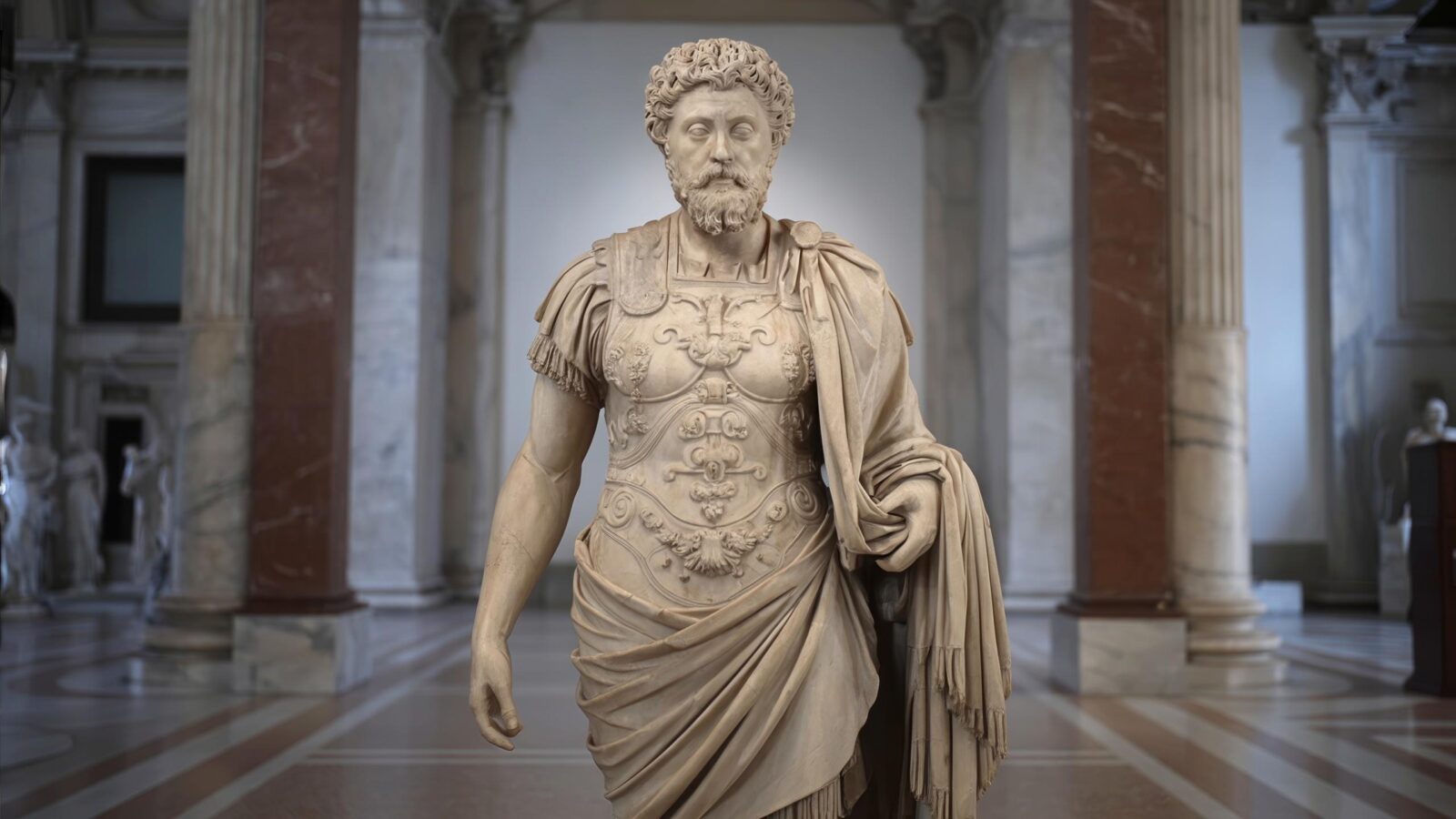
Plenty of lone wolves are simply independent people who feel comfortable working outside the pack. Marcus Aurelius, the Roman emperor whose private Stoic journal was later published as Meditations, wrote about this mindset again and again in his own contemplations on governing the Roman Empire.
He wanted to keep his mind free while running an empire that needed him every single day. Here are five signs from his writing that you might share that lone-wolf, independent mindset.
1. You Go Inside Your Own Mind for Peace
When life gets loud, many people book a trip or scroll on their phones until the noise fades. The Stoic lone wolf has a different habit, and it costs nothing.
“It is in thy power whenever thou shalt choose to retire into thyself. For nowhere either with more quiet or more freedom from trouble does a man retire than into his own soul.” Marcus Aurelius, Meditations, Book 4.3
Marcus could have escaped to any villa in the empire. He wrote these lines anyway, telling himself that the quietest place he owned was his own soul.
The habit had to hold up under real pressure. He spent much of his later reign on military campaigns along the Danube frontier, a long way from Rome and a long way from comfort.
Maybe a quiet hour alone leaves you recharged instead of lonely. This teaching is what the historian Pierre Hadot had in mind when he titled his book on Marcus Aurelius, The Inner Citadel.
2. You Stand on Your Own Two Feet
Some people need a steady flow of praise to feel okay about themselves. Take it away, and they wobble.
“Be cheerful also, and seek not external help nor the tranquility which others give. A man then must stand erect, not be kept erect by others.” Marcus Aurelius, Meditations, Book 3.5
The wording is blunt. Marcus draws a line between a man who stands up and a man who has to be propped up. Support from other people comes and goes. Friends move away, bosses change their minds, partners drift away, and the applause you got last year has already been forgotten by everyone who gave it.
A person who measures themselves by their own standards keeps going after the cheering stops. They check their conduct against what they believe is right and adjust when they fall short, whether anyone notices or not.
3. You Stop Watching What the Neighbors Think
Independence means you’ll be misunderstood sometimes, and you have to make peace with that. A lone wolf makes choices based on reason, even when those choices aren’t popular.
“How much trouble he avoids who does not look to see what his neighbor says or does or thinks, but only to what he does himself, that it may be just and pure.” Marcus Aurelius, Meditations, Book 4.18
Marcus framed this as a way to avoid trouble, and he meant it in a practical sense. Every hour spent worrying about other people’s opinions is an hour you aren’t spending on your own work.
He didn’t tell himself to ignore people completely. He told himself to keep his attention on whether his own actions were just and pure, and to let the neighbors handle theirs.
You probably fit this sign if you rarely explain your decisions to people who didn’t ask. A finished project feels finished to you even when nobody comments on it.
4. You Keep Your Emotions from Running the Show
Working alone takes emotional discipline. Nobody is around to talk you down when a plan falls apart, so your own judgment has to hold.
Marcus had a name for the part of the mind that makes decisions. He called it the ruling faculty, and he wanted it calm no matter what the body was going through.
“Let the part of thy soul which leads and governs be undisturbed by the movements in the flesh, whether of pleasure or of pain.” Marcus Aurelius, Meditations, Book 5.26
Look at how he puts pleasure right next to pain. A mind carried off by excitement makes the same bad calls as a mind carried off by fear or anger, and the Stoics treated both as problems worth working on.
The goal was never to feel nothing. Emotions show up, you notice them, and then you decide what to do with your head instead of your gut.
People with this trait tend to own their reactions. When something goes wrong, they look at what they can fix before they look for someone to blame, and they don’t sit around waiting for a rescue that probably isn’t coming.
5. You’re Independent, but You Still Help the People Around You
One myth about self-reliant people is that they’re cold or antisocial. Marcus would have thrown that idea out.
The Stoics taught that humans are social by nature. In their view, an independent person was more useful to others because they didn’t need anything in return.
“For we are made for co-operation, like feet, like hands, like eyelids, like the rows of the upper and lower teeth. To act against one another, then, is contrary to nature.” Marcus Aurelius, Meditations, Book 2.1
This passage comes from the opening of Book 2, where Marcus prepares himself for a day of dealing with busybodies, ungrateful people, the arrogant, and the envious. He fully expects to be annoyed. He still refuses to turn against them. Cutting yourself off from others, in his view, goes against the way people are built.
A Stoic lone wolf helps the group without leaning on it. Time alone is when they recharge, and then they walk back in and do their share of the work.
Conclusion
The lone wolf Marcus Aurelius describes has very little in common with the bitter loner from the movies. This person finds peace in their own thoughts and stays confident without needing a crowd’s approval.
They don’t lose sleep over gossip, and they still pitch in when people need help. If you saw yourself in most of these signs, you’re in good company, since a Roman emperor spent years writing notes to himself about the very same habits.