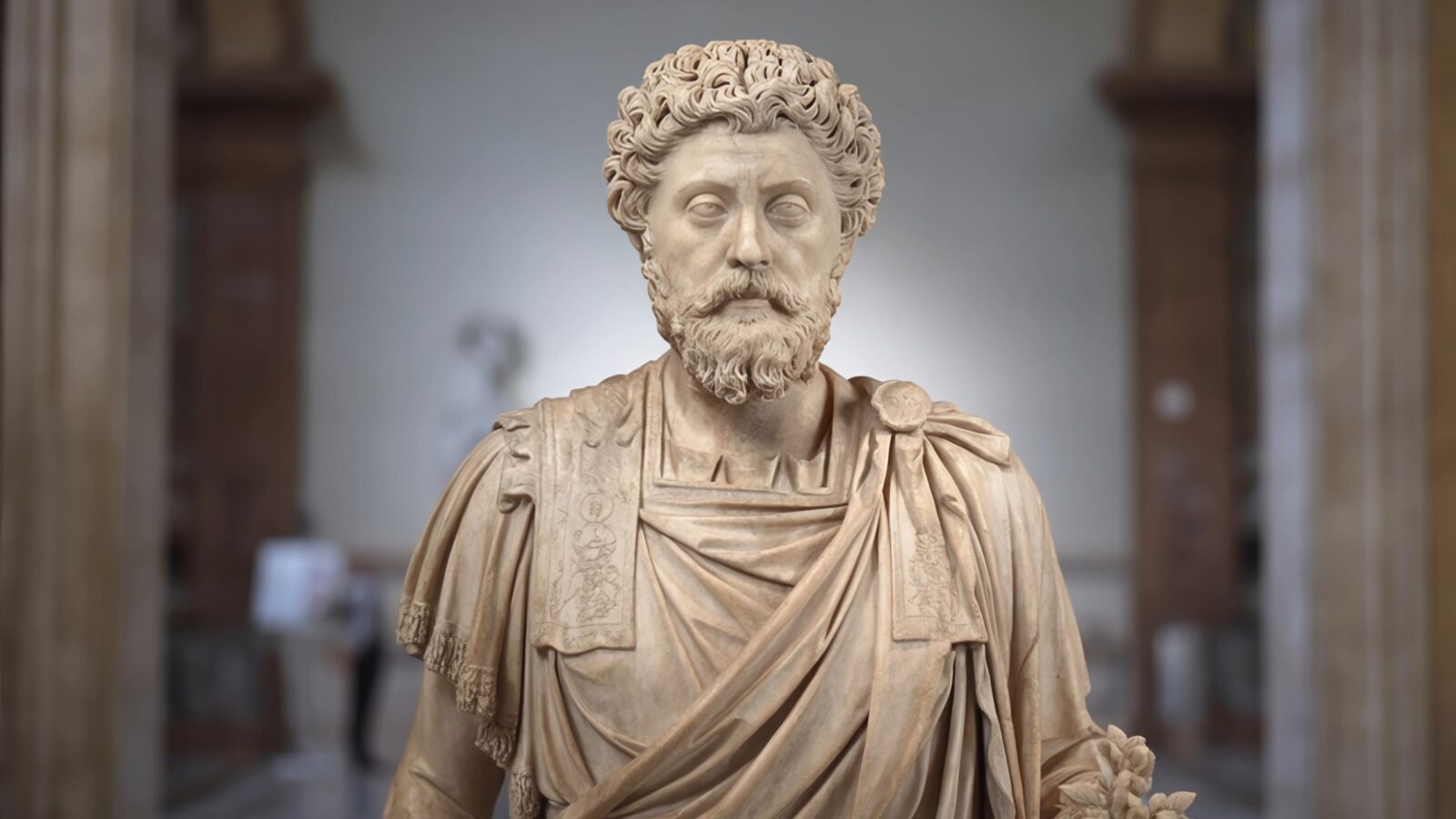
Marcus Aurelius spent much of his reign fighting on the empire’s northern frontier while plague spread at home. During those years, he kept a private journal and used it to argue with himself about how to think.
That notebook is now called Meditations. Smart people still read it because the advice is usable, and you can test most of it out in your own life. Below are ten habits drawn from its pages, each based on what the emperor wrote, that can make you act more intelligently.
1. Master the Dichotomy of Control
Sharp thinkers sort every problem into two piles. One holds what they can change, like their effort or their reply to a rude email. The other holds everything else.
The second pile gets almost no attention. Worrying about a market crash or a coworker’s bad mood accomplishes nothing, and that mental energy is gone once it’s spent.
Book VIII makes the same split. “If thou art pained by any external thing, it is not this thing that disturbs thee, but thy own judgment about it. And it is in thy power now to wipe out this judgment.” – Marcus Aurelius.
2. Guard Your Perception
A late text is just words. It turns into an insult only after the mind writes a story about it, usually one where you’re the victim.
The habit is easy to describe and hard to keep. Before reacting, intelligent people state the bare event in plain words and check whether the anger lasts.
Marcus Aurelius laid this out like a chain in Book IV. “Take away thy opinion, and then there is taken away the complaint, ‘I have been harmed.’ Take away the complaint, ‘I have been harmed,’ and the harm is taken away.”
3. Turn Obstacles Into Fuel
A failed project shows you which assumptions were wrong. A difficult client teaches patience faster than any book on patience could.
Most people read a setback as a signal to stop. People who think intelligently treat it as information and keep moving, sometimes in a better direction.
Ryan Holiday built an entire book around this passage from Book V. “The mind converts and changes every hindrance to its activity into an aid; and so that which is a hindrance is made a furtherance to an act; and that which is an obstacle on the road helps us on this road.” – Marcus Aurelius.
4. Journal for Clarity
Marcus Aurelius never wrote these notes for readers. The Greek title usually attached to them translates roughly as “to himself,” which says a lot about their purpose.
A journal can do the same job today. Write down a decision and your reasons for it, then read the entry a month later. The gap between what you expected and what happened reveals blind spots you can learn from.
Book VII points in this direction too. “Look within. Within is the fountain of good, and it will ever bubble up, if thou wilt ever dig.” – Marcus Aurelius.
5. Prepare Your Mind Each Morning
Book II opens with a morning routine that sounds almost negative. Marcus told himself to expect bad behavior from the people he was about to meet.
The point was to remove surprise. Someone who expects a delayed flight and a short-tempered gate agent can handle both without losing the afternoon to surprised frustration.
Here is the passage in full. “Begin the morning by saying to thyself, I shall meet with the busybody, the ungrateful, arrogant, deceitful, envious, unsocial. All these things happen to them by reason of their ignorance of what is good and evil.” – Marcus Aurelius.
6. Protect Your Time and Focus
Attention runs out. Pointless meetings eat it in small bites, and the phone takes the rest.
Intelligent people cut out of their lives anything that wastes their valuable time, attention, and focus. They drop low-value tasks, avoid online arguments, and stop watching negative news that changes nothing about their day.
Marcus Aurelius gave himself a one-line filter in Book IV. “For the greatest part of what we say and do being unnecessary, if a man takes this away, he will have more leisure and less uneasiness. Accordingly, on every occasion, a man should ask himself, Is this one of the unnecessary things?”
7. View Life From Above
Stress narrows vision. When one problem fills the whole screen, it starts to look permanent.
Pull back far enough, and the problem shrinks to its real size. Ask whether it will matter in five years. Usually it won’t, and that honest answer calms people faster than a pep talk.
Book IX describes the view from altitude in one long sentence. “Look down from above on the countless herds of men and their countless solemnities, and the infinitely varied voyagings in storms and calms, and the differences among those who are born, who live together, and die.” – Marcus Aurelius.
8. Value Action Over Debate
Some people can explain ethics for an hour and still treat waiters badly. Smart people check for that gap in themselves first.
Argue less about principles and practice them more. Keep promises. Show up on time, pay people what you said you would, and admit mistakes quickly.
Marcus was blunt about it in Book X. “No longer talk at all about what the good man is, but be such.” – Marcus Aurelius.
9. Accept Impermanence
Marcus held more power than anyone in Rome and still wrote reminders that he would die. Book IV warns against acting as if you had ten thousand years left.
“Do not act as if thou wert going to live ten thousand years. Death hangs over thee. While thou livest, while it is in thy power, be good.” – Marcus Aurelius.
Smart people use that fact to sort their priorities. Grudges and busywork shrink fast once the clock is visible.
Book II connects this idea to ordinary daily tasks. “And thou wilt give thyself relief if thou doest every act of thy life as if it were the last.” – Marcus Aurelius.
10. Build an Inner Citadel
Praise and criticism both show up whether you ask for them or not. People who depend on outside approval get yanked around by every comment.
The better move is to keep a quiet place in the mind. For some, that’s a walk without headphones. For others, it’s ten quiet minutes before work.
Book IV says nobody needs a country house for this kind of retreat. “Nowhere either with more quiet or more freedom from trouble does a man retire than into his own soul, particularly when he has within him such thoughts that by looking into them he is immediately in perfect tranquillity.”
Conclusion
None of these habits requires a philosophy degree.
None of these habits requires a philosophy degree. Pick one, like the habit 5 morning routine, and try it for a week before adding another. The idea is that difficult people stop surprising you once you’ve expected them, and surprise is what usually sets off a knee-jerk reaction. Later Stoic writers called this kind of advance rehearsal premeditatio malorum, the “premeditation of evils.”
George Long’s translation is in the public domain, so you can read it for free online or buy a cheap paperback for your desk. Open it when the day goes sideways and look for the line that fits.