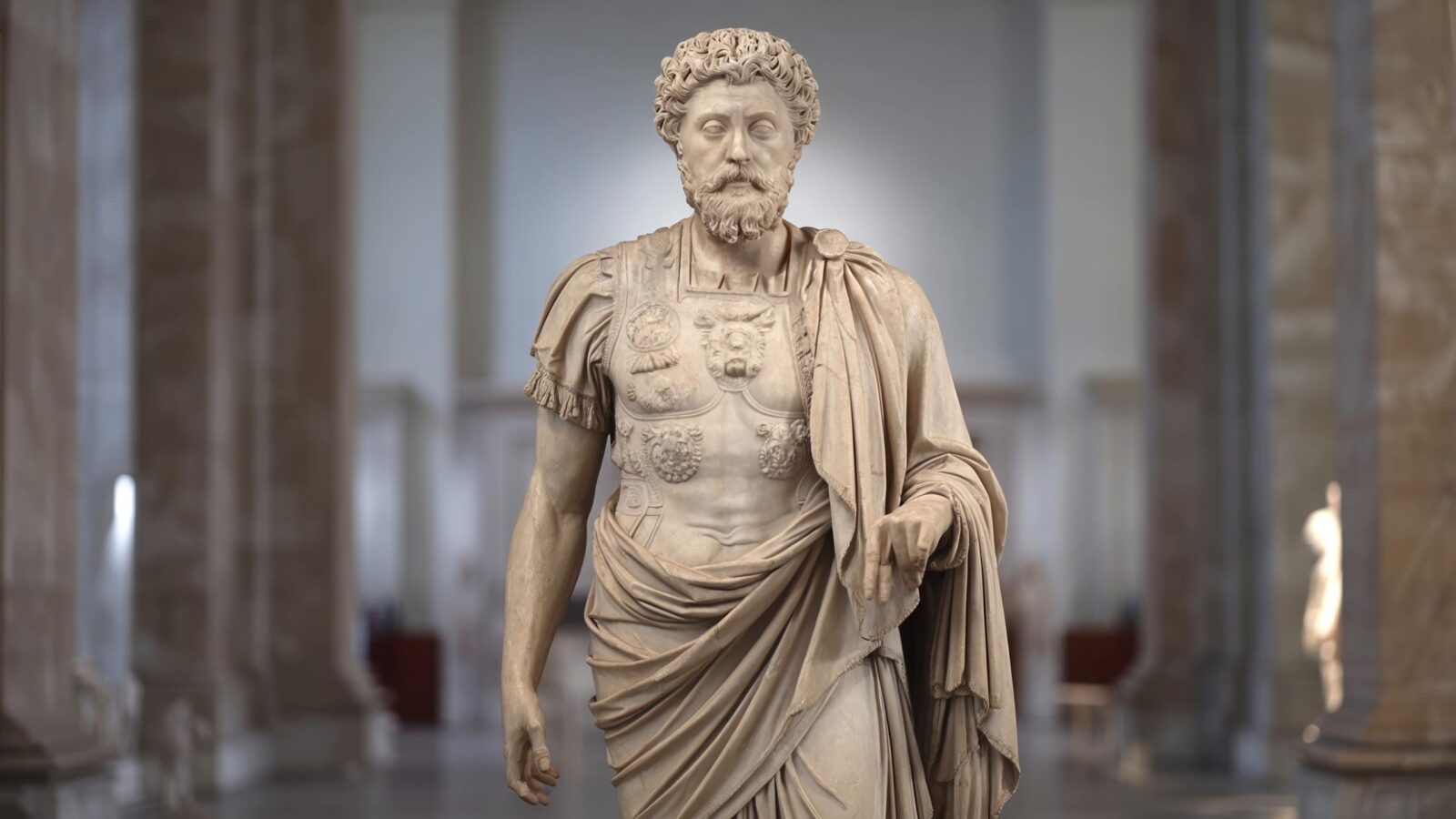
Marcus Aurelius kept his Meditations journal to himself. It gave a Roman emperor somewhere to correct his own thinking while war, disease, political pressure, and other people’s failures crowded every day.
That setting makes his advice useful. Self-discipline was never a cheerful morning ritual to him. It was how he kept his head when events got ugly, and he still had work to do as he wrote his notes to himself. Here is how a Roman Emperor remained self-disciplined in any situation based on his 5 Stoic principles.
1. Separate the Event From Your Opinion About It
“If thou art pained by any external thing, it is not this thing that disturbs thee, but thy own judgment about it.” Marcus Aurelius, Meditations, Book 8.47
A bad event arrives before the story about it. The client cancels. The market moves against you. When someone speaks rudely, the first reaction often turns one problem into an afternoon of anger.
Marcus wanted to slow that process down. The event is real. The claim that it has ruined everything is your own addition, and you can refuse to add it.
Put the facts into plain language when you feel yourself slipping. “The investment lost money” is a fact. “I always fail” is a judgment that serves no useful purpose and usually pushes people toward an even worse decision.
This pause gives discipline some room to operate. You may need to send a measured reply, sell a stock, redo the work, or walk away for ten minutes before you say something foolish. The external situation remains as it is, yet your conduct remains yours to decide.
2. Give Full Attention to the Job in Front of You
“Let every act of thine be done as if it were the last act of thy life.” Marcus Aurelius, Meditations, Book 2.5
People lose their footing when they try to carry the entire week in one sitting. The unfinished book, a new business, a strained relationship, or an intimidating health goal can look like a wall with no door. Avoidance starts there.
Marcus brought his focus back to the duty at hand. He could not settle every question about the empire at sunrise. He could handle the first decision before him with care and move on to the next one.
Make the next step small enough to name. Open the spreadsheet. Write the first paragraph. Wash the dishes, make the call, or take the walk. A clear task gives the mind less room to bargain and complain.
3. Work From Duty When Your Mood Is Useless
“In the morning, when thou risest unwillingly, let this thought be present: I am rising to the work of a human being.” Marcus Aurelius, Meditations, Book 5.1
Marcus knew the feeling of wanting to stay in bed. He wrote about it because comfort can sound very reasonable in the moment, especially when the day’s work seems thankless or difficult. He did not wait around for enthusiasm to rescue him.
He treated useful effort as part of being human. We care for our bodies, keep our promises, earn a living, and show up for people who depend on us. Some days feel satisfying. Other days, it feels like carrying a big rock uphill.
Motivation changes quickly. Duty gives you a steadier focus. If you have planned time for exercise, writing, research, or a difficult conversation, start even if the session is shorter than usual.
4. Put the Obstacle to Work
“The mind converts and changes every hindrance to its activity, and every obstacle on the way helps it on its way.” Marcus Aurelius, Meditations, Book 5.20
A setback is often where good intentions die. A delay turns into irritation. A loss turns into revenge trading. A mistake can make a person hide from the very work that would repair the damage.
Marcus viewed trouble as an opportunity to practice a particular virtue. A delay gives you a chance to show patience. An error requires honesty, then a better process. A rude person tests whether you can keep your temper without becoming passive.
This approach does not make hardship pleasant, nor does it excuse genuine wrongdoing. It keeps the problem from taking everything from you. You still have a choice about the quality of your response, even when you dislike every available option.
5. Clear Out What Does Not Matter
“Most of what we say and do is not necessary. If you can eliminate it, you will have more tranquillity and more time.” Marcus Aurelius, Meditations, Book 4.24
Discipline gets harder when attention is scattered all day. Constant alerts, idle arguments, and habitual checking leave people tired before they reach the work that matters. The problem is not always laziness. Sometimes your schedule is crowded with low-value activities.
Aurelius pushed himself to distinguish necessary activity from noise. That does not require a joyless schedule. It asks you to decide what earns a place in your day, rather than handing the decision to every notification and passing impulse.
Look closely at the habits that drain an hour at a time. Turn off the alerts that have no value. Leave some arguments unanswered. Put your phone in another room when a task needs your full attention.
A little empty space can feel uncomfortable at first. It also gives concentration a chance to return. You do not need an elaborate system to protect attention, only a few boundaries you are willing to keep.
Conclusion
“Be not careless in deeds, nor confused in words, nor rambling in thought.” Marcus Aurelius, Meditations, Book 8.1
Marcus Aurelius expected difficult days. His writing does not pretend that disciplined people float above grief, anger, fatigue, or disappointment. It asks them to stop giving those feelings unlimited authority.
Use one principle the next time pressure shows up. Name the fact without turning it into a catastrophe, complete the next task, act from duty, make some use of the obstacle, or cut a distraction. Repeated choices of that kind build self-discipline that holds up when conditions are far from ideal.