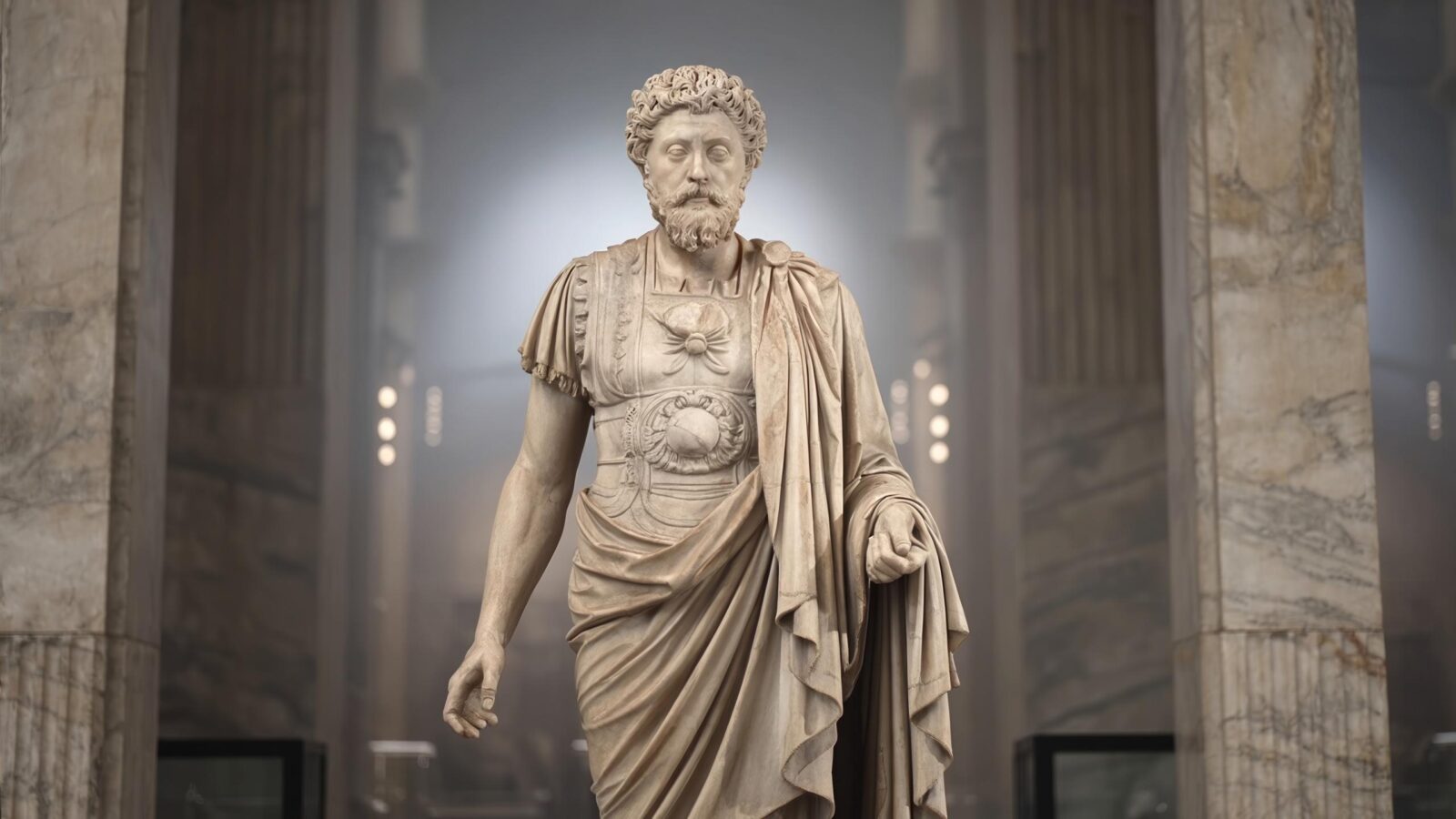
Marcus Aurelius had the job of ruling Rome through war, disease, and political strain. In private, he wrote short notes to himself about anger, fear, duty, and the ordinary tendency to make a hard day worse in your own head.
Stoicism does not offer an easy escape from disappointment or grief. It gives you a way to meet those things without letting them rule every thought and choice. Three lessons from Marcus Aurelius still apply to a bad morning, a strained relationship, a failure at work, or a plan that falls apart.
1. You Control Your Mind, Not External Events
“Thou hast power over thy mind, not outside events. Realize this, and thou wilt find strength.” Marcus Aurelius, Meditations, Book XII.
A traffic jam does not care about your schedule. A rude person may never admit they were wrong. Markets can reverse, clients can leave, and news can ruin plans that looked solid the day before.
Marcus Aurelius drew a line between the things in your life that you have no control over and the things that you can control. Your response belongs to you. So do your effort, your preparation, the words you say, and the judgment you make once an event has occurred.
People lose a great deal of energy fighting facts. They replay the insult, complain about the delay, or turn a setback into a running argument with the universe. That reaction changes nothing and often leads to the next poor decision.
There is no instruction here to act cheerful when something painful happens. A failed business deal can hurt. The death of someone close can leave a real wound. Stoicism asks you to face the event plainly, then avoid adding panic, rage, or self-pity to your emotional pile.
When a problem appears, pause before you give it a mental story. Sort the situation into two columns in your mind: what you can affect and what you can’t affect. Put your energy into the first column and stop trying to win an internal mental argument with the second.
Sometimes the next move is direct action. You make the call, change the plan, apologize, or leave the room before saying something foolish. At other times, there is nothing to fix that day, and patience is what you must work on.
This habit is hardest when your emotions are loud. Anger feels active, and worry can disguise itself as preparation. Marcus Aurelius knew the difference between motion and useful action. Keeping your judgment clear gives you a chance to respond well while others react on instinct.
2. Your Perspective Shapes Your Reality
“The happiness of thy life depends upon the quality of thy thoughts: therefore, guard accordingly.” Marcus Aurelius, Meditations, Book V.
Events hit first. The explanation your mind gives them follows almost immediately. A late response can seem like proof that somebody does not respect you. One mistake can seem like evidence that you have failed at everything.
Those conclusions often arrive before the facts do. Marcus Aurelius treated judgment as something that needed inspection because the mind is quick to overstate a threat, assign motives, and predict disaster. A difficult event may call for action, but it does not require every dark conclusion attached to it.
Say that a project goes poorly. You can see the mistake, learn what caused it, and repair the damage where possible. Calling yourself hopeless adds nothing to that job. It only makes the work feel heavier than it already is.
Stoicism is not an excuse for cheerful denial. Some problems are serious, and some people act badly. The useful response begins with accuracy, followed by a choice about how you will conduct yourself under pressure.
A delay might ask for patience. An awkward conversation might require honesty. A public mistake may call for humility and a better process the next time. Hard circumstances can teach you something if you quit treating every inconvenience as a personal attack.
Watching your thoughts does not mean you must trust every pleasant thought either. It means giving your first reaction a second look before it turns into speech or behavior. A few seconds of restraint can spare you a regret that lasts much longer.
3. The Present Moment Is All You Ever Possess
“Confine thyself to the present.” Marcus Aurelius, Meditations, Book VII.
The past has already taken its shape. The future is mostly imagination until it becomes today. Still, many people spend hours dwelling on past mistakes or disasters that have not happened.
Marcus Aurelius brought himself back to the present because it is the place where life occurs. You can make a call today. You can do the next hour of work, tell the truth, take a walk, or stop feeding a habit that keeps hurting you.
Long-term plans still matter. A person should prepare for a business, a family, and a financial future. Planning earns its place when it leads to a real step you can take now, rather than another night of rehearsing every bad possibility.
When anxiety starts to spread, make the frame smaller. Identify the immediate responsibility in front of you. Give it your attention, finish it as well as you can, and wait until the next problem is real before trying to solve it.
The same discipline helps with regret. You may need to own a bad decision or repair the harm you caused. Once you have done what you can, repeated self-punishment takes time away from the only moment where a better choice is available.
Conclusion
Marcus Aurelius did not get an easier life because he studied philosophy. He worked to meet a difficult life with less confusion. His advice starts with a demanding fact: you can’t command every event, and you are still responsible for your conduct.
Keep your attention on the part you can direct. Question the harsh story your mind adds to a setback. Then deal with the next piece of life that is actually in front of you. The conditions around you may remain difficult, but your response does not need to become another source of mental harm.