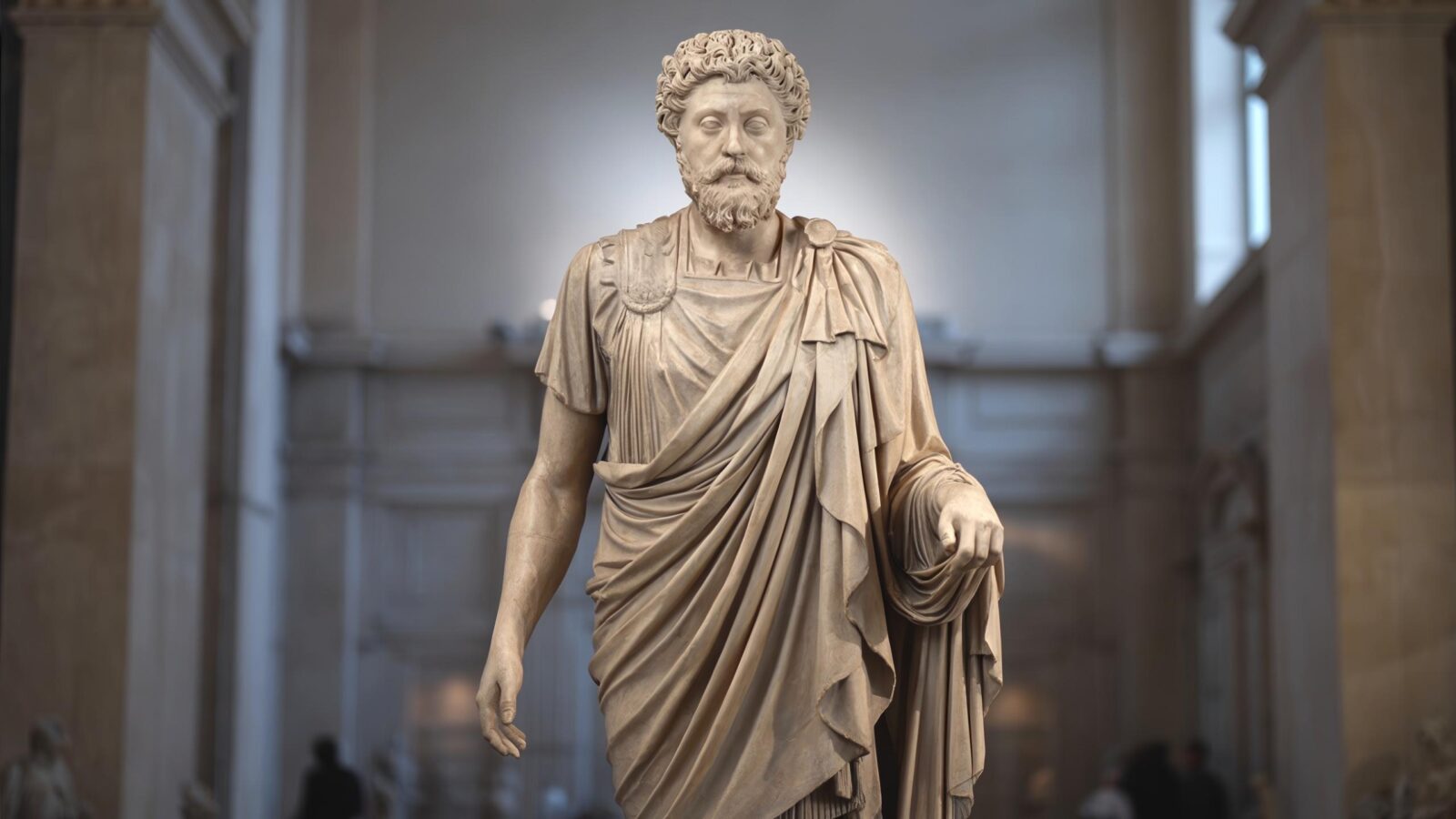
Marcus Aurelius did not write Meditations as a promise of life without grief. He wrote these private notes during wartime in the Roman Empire when he was the Emperor. His brand of Stoicism builds inner steadiness so that outside events do not run your mind.
No philosophy makes hard events painless, howerver it can reduce the added suffering caused by panic, resentment, and imagined disasters. Here are his 10 Stoic principles to help you manage mentally what affects you most in life.
1. Put Your Energy Into What Is Yours to Govern
“The universe is transformation: life is opinion.” – Marcus Aurelius.
Your choices, effort, attention, and conduct belong to you. Other people’s opinions, market outcomes, weather, and the past do not. Frustration comes from treating that second group as though worry could change it.
When a result matters, do the work that is yours and release the rest. You can prepare for a meeting and speak honestly, but you can’t command agreement or a particular outcome.
2. Separate the Event From the Story You Add to It
“The soul becomes dyed with the color of its thoughts.” – Marcus Aurelius.
An event is often simpler than the story that follows it. A rude comment is a rude comment. It becomes unbearable only after the mind turns it into proof that you are disrespected, unsafe, or destined to fail.
Describe the facts without decoration. Ask what happened, then identify the conclusion you supplied. That creates room for a response instead of a reaction to a catastrophe invented by your mind.
3. Work With Fate Instead of Fighting Reality
“Love only that which happens to thee and is spun with the thread of thy destiny.” – Marcus Aurelius. He wrote it for his own reflection.
Later writers called this attitude amor fati, or love of fate. In practical terms, it means meeting reality as it is before deciding what to do next. Resenting a loss or delay does not alter it. It does waste energy.
Acceptance starts with seeing what happened clearly. You may dislike it and still use it. A setback may force a better plan or reveal a hidden weakness.
4. Prepare Your Mind for Ordinary Misfortune
“Begin the morning by saying to thyself, I shall meet with the busybody, the ungrateful, arrogant, deceitful, envious, unsocial.” – Marcus Aurelius. He used the reminder to prepare for daily life.
Marcus began the day by admitting that difficult people and inconvenient events would appear. This resembles premeditatio malorum, a calm consideration of what could go wrong. It is preparation that reduces surprise.
Think through criticism, a rejected proposal, or a sudden expense while calm. Decide how you would act with dignity. If it arrives, it feels less like an ambush.
5. Let Mortality Clarify Your Priorities
“Do not act as if thou were going to live ten thousand years.” – Marcus Aurelius. The warning is direct.
Thinking about death is not meant to make life bleak. It exposes how easily a person can spend years on petty arguments, deferred conversations, and unnecessary fears. A finite life makes attention valuable.
Use this thought gently, not negatively. Ask whether the disagreement will matter in the long term. The answer can bring you back to a necessary task or make forgiveness easier.
6. Guard Your Mind
“The things which are external to my mind do not touch it.” – Marcus Aurelius. Marcus returned to this point often.
The Stoics treated the reasoning mind as a person’s ruling center. Other people can insult you or behave unfairly. They can’t force you to become dishonest, cruel, or uncontrolled. Your character still requires your consent.
Staying calm does not require tolerating abuse or remaining in a harmful situation. Protect your judgment while setting a boundary, leaving, documenting a problem, or asking for help. Keep your response aligned with your standards.
7. Meet Difficult People Without Becoming One
“Men exist for the sake of one another. Teach them then or bear with them.” – Marcus Aurelius. It frames his duty to other people.
Some people will be selfish, careless, or impossible to please. Marcus saw much of that behavior as ignorance about what is good rather than a special offense aimed at him. That does not require trust or excuse repeated wrongdoing.
It can free you from having to carry their behavior around all day. Correct what can be corrected, protect yourself where necessary, and avoid joining the same ugly pattern.
8. Carry Only On Today’s Work
“Do not disturb thyself. Make thyself all simplicity.” – Marcus Aurelius. He was writing to himself here.
The future can overwhelm you when you carry every possible problem at once. The past can do the same when you relive a mistake that can’t be changed. Marcus brought attention back to the present act because that is where conduct is possible.
Ask what this hour requires. It may be a phone call, a difficult conversation, or the next piece of work. That is how a large problem is handled without consuming your inner life.
9. Take the View From Above
“Consider the vastness of time, and the rapidity of the change of each thing.” – Marcus Aurelius. The thought cuts pride down to size.
Marcus widened his view beyond the irritation of one day. Reputations, possessions, arguments, and powerful institutions are temporary. This corrects the ego’s tendency to treat every setback as permanent and enormous.
When you feel trapped, picture the wider city, the long history before you, and people carrying unseen burdens. The issue may still need attention, but it is no longer the whole universe.
10. Build Your Worth on Character, Not Approval
“If it is not right, do not do it: if it is not true, do not say it.” – Marcus Aurelius. It offers a simple test for conduct.
Praise, status, money, and popularity can be pleasant. They are unstable foundations for self-respect. Needing constant approval gives other people power over your mood.
Marcus returned to justice, courage, self-control, and clear thinking. Judge the day by whether you acted fairly and kept faith with your principles. Criticism can then be examined without becoming a verdict on your worth.
Conclusion
Stoicism does not promise that nothing will ever affect you. Loss, illness, betrayal, and fear are part of being human. Marcus Aurelius offers the ability to keep an inner part of yourself clear enough to choose your next action well.
That stability is built through repetition. Focus on what you can govern, challenge stories that intensify pain, and let character matter more than applause. The world will remain unpredictable, but it does not have to decide who you become inside it.