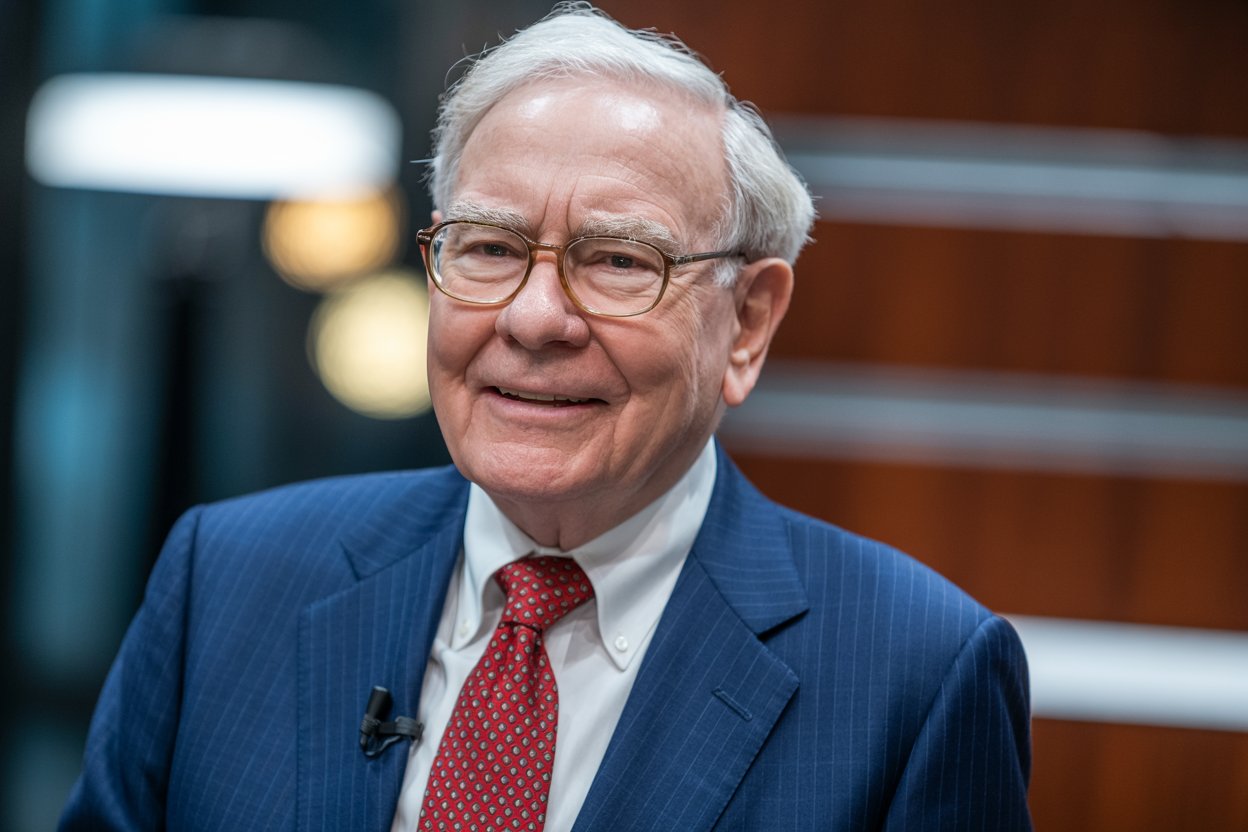
Warren Buffett didn’t become one of the world’s wealthiest investors by following complex strategies or chasing hot stock tips. His approach is surprisingly simple, so simple that most people dismiss it as too basic to work. Yet Buffett has consistently outperformed professional money managers for over six decades using principles that any beginner can understand and apply.
Warren Buffett, known as the Oracle of Omaha, has shared his investment wisdom freely through annual letters, interviews, and shareholder meetings. While Wall Street pushes complicated products and trading strategies, Buffett advocates for straightforward rules that prioritize patience, discipline, and common sense. These aren’t get-rich-quick schemes but proven principles that compound wealth over time.
For beginners overwhelmed by market jargon and conflicting advice, Buffett’s approach offers clarity. His five core rules provide a foundation for building wealth without requiring advanced financial knowledge or constant market monitoring. What these rules need is the psychological discipline to go against prevailing market emotions, something most investors find more complicated than mastering fundamental analysis.
1. Invest in What You Understand
Buffett’s first rule is deceptively simple: “Never invest in a business you cannot understand.” This principle, which he calls staying within your “circle of competence,” prevents investors from making costly mistakes in complex industries they don’t fully understand.
The tech bubble of the late 1990s severely tested this rule. While investors poured money into internet companies with no earnings, Buffett refused to buy stocks he couldn’t value. Critics called him outdated. Then the bubble burst, wiping out trillions in wealth while Buffett preserved his capital.
This doesn’t mean you need an MBA to invest. Buffett suggests starting with businesses whose products and services you use on a daily basis. Can you explain how the company makes money? Do you understand its competitive advantages? If not, move on to something clearer.
The key insight here challenges conventional wisdom: You don’t need to understand everything in the market. Buffett himself admits there are entire sectors he avoids because he can’t properly evaluate them. Success comes from exploiting what you do understand, not from spreading yourself thin across markets you don’t.
2. Buy Quality Businesses at Fair Prices
“It’s far better to buy a wonderful company at a fair price than a fair company at a wonderful price.” This quote captures Buffett’s evolution from buying cheap, mediocre businesses to acquiring exceptional companies at reasonable valuations.
Quality manifests in several ways: substantial competitive advantages (what Buffett calls “moats“), consistent earnings growth, solid management, and pricing power. These businesses can raise prices without losing customers, giving them protection against inflation and economic downturns.
Beginners often chase the cheapest stocks, assuming low prices equal good value. A stock trading at $5 isn’t necessarily cheaper than one at $500. What matters is the relationship between price and the company’s earning power, assets, and prospects.
Buffett looks for businesses with durable competitive advantages: brands customers trust, network effects that grow stronger with scale, or cost advantages competitors can’t match. Coca-Cola, his most famous investment, possesses a brand moat that has protected its market position for over a century.
The “fair price” component requires patience. Even the most wonderful businesses can become poor investments if you overpay. Buffett waits for market pessimism or temporary setbacks to buy quality companies at prices that allow for substantial returns.
3. Think Like an Owner, Not a Renter
“If you aren’t willing to own a stock for ten years, don’t even think about owning it for ten minutes.” This quote separates investors from speculators. Buffett buys pieces of businesses, not lottery tickets.
When you purchase stock, you’re acquiring partial ownership in a real enterprise. Short-term stock price fluctuations don’t change the underlying business value. A quality company doesn’t become less valuable because its stock drops 20% in a bad month.
This ownership mindset shifts your focus from stock prices to business fundamentals. Instead of checking prices obsessively, you evaluate whether the company is growing earnings, maintaining competitive advantages, and allocating capital wisely.
Buffett’s holding periods for his best investments span decades. He bought Coca-Cola stock in 1988 and still owns it today. American Express has been in his portfolio since 1963. This buy-and-hold approach lets the power of compounding work its magic while avoiding the taxes and fees that erode returns through frequent trading.
4. Be Fearful When Others Are Greedy
“Be fearful when others are greedy, and greedy when others are fearful.” This contrarian principle separates wealthy investors from the crowd that buys high and sells low.
When markets soar and everyone feels optimistic, prices usually exceed reasonable valuations. Conversely, when fear dominates and investors panic, quality businesses often trade at bargain prices. Buffett built much of his wealth by investing heavily during market crashes when others were selling.
During the 2008 financial crisis, while most investors fled stocks, Buffett invested $5 billion in Goldman Sachs and billions more in other companies. His timing proved prescient as markets eventually recovered and multiplied his investments.
This rule requires emotional discipline more than analytical skill. When your portfolio drops 30% and financial media predicts doom, your instinct screams “sell everything.” Successful investors train themselves to recognize these moments as potential opportunities rather than disasters.
5. Focus on the Long Term
“Someone’s sitting in the shade today because someone planted a tree a long time ago.” Buffett’s final rule emphasizes the importance of patience and the power of compound growth over the course of decades.
The stock market rewards patience extraordinarily well but punishes impatience almost as severely. Over the course of one day, the market is essentially random. Over a one-year period, it remains quite volatile. But over 20-year periods, quality businesses consistently create wealth.
This long-term focus eliminates countless distractions. You don’t need to predict next quarter’s earnings or next year’s economic growth. You only need to identify businesses that will be more valuable in 10 to 20 years than they are today.
The compounding effect Buffett harnesses works slowly but powerfully. A $10,000 investment growing at 10% annually becomes $67,275 in 20 years. The same investment held for 40 years would be worth $452,593. Time transforms modest returns into extraordinary wealth, but only if you resist the urge to interrupt the process.
Conclusion
These five rules form the foundation of Buffett’s investment philosophy. They’re simple but not easy, requiring discipline that most investors lack. That’s precisely why they work. For beginners willing to think differently from the crowd, these principles offer a proven path to building lasting wealth.