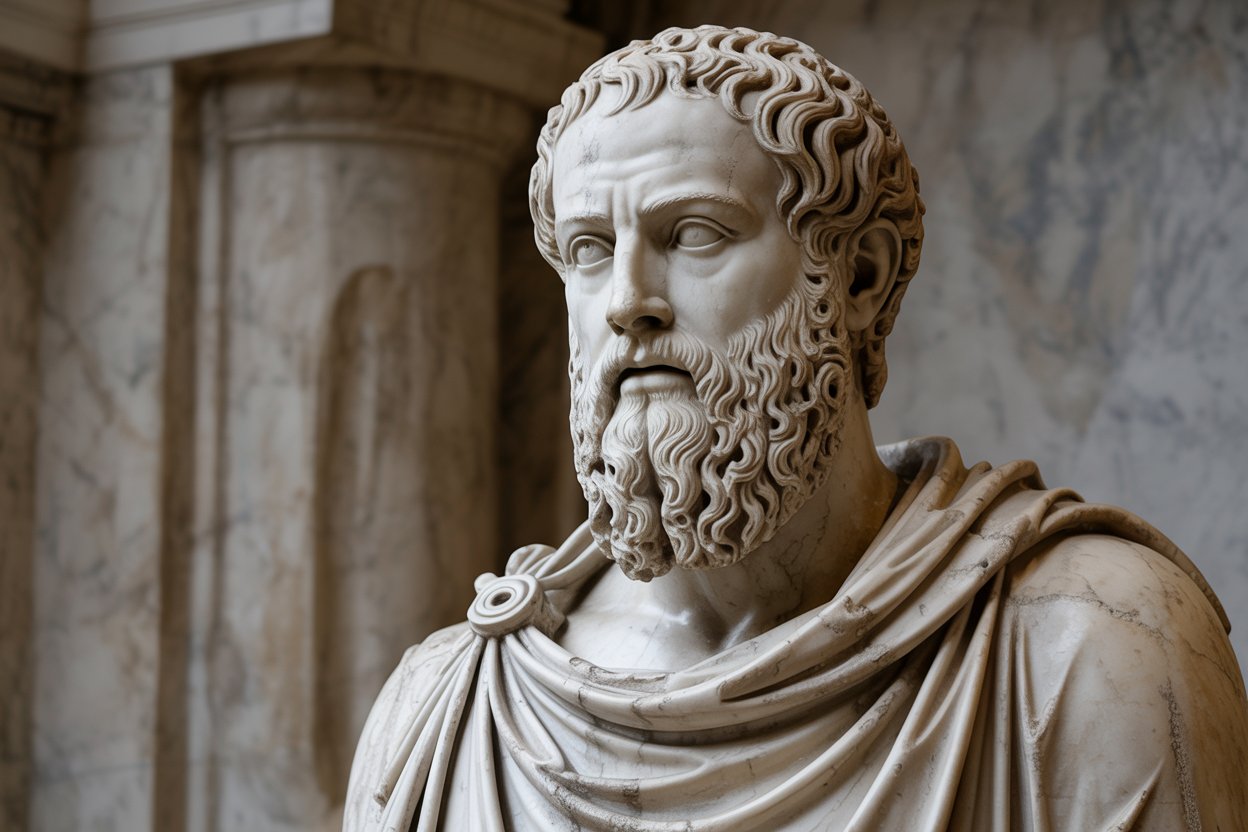
Most men spend decades chasing outcomes they can’t control while ignoring the one thing they can: their own minds. Stoic philosophy, developed by Marcus Aurelius, Epictetus, and Seneca over two thousand years ago, offers a framework that modern men typically discover only after wasted years, broken relationships, and financial mistakes.
The pattern repeats across generations. Young men chase status, approval, and material comfort, believing these external markers will deliver peace and satisfaction. By middle age, many realize they’ve been climbing the wrong ladder entirely. Here are the ten most critical insights men eventually grasp, often decades after they needed them most. The Stoics teach these lessons in their writings.
1. You Control Your Mind, Not External Outcomes
Epictetus divided all things into two categories: what we control and what we don’t. Men waste enormous energy trying to control outcomes in every area of life, other people’s opinions, their children’s choices, and their family’s politics. This strategy fails because external events operate independently of our preferences.
Your power exists entirely within your judgments, interpretations, and responses. You can’t control whether you get promoted, but you control how you handle rejection. You can’t control whether your business succeeds, but you control your effort and attitude. Most men burn themselves out fighting battles they can’t win instead of mastering their own thinking.
2. Time Is Your Most Finite Asset
Seneca wrote extensively about time as the only limited resource. Money can be earned again. Health can often be restored. But time spent is gone forever, and most men treat it carelessly until middle age reveals how little remains.
The Stoics viewed wasted time as a moral failure because it represents squandered life itself. Scrolling social media for three hours, staying in a dead-end job for a decade, or maintaining toxic friendships for years aren’t minor inconveniences. They’re pieces of your finite existence you’ll never recover.
3. Comfort Weakens Character
Modern life offers unprecedented ease, and most men unconsciously choose the comfortable path at every turn. Marcus Aurelius deliberately practiced hardship, understanding that difficulty builds strength while ease breeds weakness.
Men who avoid all discomfort become psychologically fragile. When real hardship arrives, they lack the resilience to handle it. Voluntary hardship serves as training. Taking cold showers, exercising intensely, or living below your means builds the mental toughness you’ll eventually need.
4. Approval Is a Trap
Seeking validation makes you emotionally enslaved to whoever holds the power to grant or withhold it. Stoics warned that living for reputation hands control of your inner peace to other people, making you a puppet of their changing opinions.
Men discover this lesson painfully late when they’ve spent decades performing for an audience and realize they’ve built someone else’s version of a good life. Marcus Aurelius asked, “What does it profit a man to gain the world’s approval but lose his own self-respect?” The answer is nothing.
5. Most Fears Never Happen
Anxiety is imagined suffering about things that usually don’t occur. Seneca observed that we suffer more in imagination than in reality, creating elaborate mental torture over outcomes that never materialize.
Men waste years paralyzed by fears that prove groundless. The Stoics practiced negative visualization not to increase anxiety but to expose how survivable most disasters actually are. Most of what you worried about never happened, and the things that did go wrong rarely unfolded as catastrophically as imagined.
6. Desire Must Be Governed
Unchecked desire creates endless suffering. Stoicism teaches that wanting less, not earning more, delivers freedom. Men typically learn this after accumulating debt, possessions they don’t use, or addictions they can’t control.
The hedonic treadmill ensures that satisfied desires immediately give rise to new ones. This pattern guarantees perpetual dissatisfaction regardless of achievement level. Epictetus advised wanting what you already have rather than constantly craving what you don’t.
7. Discipline Beats Motivation
Motivation fluctuates based on mood, energy, and circumstances. Discipline functions regardless of how you feel. Stoics built their lives on habits and principles that operated independently of emotion.
Men waste years waiting to “feel like” improving. The truth runs opposite: action creates motivation. Discipline means doing what needs to be done, whether it feels good or not, understanding that feelings are temporary but consequences are permanent.
8. The Present Moment Is All You Have
Marcus Aurelius taught that you cannot lose the past or future because you never possessed them. The present moment is the only time you actually inhabit, yet most men spend it dwelling on regrets or worrying about what’s ahead.
Living in the past creates depression. Living in the future creates anxiety. The only place peace exists is now, in this moment, where you can actually act. Men learn too late that decades have disappeared while they were mentally somewhere else.
9. Death Clarifies Priorities
Stoics practiced memento mori to strip life down to what genuinely matters. Most men avoid thinking about death until a crisis forces confrontation, then suddenly gain clarity about wasted years and misplaced priorities.
The dying man doesn’t wish he’d worked more hours or impressed more people. This clarity is available now through deliberate contemplation, but most men wait until it’s too late to fully apply the insights.
10. Character Is the Only True Asset
Status fades. Wealth can vanish overnight. Physical strength declines. Stoicism holds virtue as the only possession that can’t be taken from you.
Men chase external markers of success while neglecting character development, only to see those markers disappear during divorce, bankruptcy, or job loss. Character provides the only stable foundation. Building wisdom, courage, integrity, and discipline creates something no external force can strip away.
Conclusion
These lessons aren’t complicated, but they run counter to modern culture’s emphasis on external achievement, comfort, and approval. Most men spend decades learning what the Stoics taught 2,000 years ago: peace comes from within, time is precious, and character matters more than reputation.
The tragedy isn’t that men learn these lessons late; it’s that many never learn them at all. Stoic philosophy offers a shortcut to wisdom that usually only comes through painful experience. The question is whether you’ll discover them in your twenties or wait until your sixties when most opportunities to apply them have passed.