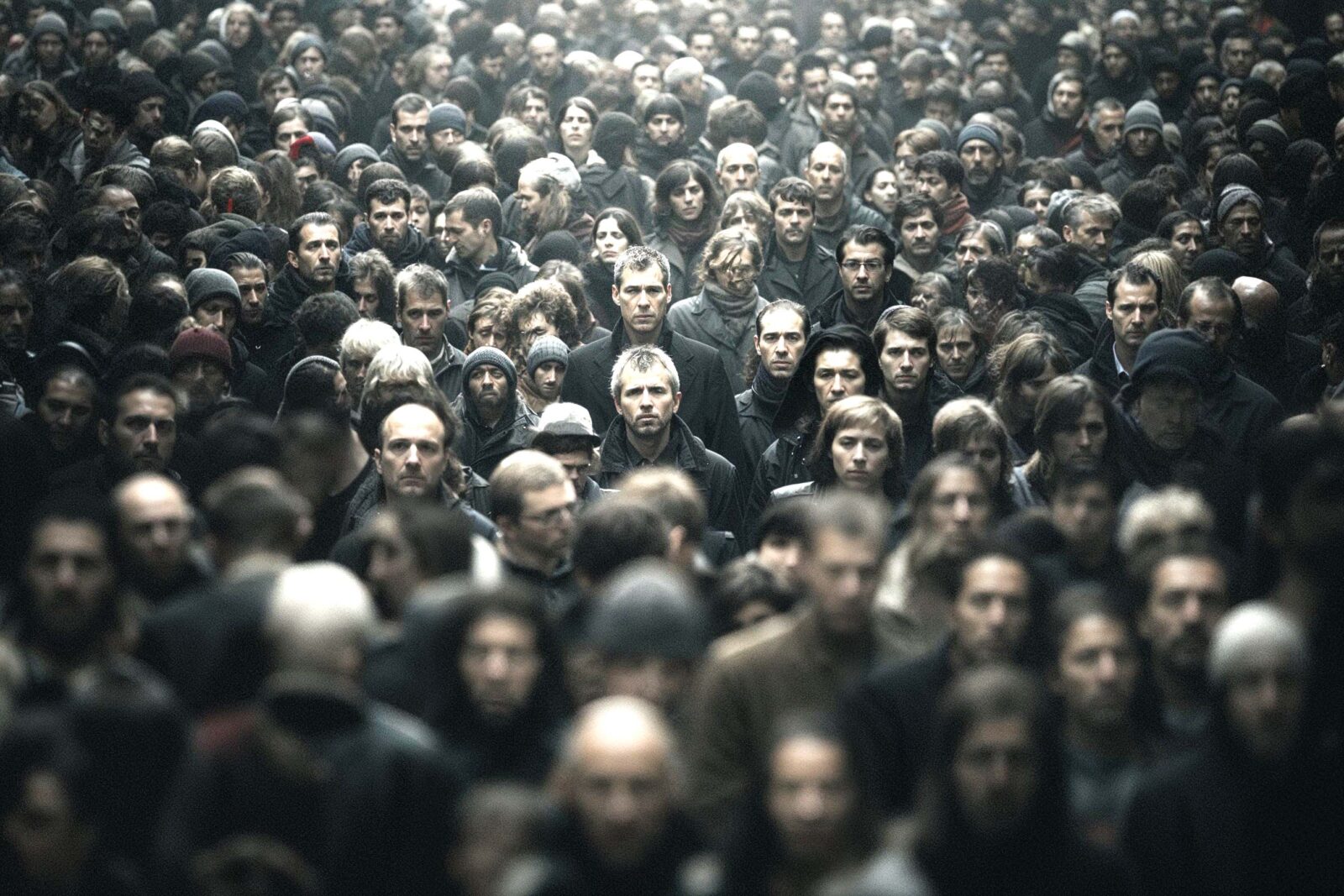
Some people come alive in packed stadiums, busy airports, and loud social events. Others feel a subtle dread the moment a space fills up. If crowded places make you tense, irritable, or exhausted, this reaction is not a personal weakness. It is a psychological response rooted in how your brain processes the world.
Disliking crowds is rarely about fear of people. It is about overstimulation, loss of control, and the strain placed on your nervous system. Psychology suggests that individuals who tend to avoid crowds often possess heightened awareness, a strong internal focus, and a deep need for mental clarity.
Crowds Overstimulate the Nervous System
Crowded places flood the brain with competing sensory input. Sounds overlap, bodies move unpredictably, and visual information constantly shifts. For some nervous systems, this stimulation is manageable or even energizing. For others, it becomes overwhelming very quickly.
People who hate crowds often have nervous systems that process information deeply rather than quickly filtering it out. This means more data is being absorbed at once. The result is mental fatigue, irritability, and a desire to retreat to quieter spaces where the brain can recover.
A Strong Need for Personal Space
Personal space is not a social preference. It is a psychological boundary. In crowded environments, that boundary collapses as strangers stand close, brush past one another, and occupy shared physical space.
For individuals who value personal space, this constant proximity can trigger discomfort because it erodes a sense of safety and autonomy. Their bodies respond with tension, even if their minds know there is no danger. Distance allows them to relax and think clearly, which is why crowds feel oppressive rather than exciting.
Heightened Sensitivity to Emotional Energy
Many crowd-avoidant individuals are highly attuned to emotional shifts around them. They pick up on impatience, stress, excitement, and tension in others almost instantly. In a crowd, those emotions multiply and collide.
This sensitivity means crowded places feel emotionally loud. Even without direct interaction, the atmosphere weighs on them. Over time, this emotional absorption leads to exhaustion, making solitude or quieter environments essential for balance.
Loss of Control Triggers Stress Responses
Crowds remove predictability. Movement slows. Exits feel blocked. Plans become uncertain. For people who rely on structure and control to regulate stress, this unpredictability activates anxiety.
Psychologically, control equals safety. When individuals feel trapped or unable to move freely, their brains may activate fight-or-flight responses. This explains why crowded spaces can feel suffocating, even when nothing visibly threatening is happening.
Introversion Is Part of It, But Not the Whole Picture
Crowd avoidance is often attributed to introversion, but the reality is more complex. Many extroverts dislike crowds, while some introverts tolerate them well. The key difference lies in stimulation tolerance, not sociability.
People who hate crowds often function best with lower levels of sensory input. Social confidence does not protect against overload. Even highly outgoing individuals may find crowds draining if their brains require calm to operate efficiently.
Crowds Disrupt Internal Focus
People who prefer deep thinking, creativity, or reflection rely on sustained internal focus. Crowded environments constantly pull attention outward through noise, movement, and interruption.
For these individuals, crowded places feel mentally fragmented. Thoughts scatter. Awareness is divided. Quiet spaces restore clarity and enable the mind to function at full capacity. This is why crowds feel disruptive rather than neutral.
Past Experiences Shape Crowd Sensitivity
Negative experiences in crowded places often leave psychological imprints. Feeling trapped, lost, embarrassed, or overwhelmed teaches the brain to associate crowds with danger or discomfort.
Even mild past stress can condition future responses. The brain remembers how it felt and prepares defensively the next time a similar environment appears. This is not irrational fear. It is learned self-protection.
Crowds Reduce Emotional Privacy
Crowded spaces leave little room for emotional withdrawal. There is nowhere to retreat, reflect, or regulate feelings privately. For individuals who value emotional autonomy, this constant exposure can be draining.
Psychologically, emotional safety requires space. Being surrounded by strangers creates pressure to monitor expressions and reactions. Over time, this vigilance becomes exhausting, making crowd avoidance a form of emotional self-care.
Crowd Avoidance Is Often Misunderstood
Society often labels people who hate crowds as anxious, antisocial, or overly sensitive. In reality, many of these individuals are self-aware and highly intentional.
They know which environments support their well-being and which do not. Choosing quieter spaces is not avoidance. It is aligned with how they function best. This awareness often promotes long-term success rather than limiting it.
Learning to Work With Your Wiring
Personal success does not require forcing yourself into environments that drain you. It requires understanding your psychological makeup and designing your life accordingly.
Choosing off-peak travel times, smaller gatherings, or quieter workspaces is not a weakness; it’s a strategic approach. It is strategic self-management. When people stop fighting their nature, confidence grows, and stress decreases.
Conclusion
People who hate crowded places are often deeply perceptive, thoughtful, and internally driven. Their discomfort is not a flaw. It is a signal from a nervous system that values clarity, space, and control.
Understanding the psychology behind crowd avoidance enables self-acceptance rather than self-criticism. You do not need to change how you are wired to succeed. You only need to respect it and build a life that supports it.