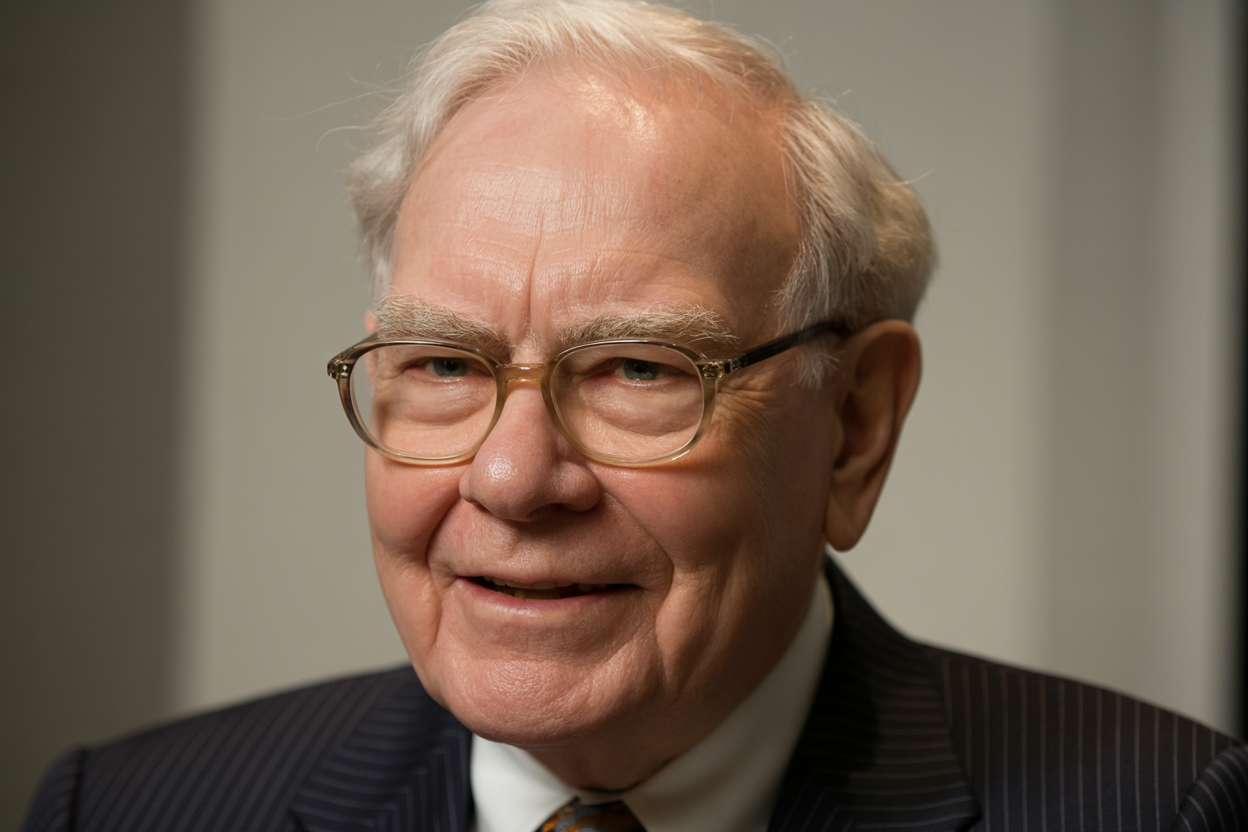
Warren Buffett built one of the greatest fortunes in history not through luck or inheritance, but through a set of principles anyone can adopt. The Oracle of Omaha has spent decades sharing his philosophy on money, investing, and financial discipline through shareholder letters, interviews, and public appearances.
What makes his approach so powerful is its simplicity. These are not strategies reserved for Wall Street insiders or trust fund heirs. Here are five core wealth principles from Buffett’s teachings that the middle class can put to work starting today.
1. Live Below Your Means and Invest the Difference
“Do not save what is left after spending, but spend what is left after saving.” – Warren Buffett.
This single idea separates wealth builders from everyone else. Most middle-class households operate on a simple formula: earn money, pay bills, spend on lifestyle, and save whatever trickles through. Buffett flips that order entirely. He treats saving and investing as a priority, not an afterthought.
The key is creating a persistent surplus in your cash flow and directing it into productive assets such as equities, index funds, or business ventures. This is the engine behind long-term compounding. Every dollar you invest today has the potential to multiply over decades, but only if you consistently create that surplus first.
Frugality is not about deprivation. It is about making intentional choices so your money works harder than you do. Buffett himself famously still lives in the Omaha house he bought in 1958, despite being worth hundreds of billions. Lifestyle inflation is the silent killer of wealth, and discipline with your spending is the foundation on which everything else is built.
2. Invest in What You Understand
“Never invest in a business you can’t understand.” – Warren Buffett
Buffett’s “circle of competence” framework is one of the most essential concepts in investing. The idea is straightforward: stick with investments you can genuinely evaluate. If you can’t explain how a company makes money or why a particular asset should grow in value, you are speculating, not investing.
For middle-class investors, this principle is a powerful shield against costly mistakes. It means avoiding the lure of speculative trades, complex derivatives, or whatever hot tip is making the rounds at work. These are the traps that destroy portfolios and set people back years.
The practical application is more straightforward than most people think. If you understand that a broad stock market index fund owns a piece of hundreds of profitable businesses and that the economy tends to grow over long periods, that is enough. You don’t need to pick individual stocks or time the market. Focus on simple, durable investments where the long-term economics make sense to you, and ignore the noise.
3. Think Long-Term and Let Compounding Work
“The stock market is designed to transfer money from the Active to the Patient.” – Warren Buffett.
Buffett’s most significant edge has never been a secret formula. It is time horizon arbitrage. He holds quality assets far longer than nearly everyone else, and that patience allows compounding to do its extraordinary work.
Compounding accelerates meaningfully only after many uninterrupted years. The gains in year twenty dwarf the gains in year two, but most people never experience that acceleration because they sell too early, react emotionally to market drops, or chase short-term returns.
Mastering this principle means minimizing portfolio turnover and resisting the urge to act on every market headline. For long-term investors, a temporary price decline in a quality investment is not a loss unless you sell. The middle class can build serious wealth by simply buying high-quality investments, holding them through market cycles, and letting decades of compounding do the heavy lifting.
4. Continuously Invest in Your Earning Power
“The best investment you can make is in yourself.” – Warren Buffett
Buffett has repeatedly framed human capital as the highest-return asset a person can own, especially early in life. Your ability to earn income is the engine that funds every other investment you will ever make. Neglecting that engine while obsessing over portfolio returns misses the bigger picture entirely.
For the middle class, this means consistently upgrading skills, credentials, and knowledge that raise your lifetime earning potential. A higher income does not just improve your lifestyle. It increases your investable surplus, which accelerates the entire wealth-building process.
This principle extends beyond formal education. Reading widely, developing communication skills, learning to negotiate, and building professional relationships all contribute to earning power. Buffett himself has credited his investment in a Dale Carnegie public speaking course as one of the most valuable decisions of his life. The returns on self-improvement compound just like financial investments, and a market crash can’t take them away.
5. Avoid Debt That Consumes Future Cash Flow
“Interest on credit card debt is the worst kind of debt.” – Warren Buffett
Buffett has long warned that leverage, especially consumer debt, destroys financial flexibility and reverses compounding. When you carry high-interest debt, you are transferring your future earnings to lenders. Every dollar paid in credit card interest is a dollar that can’t be invested and grown over time.
High-interest liabilities work as compounding in reverse. Instead of your money multiplying in your favor, it multiplies against you. Eliminating toxic debt produces a risk-free return equal to the interest rate you were paying. Paying off a credit card charging 20% interest is equivalent to earning a guaranteed 20% return, a deal no investment can reliably match.
This does not mean all debt is bad. A reasonable mortgage on a home you can afford or a student loan that leads to significantly higher earnings can be strategic tools. The danger lies in consumer debt used to finance a lifestyle you can’t sustain. Protecting your future cash flow from high-interest payments is essential to keeping the wealth-building engine running.
Conclusion
In Buffett’s framework, wealth building is not about complexity or insider knowledge. It is about disciplined surplus generation, rational investing within your circle of competence, patience measured in decades, continuous self-improvement, and protecting the compounding process from fees, taxes, and bad debt.
These five principles are deceptively simple, which is precisely why most people overlook them. The middle class often searches for shortcuts when the absolute path to wealth has been hiding in plain sight all along.
Start with what you can control today: spend less than you earn, invest the difference wisely, give it time, sharpen your skills, and refuse to let debt consume your future. That is the Buffett playbook, and it works for anyone willing to follow it.