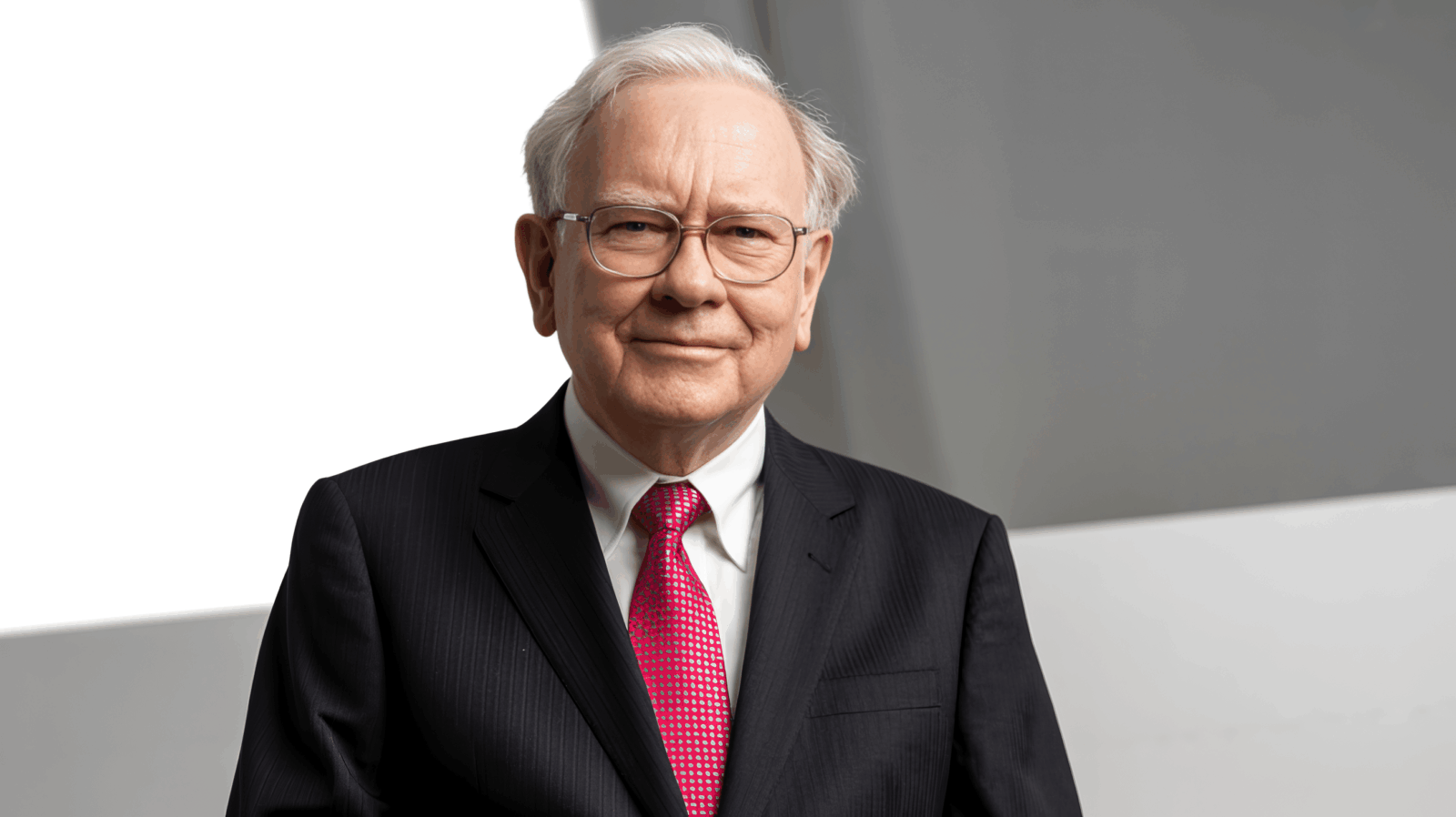
Warren Buffett is widely regarded as the greatest investor of the modern era, but his wealth didn’t accumulate through a single fortunate bet. He built his fortune through a series of deliberate, evolving strategies applied at different stages of his career.
Understanding those strategies offers a starting point and a blueprint that any serious investor can study. Here are five specific approaches Buffett used to multiply his personal wealth from a modest starting point into one of the largest fortunes in history.
1. The 25% Performance Fee Model
Buffett’s first major wealth spike came not from his own money but from other people’s capital. When he launched and managed the Buffett Partnerships from 1956 to 1969, he structured compensation to reward performance heavily. He charged no standard management fee.
Instead, he took 25% of all profits above a 6% annual return, known as the hurdle rate. Because he consistently beat the market by wide margins, he captured a large share of the growth generated by his investors’ capital. By the time he closed the partnerships in 1969, his personal net worth had grown from roughly $174,000 to over $25 million, driven largely by those performance fees.
This model perfectly aligned his incentives with his partners’. He only profited when they profited, and he profited most when he performed best, as Buffett has said, “I cannot promise results to partners, but I can promise this: our investments will be chosen on the basis of value, not popularity; and we will attempt to bring risk of permanent capital loss (not short-term quotational loss) to an absolute minimum.” Protecting investor capital was the foundation of everything.
Buffett Partnership Ltd. Annual Performance
| Year | BPL Overall Results | Dow Jones (incl. dividends) |
|---|---|---|
| 1957 | +10.4% | -8.4% |
| 1958 | +40.9% | +38.5% |
| 1959 | +25.9% | +20.0% |
| 1960 | +22.8% | -6.2% |
| 1961 | +45.9% | +22.4% |
| 1962 | +13.9% | -7.6% |
| 1963 | +38.7% | +20.6% |
| 1964 | +27.8% | +18.7% |
| 1965 | +47.2% | +14.2% |
| 1966 | +20.4% | -15.6% |
| 1967 | +35.9% | +19.0% |
| 1968 | +58.8% | +7.7% |
| 1969 | +6.8% | -11.6% |
2. Investing in Net-Nets (Cigar Butts)
In his early years, Buffett practiced a deep-value strategy he learned from his mentor Benjamin Graham. He called the targets “cigar butt” stocks because each one had at least one good puff of value left in it. He hunted for companies selling for less than their net working capital, meaning current assets minus all liabilities.
This approach meant he was essentially buying a business for less than the cash, inventory, and receivables on its books, receiving the factories and brand name at no additional cost. The margin of safety was built directly into the purchase price. Buffett once explained his fundamental approach this way: “Price is what you pay. Value is what you get.”
In this early phase, he applied that principle in its most literal form. Every purchase had to make mathematical sense before any qualitative judgment about management or competitive position even entered the equation.
3. High-Octane Concentration
While Berkshire Hathaway is associated today with a broadly diversified portfolio of businesses, the original Buffett of the 1960s was a radical concentrator. His approach to high-conviction ideas was to act on them boldly, not cautiously. In 1964, a scandal involving falsified vegetable oil collateral caused American Express stock to fall sharply.
Rather than spreading his risk across multiple positions, Buffett spent time in restaurants and hotels observing whether ordinary customers were still using their American Express cards. When he confirmed that the brand remained strong, he allocated approximately 40% of the entire partnership’s capital to that single stock.
Buffett has been direct about diversification as a concept: “Diversification is protection against ignorance. It makes little sense if you know what you are doing.” High conviction, backed by rigorous research, allowed him to accelerate his compounding far beyond what a cautious, spread-out portfolio could have achieved at that stage of his career.
4. Cash-Flowing Assets and Active Income
Before Buffett was known as a stock picker, he was an entrepreneur who treated every dollar of active income as a seed to be planted. At age 14, he used $1,200 saved from his paper route to purchase 40 acres of Nebraska farmland, which he immediately leased to a tenant farmer. The land generated passive income while he continued working.
In high school, he bought a used pinball machine for $25 and placed it in a barbershop. The income from that first machine funded additional machines, and he eventually operated a route across multiple locations.
Each venture was designed to produce income that could be reinvested, not spent. Buffett has long described this compounding mindset with a vivid image: “Someone’s sitting in the shade today because someone planted a tree a long time ago.” He planted financial trees early and continuously, treating earned income as capital to be deployed rather than a reward to be consumed.
5. Total Consolidation into Berkshire Stock
The single greatest driver of Buffett’s multi-billion-dollar net worth was a decision he made in 1969 that most investors would find nearly impossible to execute psychologically. When he dissolved the Buffett Partnerships, he gave his partners a choice: take their proceeds in cash or accept shares in Berkshire Hathaway. He chose to take shares and has held them ever since.
By concentrating nearly his entire net worth into Berkshire, he avoided the constant leakage of capital gains taxes that occurs when investors frequently rotate from one stock to another. His wealth was compounded largely tax-deferred for decades, allowing the full power of compounding to work uninterrupted on his original stake.
Buffett has described his ideal holding strategy: “Our favorite holding period is forever.” The decision to stop diversifying and trust the long-term growth of a single enterprise is arguably the most counterintuitive and most consequential financial move of his career.
Conclusion
Buffett’s path to wealth was not built on a single insight or a single investment. It was constructed over multiple decades through careful strategy shifts, from leveraging other people’s capital to hunting for deep value, to concentrating on high-conviction positions, to building cash flow through entrepreneurial ventures, and ultimately consolidating everything into one compounding vehicle.
Each phase served its purpose at the right stage of his financial life. The lessons are accessible to investors at any level, not because they are easy to execute, but because they are grounded in principles that have proven durable across generations of market cycles.