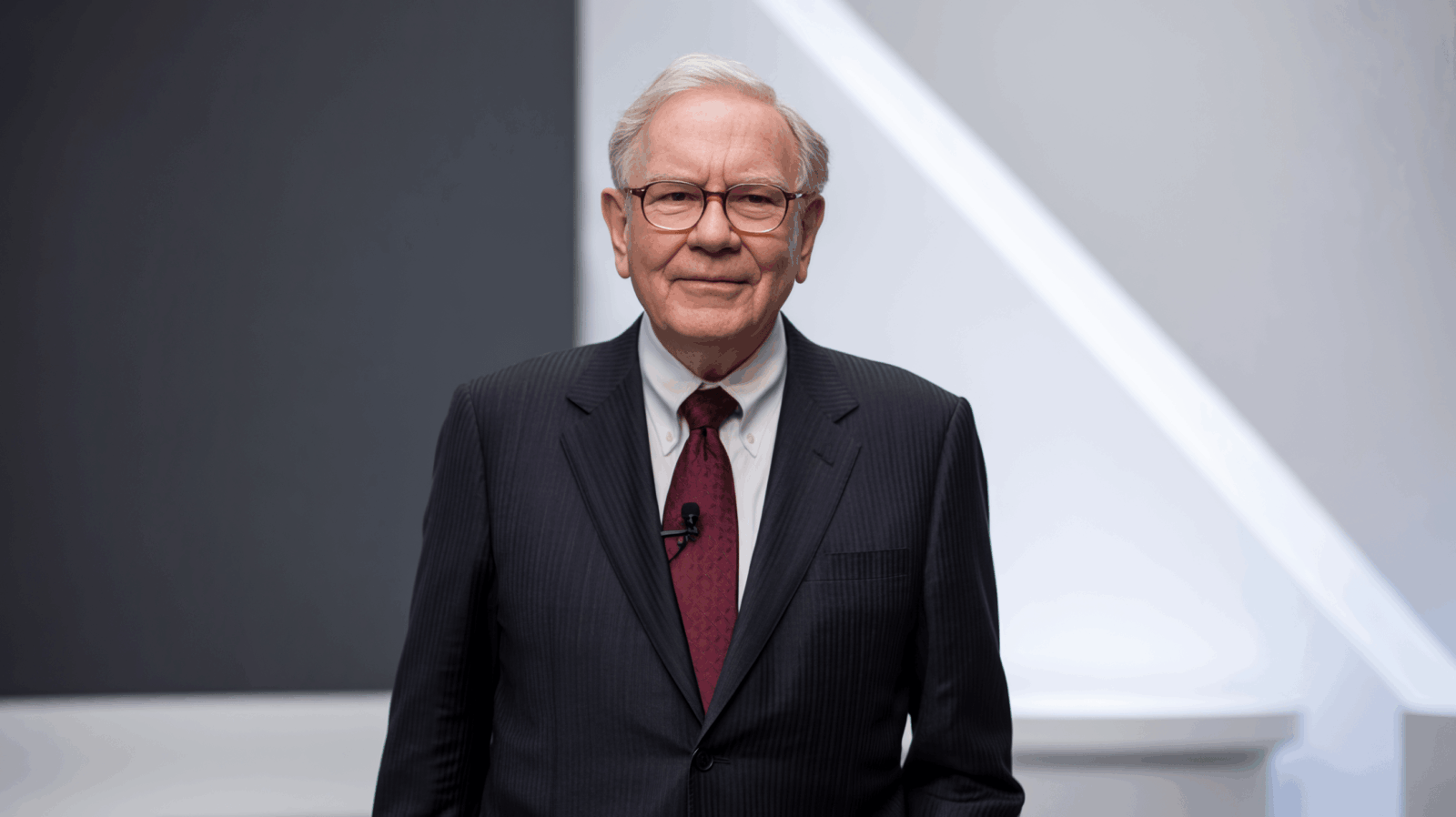
Warren Buffett has spent decades building one of the greatest investing track records in history. Yet the advice he consistently gives to ordinary people interested in investing but don’t want to put in the time to be great stock pickers is strikingly simple. He doesn’t tell them to study balance sheets, hunt for undervalued companies, or spend their weekends reading annual reports.
He tells them to buy a low-cost S&P 500 index fund and hold it for a lifetime. This single piece of guidance, repeated across shareholder letters, televised interviews, and public speeches, carries enormous weight. The most successful investor alive has concluded that the average person is better served by owning a broad slice of all of America’s greatest businesses than by trying to identify the right individual ones.
1. Why the S&P 500 Beats Stock Picking for Most Investors
“The goal of the non-professional should not be to pick winners – neither he nor his advisors can do that – but should rather be to own a cross-section of businesses that in aggregate are bound to do well. A low-cost S&P 500 index fund will achieve this goal.” – Warren Buffett, 2013 Berkshire Hathaway Shareholder Letter.
The S&P 500 is a collection of the 500 largest publicly traded companies in the United States. When you invest in a fund that tracks it, you are buying a stake in American business at its broadest and most powerful level. Buffett argues that stock picking is an unreliable game, even for professionals. Study after study has shown that the overwhelming majority of actively managed funds fail to outperform a simple S&P 500 index fund over the long term, and Buffett has been making this point consistently for decades.
2. The Simple Strategy Wall Street Doesn’t Promote
“My regular recommendation has been a low-cost S&P 500 index fund.” – Warren Buffett, 2016 Berkshire Hathaway Shareholder Letter.
The financial industry profits from complexity. When investors feel uncertain, they pay for active management, elaborate strategies, and advisors who promise superior returns. The uncomfortable reality is that most of this activity destroys value rather than creating it.
Buffett has never wavered from his position. A regular investment into a low-cost S&P 500 index fund, sustained over decades, is the approach he recommends for anyone who isn’t a full-time investment professional. He says this publicly, knowing full well that it undercuts an enormous industry built on the premise that complexity equals performance.
3. How Fees Silently Destroy Long-Term Wealth
“If you invested in a very low-cost index fund — where you are not paying a big fee to anybody — and you just bought it consistently over 10, 20, 30 years, you’d do very well. You don’t need to know anything about accounting or stock markets or anything else.” – Warren Buffett, CNBC, 2017
Investment fees appear trivial when expressed as a small annual percentage. Their compounding effect over decades, however, is devastating to long-term returns because the fee doesn’t just take a slice of today’s money; it also reduces returns over time. It also takes a slice of every dollar that would have compounded in future years.
Index funds are inexpensive by design. Because they track the market rather than employing armies of analysts trying to beat it, their costs are a fraction of what actively managed funds charge. Buffett’s advice to prioritize the lowest-cost option available is not a minor detail. It is one of the most financially significant decisions an investor can make.
4. Why Active Trading With No Edge and Market Timing Work Against You
“Active trading, attempts to ‘time’ market movements, inadequate diversification, the payment of high and unnecessary fees to managers and advisors… can destroy the decent returns that a life-long owner of equities would otherwise enjoy.” – Warren Buffett, 2014 Berkshire Hathaway Shareholder Letter.
One of the most common investor mistakes is believing it’s possible to predict when the market will rise or fall. Missing even a handful of the market’s best days in a given decade can dramatically reduce long-term returns, and those best days tend to arrive without notice.
Buying an index fund and holding it through corrections, crashes, and recoveries is not passive investing in a negative sense. It is a disciplined strategy that removes emotion from decision-making and protects investors from the destructive cycle of buying high out of excitement and selling low out of fear.
5. The Ultimate Proof: Buffett’s Plan for His Own Family
“In my view, for most people, the best thing to do is to own the S&P 500 index fund… If you bet on America and sustain that position for decades, you will do far better than if you try to pick a basket of stocks.” – Warren Buffett, 2020 Berkshire Hathaway Annual Meeting
No endorsement of the S&P 500 index fund carries more weight than the instructions Buffett placed in his own will. Despite building his fortune by selecting individual companies like Apple, Coca-Cola, and American Express for the Berkshire Hathaway portfolio, his directive for the cash left to his wife avoids individual stocks entirely.
His instructions call for a 90/10 allocation: 90% in a low-cost S&P 500 index fund, with Vanguard specifically recommended, and 10% in short-term government bonds. The bond allocation exists to provide liquidity during market downturns, allowing withdrawals without selling equities at depressed prices. A man who has spent his entire career analyzing businesses concluded that the right approach for protecting his own family’s wealth is the same fund he has long recommended to everyone else.
Conclusion
Warren Buffett’s message on index investing is remarkably consistent across decades and audiences. The average investor doesn’t need to identify the next great company or predict the next market move. They need to own a broad, low-cost stake in American business and hold it with patience throughout every market cycle.
The S&P 500 index fund is not a consolation prize for investors who can’t find an edge in stock picking. According to Buffett, it is the smarter choice for almost everyone, including the families of billionaires. Buying consistently, keeping fees low, and staying invested through volatility is a strategy simple enough to explain in a single sentence and powerful enough to build real wealth over a lifetime.