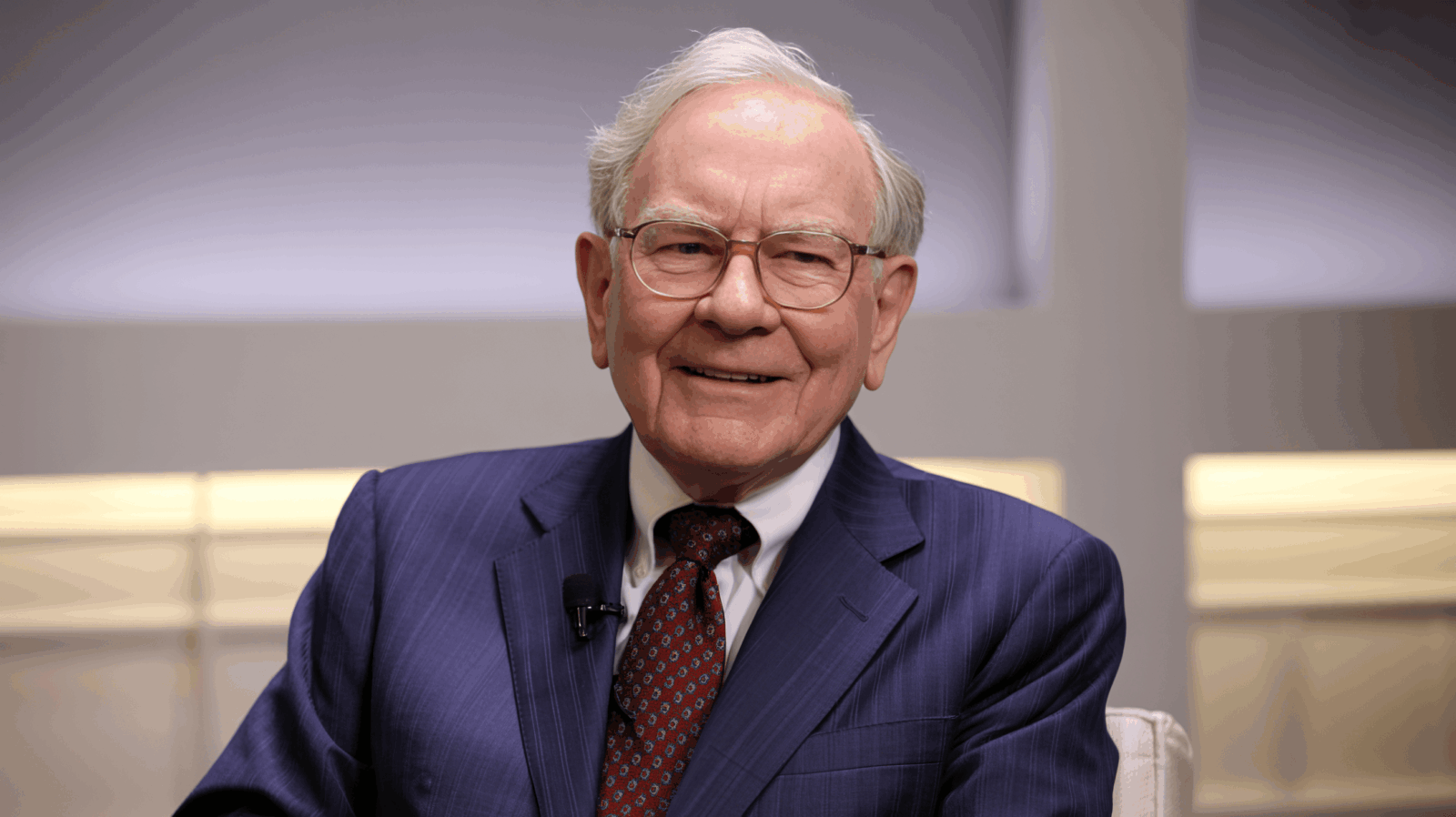
Warren Buffett is one of the most studied investors in history. Most people focus on his financial strategies, his love of compounding, and his long-term approach to building wealth.
But Buffett’s most underrated wisdom has nothing to do with the stock market. Across decades of shareholder letters, university speeches, and candid Q&A sessions, he has offered a consistent philosophy for achieving genuine inner happiness. Here are his five most powerful tips for being happy with yourself.
1. Live by the Inner Scorecard
Buffett credits his father, Howard Buffett, with teaching him one of life’s most important distinctions: the difference between an inner scorecard and an outer scorecard. The outer scorecard means measuring your worth by what other people think of you. Your status, your reputation, the approval you collect from strangers. The inner scorecard means measuring yourself by your own values and your own integrity, full stop.
To bring this to life, Buffett poses a striking question to audiences: “Would you rather be the world’s greatest lover, but have everybody think you’re the world’s worst lover? Or would you rather be the world’s worst lover, but have everybody think you’re the world’s greatest lover?” If you choose the first option, you are wired for the inner scorecard.
Buffett has said plainly that if you are comfortable with your inner scorecard, you will live a happy life. If you rely on the outer one, fulfillment will always feel hollow, no matter what you achieve. Most people spend their entire lives chasing approval they never actually needed. They build careers, reputations, and social profiles for audiences that weren’t paying attention in the first place.
2. Understand That Money Magnifies Who You Are
Despite being one of the wealthiest people on earth, Buffett has spent decades pushing back against the idea that money buys happiness. He has often noted that “Of the billionaires I have known, money just brings out the basic traits in them. If they were jerks before they had money, they are simply jerks with a billion dollars.” Jerks tend to be unhappy people in my experience.
Buffett has been direct about this for years. “If you aren’t happy having $50,000 or $100,000, you are not going to be happy if you have $50 million or $100 million.” If your life is already filled with shame, arrogance, regret, or loneliness, adding zeros to your bank account won’t fix any of it. Contentment has to come first, and no stock portfolio has ever manufactured it from scratch.
This is a lesson that runs counter to almost everything modern culture tells us. The pursuit of wealth as a path to happiness is one of the most common and costly mistakes people make. Buffett spent decades watching it play out and kept saying the same thing. Do the inner work first. The rest is just arithmetic.
3. Measure Success by How Many People Love You
During a Q&A session with university students, Buffett was asked to define real success. His answer had nothing to do with stock prices or business performance. “When you get to my age, you will measure your success in life by how many of the people you want to have love you actually do love you,” he told them.
He went further, pointing out that he has known people with enormous fortunes whom nobody truly loved. According to Buffett, that is the ultimate test of how you have lived your life. Love can’t be purchased, and the only reliable way to earn it is to be genuinely lovable.
Buffett’s practical advice flows from this. Invest heavily in your relationships. Treat people with kindness, which he has described as costless but priceless. And choose the right life partner. He believes that a single decision shapes your daily happiness more than almost any other choice you’ll ever make. Get that one right, and everything else gets a little easier.
4. Do Work You Would Do for Free
Buffett is famous for saying he “tap dances to work” every morning. That enthusiasm isn’t an accident. He has spent his career doing exactly what he loves, surrounded by people he genuinely respects, and he encourages everyone to find the same kind of fit.
His advice to students is consistent and blunt. “Taking jobs to build up your resume is the same as saving up s*x for your old age,” Buffett has said. Find the work you’d choose to do even if you didn’t need the paycheck. When your daily activities align with your natural curiosity, life stops feeling like a grind. That shift alone changes more than most people expect.
This doesn’t mean quitting your job tomorrow. It means directing your career and energy toward work that genuinely engages you and being honest about the gap between where you are and where you want to be. Buffett’s own life is the proof of concept. He has been doing the same essential work for decades and still shows up eager every single day. That kind of longevity doesn’t come from discipline alone. It comes from actually wanting to be there.
5. Protect Your Time by Saying No
Buffett famously keeps a largely empty calendar. He guards his time more fiercely than most people guard their money, and he believes that control over your own schedule is one of the most direct routes to inner peace. “The difference between successful people and really successful people is that really successful people say no to almost everything,” he has said.
Time is the one asset you can’t buy more of, and Buffett is clear about what that means in practice. Most unhappiness, he suggests, comes from overcommitting to obligations that exist to please other people rather than to serve your own growth or your closest relationships. Saying no to the noise is how you protect space for what actually matters.
He also offers a simple rule for managing anger and impulsive reactions. “You can always tell someone to go to h*ll tomorrow,” Buffett has said. Sleep on it first. Waiting twenty-four hours before responding to a frustrating situation gives you back control and keeps you from making choices you’ll spend months walking back.
Conclusion
Warren Buffett’s financial track record is extraordinary, but his philosophy for living well may be his most lasting contribution. The principles he returns to again and again are clear: judge yourself by your own standards, stop expecting money to fix what only character can fix, invest in the people who matter, do work that genuinely engages you, and protect your time without apology.
None of the tips requires a large portfolio or a seat on a board of directors. They require honesty and the willingness to stop measuring your life by someone else’s scorecard. Buffett has been saying this for decades. Most people nod along and go right back to checking what their neighbors think.