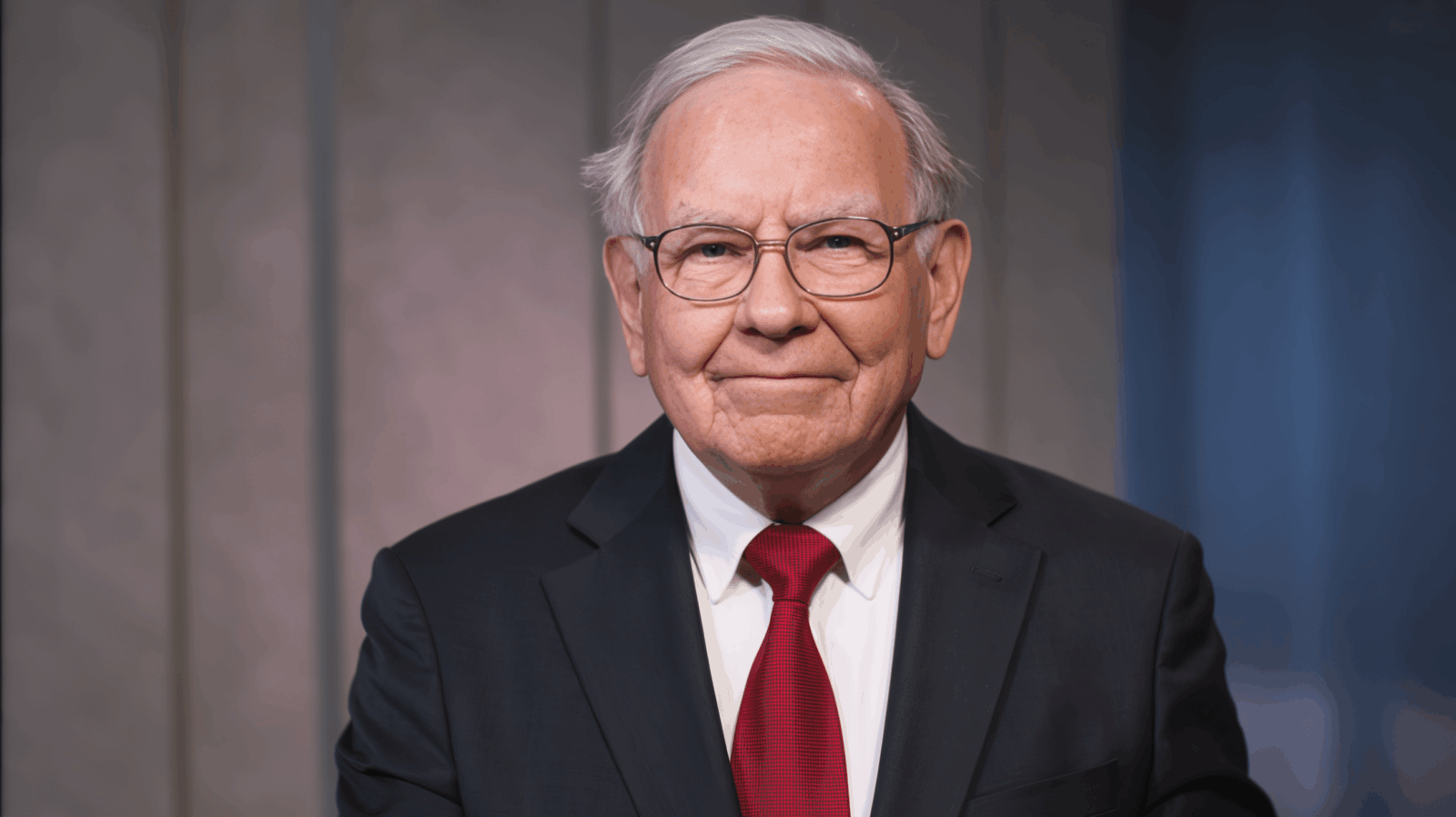
Warren Buffett has built one of the greatest investing records in history, and he is still active and sharp well into his nineties. Most people study his stock picks—fewer look at how he spends the hours when he is not reading a financial report.
The hobbies Buffett has kept for decades are not idle time. Science suggests they have actively shaped his decision-making, his processing speed, and the physical health of his brain. Each of the following five pastimes works on a different cognitive system. None of them looks like training. That may be where the magic happened.
1. Reading Voraciously
“Read 500 pages like this every day. That’s how knowledge works. It builds up, like compound interest.” — Warren Buffett.
Buffett has said he spends the majority of his working day simply reading. Annual reports, newspapers, biographies, trade publications. The volume is high, and the range is wide. Psychologists describe the knowledge that accumulates through deep reading as crystallized intelligence, a storehouse of facts, vocabulary, and contextual understanding that grows across a lifetime.
Research from Emory University found that deep, immersive reading triggers lasting increases in functional connectivity within the brain’s left temporal cortex—the region tied to language receptivity—and the somatosensory cortex. Strikingly, this neural “muscle memory” persists for days after the book is closed, temporarily rewiring how our brains process narrative and complex information.
While neuroscientists study this to understand empathy and language, the broader cognitive payoff is vital for professionals in high-stress environments. By stepping out of the chaotic 24-hour news cycle and engaging in deep reading, we train the brain to transition from fast, reactive impulses to deliberate, analytical thinking. For an investor who depends on seeing what competitors miss and staying calm when markets break down, this cognitive conditioning is not a minor benefit. It is the whole job.
2. Playing Strategic Bridge
“Bridge is such a sensational game that I wouldn’t mind being in jail if I had three cellmates who were decent players.” — Warren Buffett.
Buffett has called bridge the best intellectual exercise available, and he has played it seriously for most of his adult life. He competes online and in person. He has played alongside Bill Gates at high-level tournaments for years.
Bridge is among the most demanding card games the brain can play. A player must hold large amounts of incomplete information in working memory, deduce what opponents hold from partial evidence, and revise strategy hand by hand as new information surfaces.
Broader aging studies show that this kind of strategic play builds cognitive reserve, creating a mental buffer that delays dementia and age-related decline. Furthermore, research from the University of California, Berkeley, shows that this specific mental stimulation activates the brain’s cortex, significantly boosting the immune system. Because every deal presents a completely new problem, the brain never gets to coast.
3. Playing the Ukulele
Buffett picked up the ukulele in college and has never put it down. He has played at Berkshire Hathaway annual meetings and at charity events across the decades. He does not treat it as a performance. He treats it as something he genuinely enjoys.
Neuroscientists have described playing a musical instrument as one of the most demanding cognitive tasks a brain can perform. Simultaneously coordinating hands, eyes, and ears forces intense, high-speed communication between the brain’s left and right hemispheres. Studies show that this activity can expand and strengthen the corpus callosum—the dense band of nerve fibers connecting both sides of the brain.
While neuroscientists note that these structural adaptations are most profound when intense musical training begins in early childhood, maintaining a musical hobby supports fluid intelligence and neuroplasticity into old age. Warren Buffett has spent over seventy years strumming chords on his ukulele; while we cannot scientifically prove it taught him to spot undervalued stocks, it has undoubtedly served as a powerful workout for his brain.
4. Playing Ping-Pong
Buffett has played table tennis for years and will challenge players of any skill level at Berkshire events. The game looks casual. The demands it places on the brain are not. Many neuroscientists consider table tennis one of the most neurologically taxing recreational sports available. Tracking a spinning ball at high speed requires split-second spatial calculations from the prefrontal cortex, the region most responsible for planning and judgment.
The aerobic side of the game triggers the release of Brain-Derived Neurotrophic Factor, a protein that drives the growth of new neurons in the hippocampus, which handles long-term memory storage. An investor who needs to recall market patterns from decades ago accurately depends heavily on a healthy hippocampus. Ping-pong keeps that system active in a way most hobbies don’t.
5. Playing Golf
Buffett is a long-time golfer who has joked about the limits of his game. He holds a membership at Augusta National and plays regularly, treating the course as time with friends as much as exercise. Golf works on fluid intelligence, the ability to read a genuinely new problem on the fly. Every shot asks the player to calculate distance, wind, slope, and muscle mechanics and then commit under pressure to a single choice.
There is no repeating the same hole; each one is a new experience because the variables change constantly. Broad medical research—including comprehensive reviews highlighted by the British Journal of Sports Medicine—confirms that the combination of moderate physical activity, strategic focus, and time spent in natural green environments measurably lowers cortisol levels.
Because chronic high cortisol is known to damage the prefrontal cortex and erode memory, reducing this stress hormone is vital for long-term brain health. A round of golf is not just leisure. For a sharp ninety-five-year-old still making monumental capital allocation decisions, this active mental and physical engagement is essential cognitive maintenance.
Conclusion
What is worth noticing here is that none of these hobbies were chosen for their cognitive payoff. Buffett reads because he is curious. He plays bridge because he finds it genuinely difficult. He picked up the ukulele to impress a girl in college. The benefits accumulated because he stayed consistent, not because he was running an optimization program on his own brain.
Science caught up to the habits later. Most people know Buffett as a reader. Fewer think about the card player, the musician, the golfer, the man who played ping-pong at Berkshire weekend events. The full picture is more interesting than the one-line version. He did not just read his way to a sharp mind at ninety-five. He played his way there, too.