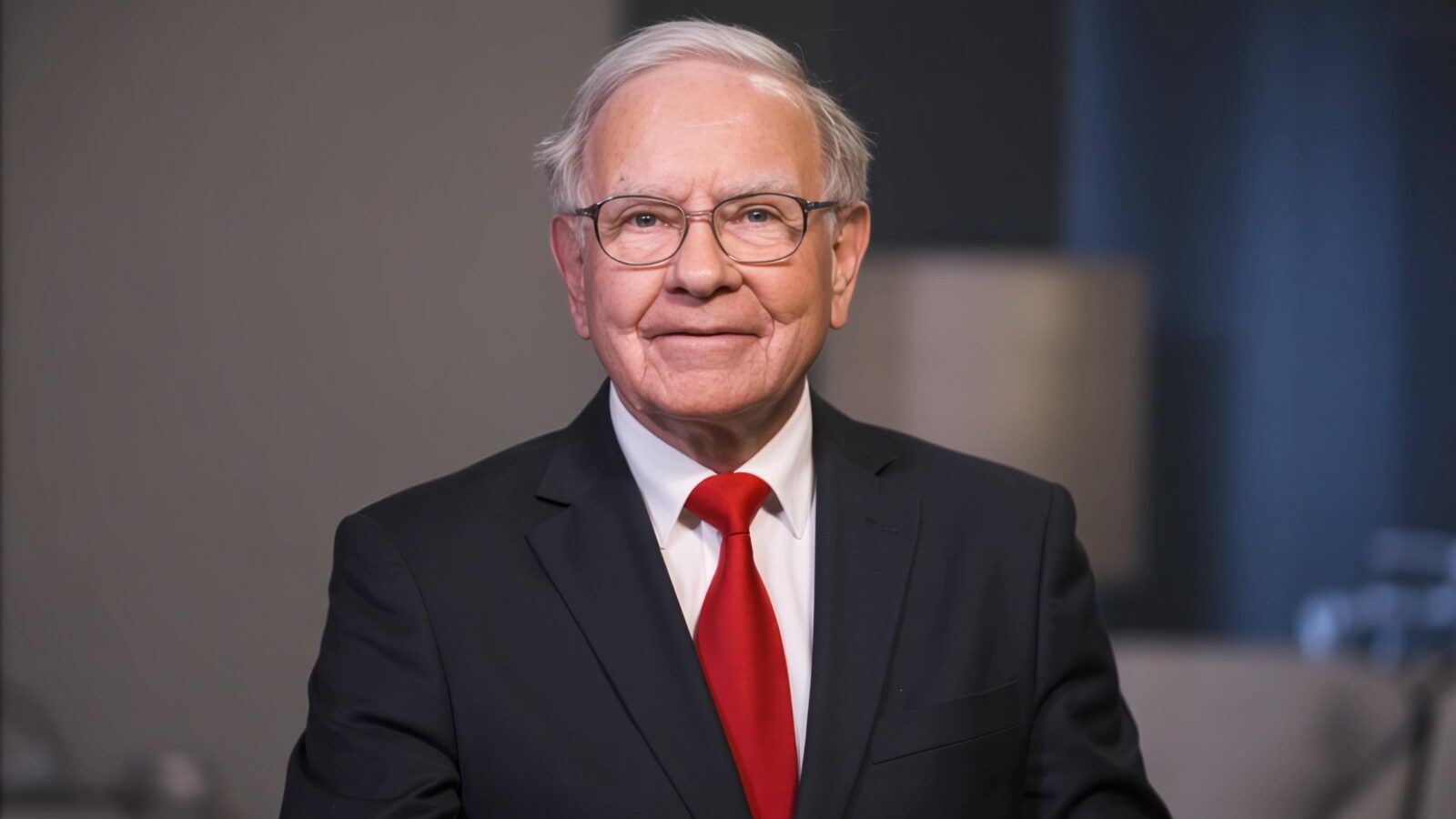
Warren Buffett didn’t build his reputation by picking stocks in a vacuum. He built it by running a company composed of dozens of operating businesses and by watching, year after year, what actually worked on the ground. Strip away the market commentary, and something else remains underneath—a management philosophy built from decades of running real companies with real employees and real customers.
“I am a better investor because I am a businessman, and a better businessman because I am an investor.” – Warren Buffett.
These are seven lessons on running a business that have stuck with me. Each one comes straight from Buffett’s own words.
1. Build and Protect Your Competitive Moat
Buffett described his approach to business this way in 1995: “In business, I look for economic castles protected by unbreachable moats.”
A moat, in practical terms, is your pricing power. Raise prices by 10 percent and keep every customer, and you have one. Raise prices by a fraction of that and watch customers walk to the shop down the street, and you’re running a commodity business with no defense at all. There’s no partial credit here. Either the gap exists, or it doesn’t.
Widening that gap has to be someone’s daily job. Sometimes it’s brand loyalty built over years. Sometimes it’s a cost structure competitors can’t touch. Sometimes it’s simply that switching away from you costs more trouble than it’s worth. Whatever the mechanism, a moat needs upkeep just like a real one. Leave it alone long enough, and it goes dry.
2. Radical Decentralization and High-Trust Hiring
On hiring, Buffett has said, “Somebody once said that in looking for people to hire, you look for three qualities: integrity, intelligence, and energy. And if you don’t have the first, the other two will kill you.”
Buffett oversees a company employing hundreds of thousands of people while keeping a famously small corporate staff. That works because he hands operational control to the people running each business, not because he’s careless, but because he trusts them. A sharp, energetic manager without integrity doesn’t slow down. He finds faster, cleverer ways to run the business into the ground for their own gain.
A thick policy manual is a poor substitute for that kind of trust. It can tell people what not to do. It can’t make them care whether anyone is watching. That has to come from who gets hired in the first place, one decision at a time, long before a crisis ever tests it.
3. Treat Capital Allocation as the Executive’s Primary Job
On the difference between price and worth, Buffett wrote: “Price is what you pay. Value is what you get.”
Most people rise to the top job through operations, sales, or product development. Then the job itself changes on them. Suddenly, the central task is deciding what to do with the cash the business throws off, and that single decision shapes almost everything downstream.
A dollar kept inside the company needs to become at least a dollar of long-term value, and ideally more. It might fund a new plant. It might grow the sales team. It might just pay down debt and buy some breathing room. The destination matters less than the discipline behind the choice. Get that discipline wrong for a few years running, and no operational brilliance elsewhere will save the business from itself.
4. Stay Ruthlessly Within Your Operational Circle of Competence
On risk, Buffett has said plainly: “Risk comes from not knowing what you’re doing.”
Trouble tends to start when a business that succeeded in one lane wanders into another it doesn’t actually understand. Growth feels good in the moment. It always does. But growth into unfamiliar territory carries a different kind of danger than growth in a lane you’ve already proven to be successful in.
Knowing what your organization doesn’t understand is what keeps it out of trouble. Size matters far less here than honesty about where the expertise ends. Saying “that’s too hard” to a shiny distraction is often the single most disciplined call a leader makes all year, even if nobody notices it happened.
5. Focus on Customer Delight Over Competitor Aggression
Speaking to a group of small business owners, Buffett said: “Any business that has delighted customers has a salesforce out there that you don’t have to pay. You don’t see them, but they’re talking to people all the time.”
He points to businesses like GEICO and See’s Candies for a reason. Both built their success around the customer in the store or on the other end of the phone, not around whatever the competition happened to be doing that quarter. Watching rivals has its place. Obsessing over them is a distraction dressed up as strategy.
When the daily work of a business consistently earns real satisfaction, word spreads on its own. No line item on a marketing budget captures that kind of growth, because it isn’t bought. It’s earned, one interaction at a time.
6. Protect Reputation Over Short-Term Revenue
Testifying before Congress during the Salomon Brothers crisis, Buffett told employees, “Lose money for the firm, and I will be understanding. Lose a shred of reputation for the firm, and I will be ruthless.”
Short-term numbers should never be worth trading away long-term trust. A reputation built carefully over twenty years can unravel in an afternoon, and the math on that trade rarely works out in the company’s favor.
Mistakes happen. Every business eventually makes one. What separates those who recover is speed and honesty in their responses, not the absence of error. Cover-ups and delays do more lasting damage than the original mistake ever could.
7. Manage for Decades, Not Fiscal Quarters
On his investing horizon, Buffett wrote in 1988: “Our favorite holding period is forever.”
Running a business to satisfy a quarterly number invites tradeoffs nobody actually wants. Maintenance gets deferred until it becomes an emergency. New hires are delayed beyond the point at which they were needed. Quality gets shaved down just enough to hit a target that everyone will have forgotten by the end of the year.
A business managed with a longer view can compound its advantages without interruption. Competitors chasing the next earnings report tend to sacrifice exactly the operational health that made them worth watching in the first place. Given enough time, the company built over the decades tends to be the one still standing.
Conclusion
None of these seven lessons requires a bachelor’s degree in finance or an MBA. They require patience and a willingness to make calls that won’t pay off for a long time. Buffett’s real skill was never picking winners in the stock market. It was understanding, in granular detail, how a well-run business actually behaves that created positive earnings and growth.
Any business manager who takes even a few of these principles seriously will end up running something more successful than most people. The moat widens. The culture holds under pressure. The decisions get easier to defend when someone eventually questions them. That kind of compounding has very little to do with a stock ticker and almost everything to do with how the business is actually run.